Thursday, October 30, 2014

#774. Standing on the shoulders of Giants


Anyone who's familiar with my baseball interests knows none of my favorite teams made it to the World Series this year, but I was still more than pleased with the outcome.  I'd been rooting for the post-season sensations Kansas City Royals up until they reached the World Series.  Baseball is a game of momentum, and they blew away all their competition to that point.  But I quickly realized the edge belonged to the San Francisco Giants, who last night won their third championship in five years.

Thanks to a guy named Madison Bumgarner.

This was an ace who powered through three games of the World Series, starting two and finishing out the last four innings in the final game, and he became a whole story unto himself, and that's the sort of thing you relish.  By that point, who but Royals die hards wanted a different outcome?  How was anything less than victory possible?

Watching something like this is a reminder of what makes baseball special.  It's a game of determination, but it's also a game of patience.  These days, what was once celebrated as America's Pastime is more often dismissed as something about as exciting to watch as bowling or golf.  But who will argue that watching Bumgarner making history was anything less than thrilling?

Baseball is what happens when everything goes right.  It's a chance for things that are normally screwed up elsewhere to actually work.  Things like teamwork.  Things like believing in each other.  things like faith in the face of despair.

Watching World Series in the new millennium has been a consistent display of this.  As a member of Red Sox Nation, the so-called "curse" that lasted eighty-six years ended and then we got three championships in ten years, and each of those teams matched the model the Giants exhibited last night, and I think the same is true of just about every team that has won since 2001, starting with the Arizona Diamondbacks.  I think of the "rally monkey" Angels of '02, or the Cinderella Cardinals in Tony La Russa's final season as manager in '11.

It's hard not to be happy for Bumgarner and the Giants, winking Pablo Sandoval and everyone else.  Better luck next time Royals.

And hopefully one of my teams will win next year!

Friday, October 10, 2014

#773. Mock Squid Soup: Unbreakable


Mock Squid Soup is a film appreciation society brought to you by people actually named (on the Internet) Mock and Squid.  They are both deeply disturbed.

No, actually, all the characters in Unbreakable are.  As is director M. Night Shyamalan.  As are the fairweather film fans who quickly thought he was completely untalented the moment he was no longer flavor of the month.

Let's start our discussion with Shyamalan!  His popular career began with the surprise late-summer 1999 blockbuster The Sixth Sense, which famously had a twist ending.  Apparently if you have something like a twist ending with all your films (or, you know, have something like personal style) this is a sign of creative bankruptcy.  If I sound flippant about it, it's because I never understood that.  As far as I'm concerned, the man's a genius, easily easily one of the best filmmakers of the past fifteen years at least.  I think part of the reason people cooled on him so quickly was because of Christopher Nolan's rise at around the same time.  Shyamalan seemed to come out of nowhere (he didn't; actually, his first movie, Wide Awake, is a charming family movie) whereas Nolan's career had a chance to build in increments, from the widely respected but cult-sized Memento (although again, there was an earlier film: Following) to blockbusters like The Dark Knight and Inception.  Both are craftsmen who tend to focus on journeys where the intensity can be about emotion instead of bluster.  But while Nolan's audience had a chance to build up, Shyamalan's only had the expectation of eventual disappointment.

A slight simplification, but that's my view.

His third major release, The Village, may have been the movie where everyone took their later impression of him from, a movie that changes everything you thought you knew about the story without any real clues to prepare you.  Strangely, he rebounded popularly with Signs, but was never able to recover after that.  Lady in the Water is a terrific fable.  The Happening was never even given a chance, dismissed instantly as just more of his nonsense.  I liked The Last Airbender.  I still have yet to see After Earth.

Anyway, it isn't all Shyamalan worth considering about Unbreakable.  There's also Bruce Willis, who was also the star of Sixth Sense.  This was a period of career renaissance for Willis, where he could break away from his action persona for a change and find real success.  His two collaborations with Shyamalan were the peak of this period, and for me personally his career highlights (others still swear by Die Hard, although that's a franchise that has finally died.  hard) aside from the inspired lunacy of The Fifth Element.

There's also Samuel L. Jackson, who like Willis was turning a popular corner, and who unlike Willis has continued to parlay this period to great success, possibly because he figured out how to keep it going.  (Seriously, would anyone mind seeing a solo Nick Fury movie at this point, or does Captain America: The Winter Soldier technically count?)

Both of them were in Pulp Fiction, by the way.  I think people tend to forget Willis was in that, but of course everyone remembers Jackson's scripture-quoting hitman. They should work together more often.  (It didn't work out so well when Jackson reteamed with John Travolta in Basic, although there's at least one scene totally worth watching for having them together again in it.)

Remember the kid from Gladiator?  He's in here, too.  I think it was an odd choice for Shyamalan, because the kid kind of looks like Haley Joel Osment.  Same general hairstyle.  May have been an unconscious thing people held against the director.

Robin Wright!  Who doesn't love Robin Wright?  Her career is probably one of the least needy ones in Hollywood.  It's always a pleasure to find her in a movie you're watching.  You might consider giving The Conspirator a shot if you're looking for something new.

Besides all that, Unbreakable is also a superhero movie, and as a 2000 release (same year as X-Men) just on the cusp of that actually being a very good thing.  It's probably one of the reasons the public started liking them so easily.  It's part of a holy trinity for me, along with Hancock and The Dark Knight, as the best superhero experiences yet featured on the big screen.  Like Hancock, it's a rare modern original effort, rather than an adaptation from comic books.  Like Dark Knight, it's a movie that takes superheroes completely seriously.

It's an absolute favorite of mine, featuring a number of absolute favorites behind and in front of the camera.  For me, there's nothing but plenty to love.

Tuesday, October 07, 2014

#772. The Next Generation cast recasts themselves

At the Destination 3 Star Trek con in London, the cast of Star Trek: The Next Generation reunited.  (Read about some of that here.)

The bit I'm focusing on centers on some of the cast's ideas about who could step into their roles.  Some of them I like and others are off-kilter.  Here're the results:
via Trek Core
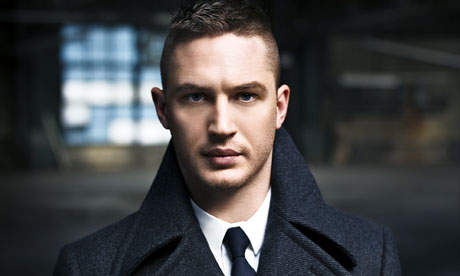
Jean-Luc Picard
originally portrayed by Patrick Stewart, who chose:
via The Guardian
Tom Hardy

Right off the bat we have a compelling situation here.  Hardy, of course, had his breakout role in Star Trek Nemesis as Shinzon, a clone of Picard.  It was the role that made me a fan of Hardy, but fans tend to hate the film and for everyone else it was the start of a long delay in Hardy's popular film career.  In 2014, Hardy's name means something completely different than it did in 2002.  Does that change anyone's mind about this casting?  Or was Stewart merely bucking what was even a trend among his castmates at the con in continuing to knock Nemesis more than a decade later?

via Bardfilm
Q,
originally portrayed by John De Lancie, who chose:
via Deadline
Sacha Baron Cohen

Truly inspired.  While better known for provoking audiences than starship captains, Cohen has become a reliable comedic presence in films as a costar, whether in Talladega Nights or Les Miserables.  Chances are Borat would prove a challenge even to Picard, though.

via Trek Core
Data,
originally portrayed by Brent Spiner, who chose:
via Daily Inspiration
Tilda Swinton

Leave it to Spiner to go with the most off-beat choice.  Swinton would redefine the role any number of ways (in some ways the Borg Queen's dream come true from First Contact!), and that's not a bad thing.
via the Geek Twins
Deanna Troi,
originally portrayed by Marina Sirtis, who chose:
via Marie Claire UK
Mila Kunis

Another one that would redefine the role, certainly, although Troi has often been targeted for criticism that Next Generation's original approach might be seen as increasingly dated.
via Trek Core
Beverly Crusher,
originally portrayed by Gates McFadden, who chose:
via Breitbart
Michelle Obama

and
via Technology Tell
Jessica Chastain

These are some interesting choices from McFadden.  The first could be interpreted any number of ways, the second casting about for a famous redheaded actress.  Chastain happens to be one of the finest actors working today.  Either way this would be bound to elevate Crusher's routinely low stature in the cast.
via Star Trek
Tasha Yar,
originally portrayed by Denise Crosby, who chose:
via Huffington Post
Charlize Theron

Another choice that seems to have been made for reasons that aren't necessarily reflected for anything but appearance.  But Theron would undoubtedly, like Obama or Chastain, greatly elevate an anemic character.
via Krypton Radio
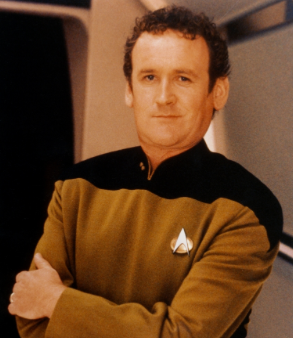
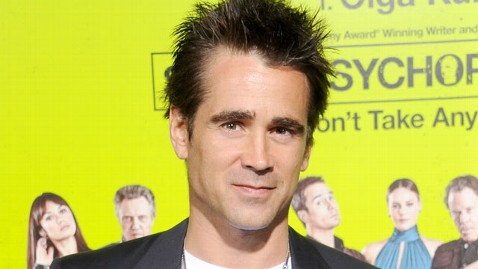
Miles O'Brien,
originally portrayed by Colm Meaney, who chose:
via ABC News
Colin Farrell

Good man, Colm.  This would be awesome.


Sunday, October 05, 2014

#771. Goodfellas

Recently, at the prodding of Armchair Squid, I rewatched Martin Scorsese's 1990 mobster opus Goodfellas.  This was going to be my chance to reconsider it.  I'm a fan of Scorsese, whether from his early classics (Taxi Driver, Raging Bull) or the string of early-millennium efforts (Gangs of New York, The Aviator, The Departed) that seemed to revitalize his career, so watching one of his films isn't exactly a tough proposition, but I hadn't thought as highly of Goodfellas as critics tend to, including Squid, the first time I saw it.  Mostly my impression was of leading man Ray Liotta, and much as Squid had been telling me, his family issues.

Seeing it again was to remember that Scorsese had done something like his most recent film, The Wolf of Wall Street, already.  Wolf, if you'll remember, was criticized for glamorizing the excesses it presumably sought to present as a cautionary tale.  That's what Liotta's narration does in Goodfellas, too.  Even by the end of the movie, he's lamenting life in witness protection as lacking the snap he'd so eagerly embraced as a boy and subsequently lived in for the next few decades of his life.  Supporting players Robert De Niro and Joe Pesci play the characters Liotta's can't be if there's to be any sympathy involved, although curiously De Niro is relatively subdued through the proceedings, as if the character knows as well as everyone else that De Niro used to be Scorsese's muse, the way Leonardo DiCaprio would eventually become.  Liotta?  For his first standout performance it was a tough act to follow, and he never really did.  The closest he ever came was Joe Carnahan's Narc.  In a way, that's all you need to know about Goodfellas, too.

Which is to say, maybe it overplays its hand a little.  Maybe it lacks, say, a certain subtlety.  The later film Donnie Brasco is basically a study of everything Goodfellas chose not to do.  I happened to rewatch Casablanca around the same time, and that's certainly a study of what Goodfellas chose not to do, too. 

Scorsese could have rubbed his gangster's itch the way he did in Mean Streets, the one where De Niro leaves his first real impression, as an obnoxious punk who's a rough edge version of the character Liotta plays.  If Goodfellas is all about family, then Mean Streets is the movie it would have been if, say, the lead had been Pesci.

It's tough watching Goodfellas from the perspective of someone who admires the Scorsese of Taxi Driver, or Raging Bull, or The Departed.  Like any director, like Quentin Tarantino for instance, who's always trying to help his characters make their way through impossible situations, Scorsese has a theme running through his movies, characters who maybe don't realize how much trouble they're in and barrel forward despite the consequences (but sometimes reconsider).  It's harder to like the work when he errs toward the unapologetic, as he does in Goodfellas, which is exactly like The Godfather Part II but without the grandiosity. 

I wish there was a moment like in American Gangster (Ridley Scott is always exploring idealism and nightmare colliding) when Denzel Washington decides to play ball with Russell Crowe, but Liotta is so busy, for the whole of Goodfellas, reveling in the life that seemed to be so carefree (except for things like bullets and dead bodies and nagging wives), even when his crew scores a major heist that in another context would have been a movie itself (Ocean's Scorsese), it's tough to even think about the life these characters (it's important to remember this is all based on real events) are actually leading, even though you never forget for a moment who they are.

What does a movie like Goodfellas say about Scorsese?  Is he warning his audience or gleefully enjoying the mayhem?  But it's also Scorsese and pizzazz working hand-in-hand, a little bit of narrative showmanship, the kind of experience only someone who'd done this sort of thing before and would again could get away with, and I think that's what people love so much about it.  Maybe it's not an experience to be taken solely for what it is, but to be considered in the mob canon, or even the Scorsese library itself.  It'll never come close to being my favorite movie, in general or among Scorsese's, but I can appreciate it for what it is.  It's just one of those experiences that leaves me wishing it had done things differently.  But if it had, it wouldn't be Goodfellas.

Thursday, October 02, 2014

There Are No Secrets On Betazed

Deanna isn't even in Starfleet the first time she meets Will Riker.  He's come to Betazed on assignment, and she's asked by her mother to be his personal liaison, help him become acquainted with the planet, keep him out of trouble.  The trouble, it would seem, would stem from Deanna's mother herself, whether in mind or body far too much for the uninitiated to handle, and even for those who have known her for years.  But it's more so that he won't notice everything else that's wrong with the planet.

Which is to say, everything.

To put it mildly, Betazed's best years are behind it.  By the time it was awarded membership in the Federation, it was a planet in cultural decline, so in fact the only reason it petitioned in the first place was to try and recapture some of the old glory.  Because there are no secrets on Betazed, and this has become a problem.

You see, Betazoids are empaths.  They can read and project thoughts at will, speak through each other's minds, and generally get along with a level of intimacy that would be unsettling on any other world.  Deanna's mother is the prototypical Betazoid.  As the leader of the last of the great houses, Lwaxana Troi took it upon herself long ago to do everything in her power to reverse the decline.  She lives in defiance of the truth, and is happy to do so, by the way.  After all, there are no secrets among Betazoids.

Which is why Deanna's father was human, totally devoid of all Betazed's gifts, the reason Deanna herself can only sense emotions rather than thoughts (although among her own people she remains perfectly telepathic).  The idea, her mother quickly seizes upon, is to build on the initial attraction Deanna can't possible hide from her concerning Riker.  It's obvious to everyone, even the other species Betazed has made a state policy of enticing to visit and if at all possible stay forever.

Yet Deanna hasn't just fallen in love with Riker, she's made a critical decision.  She is going to leave Betazed forever.  This is the opposite, actually, of what her mother hoped to achieve, the idea being to make it better, easier, for people to stay.

Yet, more and more, they aren't.  The younger generations have taken all the wrong lessons from what their elders have tried to accomplish.  They're forgetting Betazed.  On a world like this, memory is everything, and losing anyone is to lose a part of everyone.  Lwaxana Troi especially.

Fortunately, she has a few tricks up her sleeve.  Betazoids are among the cultures that still believe in arranged marriages, and Deanna had hers in order a long time ago.  She's just experimenting, or so her mother believes.  All that's about to happen is harmless, really.  Nothing to worry about at all.

If need be, Lwaxana Troi will rescue her daughter, and if she can't dissuade her from this career in Starfleet that is suddenly more interesting than even Riker, then she will follow Deanna into the stars.  She's been there before.  What could possibly go wrong?

She doesn't attempt to keep any of these thoughts from her daughter, but Deanna is constantly distracted, the kind of girl who concerns herself with ideals more than reality.  What kind of Betazoid is that?

Maybe there ought to be some secrets after all...

Wednesday, September 24, 2014

#769. TV from 9/23/14

I sometimes talk about what I've been watching.  It's been a while.  Let's do a little of that again.  Here's a survey of what was happening last night:

At 8 I gave Arrow another shot.  This is a show I'm supposed to like.  Everyone says so.  But every time I give it a try, I actually kind of hate it.  It's a soap opera.  I realize Smallville was pretty much exactly like this, but it did a much better job at casting and...general execution.  This was a repeat, anyway.  There was an ad promoting the Arrow episodes that served as a prelude for the upcoming Flash, which seems like and hopefully is a show that will do everything right that Arrow does wrong.  These episodes will play the week before Flash premieres.  I might watch them, but I've officially given up on Arrow.

At 9 I caught the second episode of New Girl's new season.  I missed the first one last week.  My track record with the show is terrible, but I'm hopelessly in love with Zooey Deschanel (which can be dangerous), so I try and catch it, and I do like it a lot.  I don't know that I love it, but you can't have everything.  By the time Jess figured out Schmidt's dating advice was terrible (she was really desperate), the episode starting feeling like classic New Girl, while everyone else was participating in the B-story PSA about drugs (which was kind of weird, but at least Winston gets to continue being awesome and hilariously completely isolated from even the new black guy they added last season).

I was flipping to Agents of S.H.I.E.L.D. every now and then, too.  It was the season premiere.  Adrian Pasdar was in it, but I think he realized at some point that like everyone in New Girl he's made some hilarious miscalculations.  Like Arrow, I've pretty much come to the conclusion that Agents, at least for me, is irredeemably terrible.

There was also the Red Sox playing on NESN (New England Sports Network for those who...don't live in New England).  The first time I checked out what they were up to, they were actually ahead 1-0.  Clay Buchholz was having a pretty good game.  (This has not been a very good season for Clay, or the Red Sox in general.  They've been making their own series of hilarious miscalculations.  Although a month or two back I was seriously depressed about it.)  But then inexplicably, Clay was kept in one inning too long (this has happened at far worse moments for Boston, at least), the Rays scored five runs, the Red Sox lost again, what can you say?

At least the Angels are doing well.  Best team in baseball this season.  Mike Trout's had a third consecutive standout season.  Albert Pujols has generally rebounded after a bad previous season.  And the A's are doing well, although less well since dealing Yoenis Cespedes to the Sox (and taking Jon Lester in return; stupid, stupid Sox, rooting up the whole pitching staff "because we'll definitely fix that in the off-season").  They will probably still make the play-offs.  The Cardinals will be in the play-offs, too, over in the National League.  Overall, with three out of my four teams doing well, a pretty good baseball season this year.

At 10 I gave Forever a shot for about a minute.  I was intrigued.  But it's basically exactly like Elementary.  So I probably won't be watching that again.  Then switched to the season premiere of Person of Interest, another show I don't watch regularly enough.  But I do love this one.  It seems like Finch has gotten over his crisis of faith.  That's good.  The show is even suggesting there's going to be a big reward for following it every season, which places it squarely back in the territory of classic J.J. Abrams, such as Alias, Lost, and Fringe.  (I won't argue the point about Lost, but I know for most fans the series finale alone seems to have completely undone its reputation.  Congratulations on that, people.)  Likely, this season will serve a good portion of that payoff, so it'll be interesting to continue watching it, as long as I can figure out how to catch it regularly again.

Tonight is Survivor's season premiere!  It's another "blood versus water"/"loved ones" season, but unlike the last time with all-new casting.  I don't make too fine a point on it, but I've loved Survivor since it premiered in 2000.  So tonight will be a good night!

Sunday, September 14, 2014

#767. 200th anniversary of "The Star-Spangled Banner"

Francis Scott Key (1779-1843) was a guest aboard the HMS Tonnant (yes, a British ship) when the bombardment of Fort McHenry began on September 13th, 1814.  The rest is history.  He composed "The Star-Spangled Banner," which became the national anthem in 1931, the next morning.  It's the defining moment of the otherwise forgotten War of 1812, a conflict I've come to study (in a strictly amateur fashion) over the years and admire as one of the defining formative moments of America's past.  It was a deeply unpopular war (although I struggle with finding popular ones) and as such probably did James Madison a lot of harm despite an otherwise stellar legacy (Father of the Constitution).  Key was a man of his time, a lawyer and proponent of slavery (yeah, kind of sucks) and so while building a significant legacy of his own was also part of an ignominious one that was hotly debated in his day and years away from being addressed directly.  They were days that pushed the country toward Civil War.  But for one brief moment, the survival of a flag was cause for immeasurable pride, relief, joy.  Other than the raising of another one during WWII, Old Glory has no more defining moment, one many Americans take for granted today, a song they find hard to appreciate, but it's some of the truest poetry we've ever produced.  To wit, the famous first stanza:

O say can you see by the dawn's early light
What so proudly we hailed at the twilight's last gleaming,
Whose broad stripes and bright stars through the perilous fight
O'er the ramparts we watched, were so gallantly streaming?
And the rockets' red glare, the bombs bursting in air,
Gave proof through the night that our flag was still there;
O say does that star-spangled banner yet wave
O'er the land of the free and the home of the brave?

Friday, September 12, 2014

#766. Mock Squid Soup: Burn After Reading

The second meeting of Mock Squid Soup, which oddly enough originates from a dude named Mock and another dude named Squid, is exploring the Coen Brothers' Burn After Reading, released in 2008.
via Stand By for Mind Control

The Coen Brothers, otherwise known as Joel and Ethan Coen, have been making some of the quirkiest movies of the past thirty years (beginning with 1984's Blood Simple).  I'm sadly lacking in some of the essentials (Fargo, Miller's Crossing, The Big Lebowski, Barton Fink, Raising Arizona), but I've been a die hard fan since the release of 2000's brilliant O Brother, Where Art Thou? (which conveniently enough for my personal tastes is a pastiche on The Odyssey).  My dad is a big fan of John Wayne, so I saw the original True Grit when I was a kid, but I love the Coen version more.  No Country For Old Men is a movie I actually made a personal holiday out of catching when it was in theaters, and while I appreciate it a great deal, it's one of those movies I really need to see again, because like everyone else my enduring memory of it remains Javier Bardem's Anton Chigurh ("Call it, friend-o"), even though it was the culmination of a hot streak for the perennially underrated Josh Brolin I very much appreciated at the time.  And I love Tom Hanks in The Ladykillers.  One of his many classic performances.

But getting back to Burn After Reading, and why I selected an image of J.K. Simmons, I'm actually realizing for the first time in a while (because it's been a while since I saw it), that the image I want is actually probably John Malkovich:
via Cinematic Thoughts
I'm now pretty sure it's Malkovich who repeatedly utters a phrase...I cannot share on a family-friendly blog.  It contains the word "morons," and another word that ends with "king" but certainly does not begin royally.  I remember the phrase if not exactly who utters it (I'm pretty sure Malkovich now!) because I subsequently adopted it as my foul-mouthed oath to the world.  I have issues.  I indeed think a lot of people are "[...]king morons."  

Judge me.  But that's the major reason I love Burn After Reading.  For me, it's about as accurate a movie as I've ever seen about how the world really works, when there really are no competent people around and everyone's flaws are magnified into their dominant personality traits.  (I can be cynical.)

I know, I know, it's terrible.  But c'mon!  Okay, so maybe you don't relate.

I also love it because Brad Pitt is running around in an overtly comedic performance.  This was before Inglourious Basterds, which for me instantly became one of his defining performances.  (Great movie.  Tarantino found his perfect muse at last in Christoph Waltz.)

Speaking of perfect muses, other than Jeff Bridges, do the Coens have a better or more consistent one than George Clooney?  He's in the mix here, too.  I love Clooney, have ever since I saw him in ER.  I don't know why it took so long for everyone to admit the guy has charisma to spare, but at least it finally happened, and he landed in a perfect groove to exploit it.  I make no qualms about saying so.  Clooney exploits his charisma, sometimes for some truly dramatic performances (Syriana, Up in the Air, Three Kings), sometimes just being Old Hollywood goofy.  I think he's less consistently successful with wide audiences, not to mention critics, because he's so sure of his own skills.  It's not that he can't disappear into a part, but his movie career came about only after everyone discovered Clooney could be a star.  It wasn't a role, other than a few seasons on a TV show, that made him.  It was pretty much Clooney himself.  He's what Hollywood stars used to be, but stopped being decades ago.  Which come to think of it probably explains his whole career.

But getting back to Simmons, I love that his career finally became a thing, and it's the major development I take away from Sam Raimi's Spider-Man movies, where Simmons played the blustery J. Jonah Jameson, the one cartoon performance that's been completely owned in a comic book movie to date.  He's been consistently great ever since, and like Clooney all he has to do is do his thing.  Great in Juno (but everyone's great in that one).  Great in those All-State commercials.  Even if he isn't the one to...utter the phrase, he's still a great reason to watch this movie.

Maybe I've already spoiled the movie and perhaps even your opinion of me with some of the things I've said here today (but were they really surprises?), I don't know.  Just watch the movie.  Watch more Coens movies.  Watch more Clooney movies.  Watch movies.  They have weird ways of explaining the world around us.

Thursday, September 11, 2014

9/11/14

thirteen years:
perhaps an 
       unlucky number;
but these are
       unlucky times,
although saying so now
makes me wonder
if there are
       lucky times

Wednesday, August 20, 2014

#764. Three Underrated Best Picture Winners

Today, as the title suggests, I'll be talking about three underrated Best Picture winners from the annual Academy Awards celebration.  Specifically, Forrest Gump, Shakespeare in Love, and Gladiator.

Movie: Forrest Gump
Year it won the Oscar: 1995
Movies it beat out: Four Weddings and a Funeral, Pulp Fiction, Quiz Show, The Shawshank Redemption
The argument: Now, I want to make it clear that I'm a big fan of both Pulp Fiction (a big fan of Quentin Tarantino in general) and Shawshank (other than critics, who isn't?).  But I unabashedly love Forrest Gump.  A huge popular hit when it was released in 1994, this adaptation of the Winston Groom book gave Tom Hanks his second Best Actor honor in as many years following Philadelphia.  Yet over time, its reputation has dimmed.  It became known as the movie that sees a character randomly weave his way through U.S. history, less "Life is like a box of choc-lates" and more..."Will you stop with the shrimp recipes already???"  For me, the more I've thought about it, the more Forrest Gump is so obviously more than just about the title character or his experiences.  I always loved Gary Sinise's Lieutenant Dan.  Probably more than Gump.  I loved Robin Wright's haunted Jenny.  I loved Mykelti Williamson's Bubba (the dead partner in Bubba Gump).  Sally Field is in there as Gump's momma.  Haley Joel Osment's first major role was at the end of the movie as Forrest Gump, Jr.

And you know what?  I think there's a secret message behind the whole thing.  Maybe I'm an idiot and am just now figuring this out for myself, but Forrest Gump isn't just a mentally challenged guy running (something literally) around the country and across the decades.  He is the country.  He's our idea of ourselves, something pure that manages to remain even in the midst of bitter tragedy.  Jenny and Lieutenant Dan are the characters who face the worst and are sometimes the worse for it, but Gump keeps intersecting in their lives even as they keep fighting to push him away.  The country grows darker, but Gump remains the same, the lives of those who cherishes grow darker, and for a moment, even Gump wonders if it's all worth it.  But then his resumes his life.  "You never know what you're gonna get."

The Academy typically awards its Best Picture honors to a movie it thinks represents a snapshot of the world, either as it is now or as it was or even sometimes as the movies themselves have viewed it.  Is there a better movie in that group of nominees to fit that model?  I think not.  There are two incredibly strong contenders, but when it comes down to it, Forrest Gump is a more profound statement, and in fact understatement.  This selection was definitely right.

The movie: Shakespeare in Love
Year it won the Oscar: 1999
Movies it beat out: Elizabeth, Life Is BeautifulSaving Private Ryan, The Thin Red Line
The argument: Out of those alternate possibilities, I've only ever not seen Life Is Beautiful, the Holocaust movie that propelled a joyous Best Actor winner Roberto Benigni to literally dance over the seats at the ceremony.  And I love the rest of them.  Love them.  The big argument and indeed outrage was that Saving Private Ryan deserved the win that year.  It was another WWII movie, highlighted by the stunning depiction of D-Day in its opening act.  Shakespeare in Love seemed so incredibly weightless in comparison.  So why even consider taking its win seriously?

Because in the end, it is a love letter to the man in the title, the Bard, William Shakespeare.  Modern letters practically owe their existence to Shakespeare.  Even if you're one of the legions of former students who considered it torture to sit through one of his plays while in school, you have to acknowledge his mastery of the English language.  There was never anyone else and there hasn't been anyone since who has even come close.  And this says nothing of his perfect grasp of the human condition, from all angles.  So what does Shakespeare in Love have to say about it?  Does it even breach the question of authorship, whether Shakespeare even exists?  Of course not.  It doesn't have to.  It tackles the idea of a young man of the theater trying to come up with a masterpiece and apparently failing miserably.

I love the scene where Ben Affleck as a pompous leading actor demands, "Where is the play and what is my part?"  It's such a minor role, but it was the first time I loved Affleck.  I took that moment through the times even I questioned Affleck, the same as everyone else.  Gwyneth Paltrow won her Best Actress award as the woman who pretends to be a man, and inspires the young Shakespeare.  Sometimes it seems easy to despise how easy Paltrow has it, how much she takes her charmed life for granted, how she spins everything so annoyingly positive.  But then there are things like her effortless performance in this movie.  And poor Joseph Fiennes, forever in the shadow of his big brother Ralph, except this one perfect moment.

A love letter to Shakespeare.  Perhaps too bold an undertaking.  But it's something we owe him as a culture.  And when it happens, and happens so sweetly, it's worth acknowledging, I think.

The movie: Gladiator
Year it won the Oscar: 2001
Movies it beat out: ChocolatCrouching Tiger, Hidden Dragon; Erin Brokovich; Traffic
The argument: I'll admit, I love both director Ridley Scott and actor Russell Crowe.  I think the whole argument against Gladiator rests on the fact that it's another historical epic, just a few years after Braveheart, to win Best Picture, and by comparison, or at least at the time, it just seemed to have less to love.  I think that distinction has muddled over the years, the less people love Mel Gibson.  Crowe himself engendered a lot of negative press following Gladiator (interestingly, the movie he starred in next, A Beautiful Mind, also won Best Picture; the dude was on a roll!), and has struggled to overcome that reputation for years.  I think he's turning the corner finally.  Maybe people will acknowledge Gladiator next?

Because it's brainy stuff.  I happen to favor that myself, so I never really got how people generally dismissed it as mindless entertainment.  Mostly, I guess, because the eponymous games back in ancient Rome were exactly that, and it became easy to reduce the movie only to those aspects.  Crowe' Maximus was a man driven by principle.  The later 300, and Gerard Butler's transformation into a near-parody of Maximus, might be said to represent everything that Gladiator became dismissed as.

Yet it's the discussions between Crowe and Richard Harris that I cherish, or the chilling menace Joaquin Phoenix brings to Commodus.  Interestingly, even the movie's use of computer wizardry came to be seen as one of its drawbacks, how Oliver Reed was digitally resurrected.  We marvel at modern technology while we secretly abhor it.  I don't know.  It's a wonder of the age.

I liked its competition, too, by the way.  Haven't seen Chocolat, but there others I vouch for, the same as the contenders for the other films.  But Gladiator soars on its simple ambition and indeed spectacle, which comes from all corners of its film-making.

No, these are movies I love, and will always defend.  They're worth defending, championing.  They won the Oscars, so other people thought so, too, at least at one point.  But their appeal endures.  They echo, in fact, in eternity.  I heard that somewhere...


Tuesday, August 12, 2014

#763. Pan the Man, off to an awfully big adventure

Rest in peace, Robin Williams.

In a lot of ways, his defining role was the adult Peter Pan in Hook.  I always loved this movie.  Rewatching it today had the effect of helping me realize something important not just about the movie, but J.M. Barrie's creation in general, that lost little boys and pirates are very much the same except: the ability to embrace happiness and family (which may be one and the same).  You may or may not know how Williams struggled in recent years with a divorce that gutted the financial legacy of a career that was sadly in decline.  He was a man who embodied joy in his best moments, but knew pain as well as any clown.  In the end, it seems his demons won out.  He is not a cautionary tale, though, but a model we can only hope to improve upon.  Hence Peter Pan.  Hence learning what he tried to teach, to live.  The little boy who didn't want to grow up, and succeeded in that aim for an awfully long time.
via G8ors

I haven't seen all of Williams' films.  I haven't seen Good Morning, Vietnam, haven't seen The Birdcage.  I loved everything I ever saw him in, though.  I loved Dead Poets Society (who doesn't?).  I loved Awakenings.  I loved The Fisher King.  I loved Aladdin.  I loved Mrs. Doubtfire.  I loved Flubber.  I loved Good Will Hunting.  I loved Patch Adams.  I loved Bicentennial Man.  I loved Insomnia.  I loved One Hour Photo.  I loved Happy Feet.  I loved License to Wed.  His cameos in The Adventures of Baron Munchausen and A.I. Artificial Intelligence were crucial additions to brilliant films.  What Dreams May Come will perhaps one day be discovered for the great work of art it is.

The real tragedy is that he became so easy to take for granted.  He was a treasure, truly one of a kind.  He seemed to have boundless energy.  In his dark roles he was dark indeed.  Many of his roles, even his comedic ones, seemed tinged with darkness.  But his smile was infectious, a face born to smile.  If he never told a joke he'd probably still light up a room.  I have no idea why critics found it increasingly easy to dismiss him.  I have no idea why they hated Patch Adams so much.  That was his last big hit, too.  He was last seen on television in the midst of a comeback in The Crazy Ones.

Sunday, August 10, 2014

#762. Marvel has a 2014 Grand Slam

I really wouldn't have imagined this as possible, but movies adapted from Marvel comic books turned out to be incredibly reliable entertainment this year.

First there was Captain America: The Winter Soldier.  I liked the first one, too, and so that wasn't too surprising.  Then there was The Amazing Spider-Man 2, which I liked better than the first one. Then X-Men: Days of the Future Past, which I liked better than First Class.

And now Guardians of the Galaxy.  I had great trepidation for this one.  Unlike the previous three movies, it looked like it was going to be kind of a joke, which is why I don't tend to like Marvel movies as much as other people.  ("Kind of a joke" in that it tends to not take itself very seriously.)  As it turns out, this is probably the new poster child of a Marvel movie not only having a lot of fun, but also having a good story and having some real emotional investment in its characters.  Sorry, Spidey.
via What Culture
Unlike The Avengers, there's a good reason all these random characters end up joining forces.  It's not just that they're a bunch of misfits and hey! could make a pretty good team and/or need to overcome something that is bigger than any one of them.  They're all on individual journeys, and even when they don't realize they're headed in the same direction, they are.

Yeah, even Rocket.

So anyway, I really liked it.  It's kind of like Princess Bride without all the declarations of love disguised under the phrase "As you wish."  It's kind of Star Wars from the point of view of a kid who's really obsessed with Han Solo (Peter Quill is Han, Rocket is kind of Han, but also kind of Chewie, as are Groot and Drax).  It's even, for me personally, kind of Gene Roddenberry's Andromeda.

If it was only the one film, I actually think this would be an even better experience.  If they knock it out of the park with the next one, it could legitimately be the best thing to ever come from Marvel.  As it is, in a tough Marvel crowd this year, Guardians of the Galaxy stands out.  It might even be my favorite of the four.

Friday, August 08, 2014

#761. Mock Squid Soup: Stand by Me

Coming at us from Mock and Squid is a monthly movies bloghop, Mock Squid Soup.  The inaugural meeting concerns 1986's Stand by Me.

We're going to rewind a little before we reach the movie, however.  Stephen King's book Different Seasons was released in 1982.  The '80s were a boom decade for the Maine native.  This was the first time he consciously stepped away from the horror genre.  Clearly fans still found plenty to connect with, King's patented intimate viewpoint of humanity coming to the forefront of his storytelling for the first time.  The book was a collection of novellas that went on to great pedigree.  (Each of them are loosely associated with a season, so that's how the title came about.)  The first novella in the book is Rita Hayworth and Shawshank Redemption, which of course later became the movie The Shawshank Redemption; this is arguably King's best-received story to date.  The second is Apt Pupil, which also became a movie.  The fourth is The Breathing Method, which to date has not been adapted into cinema.  The third is The Body, which became Stand by Me.

Now, Stand by Me was a movie that for me originally was best known as the secret (or not-so-secret) origin of Star Trek: The Next Generation actor Wil Wheaton.  Later, it became, cruelly, perhaps the defining film of the late River Phoenix's career.  Rounding out an excellent ensemble were Cory Feldman and Jerry O'Connell as the other two lead boys as well as Kiefer Sutherland, John Cusack, and Richard Dreyfuss.
via Prime Movies
The irony of the movie is that the way the boys talk would become the pattern of geek talk, Internet speak.  The adventure itself is something that would become known as Spielbergian thanks to The Goonies from a year earlier (which was...directed by Richard Donner, with a script from Chris Columbus...based on a story from Spielberg), which for me actually means...Super 8, J.J. Abrams' 2011 movie.  Any fan of Stand by Me owes it to themselves to watch that one, too.

But I will round out this retrospective talking about River Phoenix.  The dude had obvious talent, from an early age.  He's this generation's James Dean.  Stand by Me remains his Rebel Without a Cause.  He made a few other movies, but none of them seem to have particularly stuck out in the same way.  The closest, and I'm always meaning to watch it, would be My Own Private Idaho.  The other one I've seen so far is The Thing Called Love, released in 1993, the same year he died.  It's about aspiring country music performers, and co-stars a young Sandra Bullock.  It may not be a classic but it's entertaining.  The lost movie Dark Blood was finally completed a few years back and released to the general public.  I want to see that, too.  It should be worth noting River's kid brother Joaquin turned out to be an exceptional talent, too.  You may know him best from Gladiator, but I'd recommend you catch Two Lovers.  He's received great acclaim in recent releases The Master and Her, and of course is perhaps best known for the notorious experiment known as I'm Still Here.  He also played Johnny Cash in Walk the Line.  I also recommend Buffalo Soldiers and Signs.

Wednesday, July 30, 2014

#760. Return of the Outlaw

As a big fan of Colin Farrell, I like rewatching his films.  Even the ones I'm not immediately a big fan of.  Sometimes especially those, to figure out if he might have a dud in his filmography.  The last time I successfully changed my opinion of one, it was Pride and Glory.  It's one I liked in the past, but never really completely got.  But originally, I didn't and probably couldn't properly appreciate the creative minds behind it, namely screenwriter Joe Carnahan and director Gavin O'Connor.  Carnahan's reputation has inexplicably dropped over the years, but I still love him.  He's the director behind films like Narc and Smokin' Aces (his most recent release was The Grey, although his latest one, Stretch, lost its release date earlier this year and its fate is still undetermined).  O'Connor is the director behind one of my instant all-time favorites, Warrior.  Pride and Glory itself is a a wonderful mix between Carnahan and O'Connor's best instincts.  Farrell plays Edward Norton's adopted brother.  It's one of those cops-behaving-badly movies, but it's more about the nature of personal compromise.  Norton's character isn't clean himself, but he's trying to do the right thing.  There's a moment where Farrell's character realizes he's made a terrible mistake, but he's still headed toward an ending similar to Training Day's.

Anyway, the most recent rewatch effort was American Outlaws.  This was Farrell's first Hollywood effort after his sensational breakthrough role in Tigerland.  In a lot of ways, Outlaws is a kind of sequel.  In Tigerland he plays an Army recruit who bucks the system as he prepares to ship out to Vietnam.  In Outlaws he's Jesse James.  I always had a problem getting into it because it's relatively lighthearted (director Les Mayfield is appropriately better known for his comedies like Blue Streak and Flubber), and really, by the time I'd caught up with it, I was better acquainted with the cinematic Jesse James in The Assassination of Jesse James by the Coward Robert Ford (another instant all-time favorite).  Outlaws is the opposite of Coward Robert Ford (the outlaw in question there is played by Brad Pitt).  But last night I think I successfully stayed awake during the whole thing for the first time (despite how that sounds, I can fall asleep during any movie).

And I kind of like it better.  It's no classic, but it does explain the idea of the charismatic outlaw pretty well.  This is an archetype that has a long history in the lore of the West.  Not the Western, but the West.  From Moses to Robin Hood to Jesse James, those who buck the system tend to claim outsize reputations in the popular imagination.  We're constantly sold on the idea that it's best to be the mainstream, to position yourself to represent the mainstream, or outright reject it.  But to take it on is another matter entirely.  Outlaws aren't always criminals.  But they're harder to find than it might seem.  More like Malcolm X than Martin Luther King, Jr.

The idea of cowboys and certainly their traditional depiction in the movies, all those Westerns, seems to have tried it best to avoid the idea of the outlaw.  I'm not talking about the white hats, the good guys like the Lone Ranger, John Wayne and the Man With No Name.  No matter how tenuously these cowboys interact with society at large, they don't separate themselves because they have to but because they want to.  The outlaw never has that choice.  They take an unpopular stance and stake their life on it.

Now, whatever Jesse James actually was, it's likely he doesn't fit the romantic ideal of the outlaw.  Robin Hood he was not.  But he's pretty close.  So his return to the movies, starting with American Outlaws (the romantic interpretation) and culminating in Assassination of Jesse James (the realist interpretation) is an interesting development.

My argument is about to shift to different territory, by the way.

I believe these movies may have made it safe for something else to change.  Comic book superheroes, to be exact.  Since their inception these characters have always been seen as vigilantes, sure, some of them moreso than others.  Yet very few writers have ever explored what that actually means.  I'm not talking how "dark" the depiction.  I'm talking about their relationship to society at large.  Not in an X-Men sense.  Not quibbling over what powers they have, if people are supposed to be bigots about them.  As to whether or not they are, well, outlaws.

Starting with Christopher Nolan's The Dark Knight, I think that changed.  Westerns hadn't been popular for years.  Jesse James became acceptable material the more subversive the genre could become again.  And because of that, these films opened room for the archetype of the outlaw to be reintroduced.  Nolan realized this opportunity.  One of my favorite moments in Dark Knight was its ending, when Batman realizes that in order to have a semblance of victory he would have to transform himself into a pariah.  His activities, naturally, were never sanctioned by the law.  Tolerated, yes, considered useful.  But he was always on the right side of society.  He was a good guy.  Until he had to make it look otherwise.  And so he officially became an outlaw.

Grant Morrison picked up this thread in his run on Action Comics with Superman.  He claimed he was drawing inspiration from the icon's origins, but if that's true, it's a legacy that has been completely forgotten.  This was a Superman who was not afraid of taking on the establishment, fighting corruption at the very top.  It's a notion that was carried over into Man of Steel, where Superman is an outsider instantly mistrusted not by Lex Luthor but the U.S. government.

I mean, everyone thinks of Superman as the Big Blue Boy Scout, right?

And yet, with just a little effort, he too becomes an outlaw.  This is not a darkening of the character.  This is an acknowledgment that superheroes, basically, are inherently outlaws.  It's taken the bulk of century to realize, but there it is.

I think this is a good thing.  Cultural critics have often deemed superheroes to be a juvenile concept.  Who else but children and entertainment escapists could take them seriously?  Even with the current cinematic popularity they enjoy, most of those hits come from movies that take them with a grain of salt.  Films like The Dark Knight and Man of Steel are the exception.

They ought to become the rule.

Americans love their outlaws.  Our whole country was built on outlaws.  Somewhere along the way, I think we forgot that.  This is not necessarily a bad thing.  I'm not advocating some weird political agenda here, but rather suggesting that perhaps it's time to remember that fact.  We need figures who are comfortable bucking the mainstream.  Fighting it.  Well, not so much fighting it as fighting for it.  These figures don't have to be real.  Most of the time they aren't.

The real Jesse James doubtlessly sported a lot of rough edges.  But the idea of Jesse James endures.  And lives on in Batman, in Superman.  Movies have a unique ability to remind us of this.  Even the ones that seem like throwaway adventures might have something profound to say.  Even if the audience isn't listening, filmmakers themselves are.  And they respond to each other.  American Outlaws itself is similar to the earlier Young Guns, a movie about Billy the Kid.  But I like to think because of Outlaws we got The Dark Knight, and the Superman in Man of Steel.  Which I think is a good thing.

Perhaps that's why he always fought for "truth, justice, and the American way."

Thursday, July 17, 2014

#759. Seven Reasons - Earth: Final Conflict

In the late '90s, a decade flush in Star Trek, Majel Roddenberry helped bring a few of her late husband Gene's aborted projects to television.  The first of these efforts was Earth: Final Conflict, sort of V without lizards.

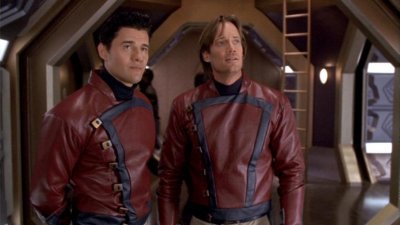
Kevin Kilner, as William Boone, was the original series lead, replaced by Robert Leeshock, as Liam Kinkaid, in the second season, succeeded by Jayne Heitmeyer, as Renee Palmer (who debuted in the third season), in the fifth season.  Others who appeared as series regulars throughout the five-year run from 1997 to 2002 included Lisa Howard (Lili Marquette), Richard Chevolleau (Augur), Leni Parker (Da'an), David Hemblen (Jonathan Doors), Anita La Selva (Zo'or), Melinda Deines (Street), Guylaine St-Onge (Juda), and Alan Van Sprang (Howlyn).  This constantly shifting cast line-up was a source of frustration for fans, but realistically reflected the volatile nature of the Resistance's efforts to thwart to an alien invasion that seemed on the surface to be totally benevolent.  Fortunes changed all the time.
via Earth: Final Conflict Wikia

My favorite character was Ronald Sandoval (Von Flores), who appeared throughout the series.  He dies a punk, but embodies the best of Earth: Final Conflict's instincts.  A few of the following episodes unabashedly feature Sandoval's unexpectedly nuanced role at its most dynamic, plus a few key developments otherwise:

1. "Sandoval's Run" (1x12)

Prior to this episode, as with most of the series, you may be forgiven to assume Sandoval is merely a stooge for the Taelons, the so-called Companions, helping to carry out their secret agenda.  Except he's as much victim as anyone.  Thanks to the CVI implant all Protectors receive (along with the Skrill weapon!), he's the opposite of what he'd otherwise be like (a parallel dimension seen in the second season episode "Dimensions" helps confirm this, where Sandoval is definitely one of the good guys).  Turns out his is a tragic story, worse than Boone's experiences from the pilot.

2. "Gauntlet" (2x11)

Expanding the mythology of the series by explaining who the Jaridians are and their relationship to the Taelons, this one hints at how the series ends.

3. "Crossfire" (2x22)

The end of the second season sees Jonathan Doors' bid to become President explode in his face as he clashes with his son and the Resistance seems to come to a tragic end.

4. "Thicker than Blood" (3x6)

Liam Kinkaid's surprising link to Sandoval is exposed to his allies, who find it difficult to reconcile, especially when it means they probably ought to save the dude's life, too.

5. "Atonement" (4x17)

Sandoval's great bid for redemption on his own terms is probably his greatest moment as a character.  Unfortunately it's all downhill from here.

6. "Boone's Awakening" (5x5)

As the title suggests, Boone returns, appearing for the first time since the first season finale, in a moment that helps explain the strange new circumstances for the final season, in which the Taelons and Jaridians have merged back together and become something worse.

7. "Final Conflict" (5x22)

The final episode of the series, in which Renee Palmer and Liam Kinkaid finally get to embrace humanity's destiny in space.

Classic opening theme (one of the best ever):


Wednesday, July 16, 2014

#758. Moxie Day Review!

You may remember me nattering on about Stephen King's 11/22/63, the book that happened to be set in my hometown of Lisbon Falls, ME.  For those who read it, you may remember the Kennebec Fruit Co. store run by Frank Anicetti.
via Sun Journal
King made up a few things (alas, no diner with a time portal exists, at least in Lisbon Falls), but he didn't make up what locals call the Moxie Store, or Frank.  You can't make up Frank.  Thanks to Frank and two preceding generations of Anicettis (the store recently celebrated a hundred years of business; yes, they used to sell fruit there), the Moxie Festival and Moxie Day itself, always celebrated on the second Saturday in July, came to town more than thirty years ago.  If you've never had Moxie, just know that it can be described both as "a treat" and "awful."  It's one of the original soft drinks, and still retains the vaguely medicinal nature they all had (really hard to believe though that is these days).  It's like Barq's root beer with...a different kind of bite, an aftertaste that always takes you by surprise.

Growing up in town, Moxie Day was a given, and it was increasingly a strange thing to realize we had something people came from all over the country to experience every year.  When I moved away in 2005, I began a ten year journey to experiencing Moxie Day all over again.

My oldest sibling, one of two sisters and the one who's older than me (not the one I spent that decade living with and/or near) has made an annual pilgrimage to Moxie Day for years.  She's been away since 1995, so I assume these visits are particularly special for her.  Half of Moxie Day this year was hanging out with her again for a extended period of time, which I hadn't done for a decade, another way this year's festivities were a way of closing a loop (a lot of my life is about closing loops, concluding journeys; don't worry, there are always loops to be closed).  She brought with her the whole family, husband and son, who happens to be my godson, whom I haven't actually seen since probably 2006, about two years into his life.

Also present and accounted for (besides my parents) were my brother (the middle child, older but not oldest brother) and his family, which includes two more nephews.  I've gotten to spend a great deal of time with these boys since returning to Maine last fall.  They're both young (five and two), which makes this an especially fun time to hang out with them.  

The highlight of Moxie Day is the parade and all the vendors who set up shop on Main St.  I got there a little early and slipped into the Moxie Store to at last have my own Moxie t-shirt (loop closed!), which I quickly slipped into (sorry, Rock Paper Scissors Lizards Spock from The Big Bang Theory!).  Walking around, I got to see what everyone was selling (either food, jewelry, or kiddie carnival games; Moxie Day is at heart a children's event with room for adults who want to have a good time).  This included my favorite part of Moxie Day, the library's book sale.  

I love browsing.  I guess for me that's the big difference between real world stores and online retailers.  In the real world you can come across things at random.  Often, online, you're looking for things you already know about.  (The big difference is that online you can find a lot of niche things.)  I know that's not always the case, but it takes less effort to find something unexpected, browsing a book sale.  (Plus you really can't beat the deal; $5 for a bagful.)  

I think it would have been the last time I got to enjoy Moxie Day that I found Thomas Pynchon's Mason & Dixon at the sale.  Most of the books in sales like this will not be a massive Pynchon tome.  But some of them will.  Here's what I got this year:
  • Agatha Christie's Murder Is Easy - I've never read Christie.  I know And Then There Were None was assigned reading for my three older siblings in school, but either I didn't have that class or it disappeared (a mystery that needs to be solved!) from the teaching agenda by the time I reached that year.  Although her best-known creation is Hercule Poirot, this is not part of the series.  (Loop closed.)
  • Winston Churchill's The Gathering Storm - Part of the famed British Prime Minister's history of WWII (six volumes in all).  
  • Eoin Colfer's Artemis Fowl: The Arctic Incident - The second of eight in the series, this was part of the great push in young readers publishing following the success of Harry Potter, and always seemed (along with Lemony Snicket's A Series of Unfortunate Events) one of the more inspired efforts.  I never got around to reading it, but after Colfer wrote the sixth book in the Hitchhiker's Guide to the Galaxy, er, trilogy, I figured I would have to get around to reading one of these eventually.  This was a recommendation from one of the attendants, a very welcome one.  (Loop closed.)
  • Stephen King's Bag of Bones - King (it seems appropriate, plus I was looking for him in the sale anyway, after unfortunately inserting most of my unread hardcovers into the great purge of 2013) has had a few phases in his career.  This book was part of a comeback that began while I was in high school (perhaps highlighted by The Green Mile).  Arguably since then there was also the Dark Tower Surge (to complete that seven book series) that followed it and the Books He Always Wanted to Finish period (I think recently concluded, featuring such novels as 11/23/63, Under the Dome, and Doctor Sleep), while of course the Everyone Loves Me 1980s era and his early success.  (This is a hardcover, by the way.)  (Loop closed.)
  • Michael Shaara's The Killer Angels - The popular work of Civil War literature that was later adapted into the film Gettysburg.  Always wanted to read this one.  (Loop closed.)
  • Gregory David Roberts' Shantaram - A book that used to stare at me expectantly when I worked at Borders, and also the subject of a rare customer recommendation.  So I finally have it (loop closed).  Another epic-sized (darn near a thousand pages) piece of fiction found in the book sale!
Drank some Moxie.  Ate some food.  Hung out with family.  Good times, good times.

Thursday, July 10, 2014

#757. Seven Reasons - Gene Roddenberry's Andromeda

In the late '90s, probably flush in what was a decade saturated in Star Trek, Majel Roddenberry helped bring two of her late husband Gene's other projects to television.  The first was Earth: Final Conflict, which was very similar to V.  The second was Andromeda, which was part of a TV space opera boom that decade that included Babylon 5 and Farscape.  Come to think of it, Andromeda was kind of a mix between those two.  It was an attempt to create an alternative to Star Trek saturated with wild sci-fi concepts heavily steeped in an ambitious mythology.

Fans tended to think of Andromeda in two ways: 1) it was developed by Star Trek: Deep Space Nine writer Robert Hewitt Wolfe and 2) it starred Kevin Sorbo.  A few years after the launch of Andromeda, another Star Trek alumni, Ron Moore, launched a very different kind of space opera in Battlestar Galactica.  Wolfe left Andromeda, famously, partway through the second season, taking with him any sense of creative integrity, at least as far as the fans were concerned.  Left behind was Sorbo, who had made his name previously in Hercules: The Legendary Journeys, which at some point had become better known as the series where Xena: Warrior Princess came from.

Long story short, Andromeda grew to have a poor reputation.  It's another thing I love that very few others do.  Here are seven episodes that showcase the series at its best:

1. "Under the Night" (first season)
via DVD Talk
First episode of the series, establishes the Systems Commonwealth and its fall from betrayal by the Nietzscheans as represented by Dylan Hunt (Sorbo) and his first officer and best friend, Rhade (Steve Bacic, who was far from done with Andromeda despite his character dying this episode).  The second hour, "An Affirming Flame," sets up the salvage crew who round out the rest of the cast and how Dylan hopes to revive the Commonwealth after being stuck in a black hole for three hundred years.

2. "Ouroboros" (second season)
via Andromeda Wikia
The episode where everything changes.  Wolfe's final episode.  Rev Bem (Brent Stait) departs as a series regular.  Harper (Gordon Michael Woolvett) finally loses the nasty Magog larvae he picked up at the start of the season.  Trance (Laura Bertram) switches from purple to gold, loses tail.  The prime example of just how wild the series could be with its science fiction.

3. "Immaculate Perception" (second season)
via Andromeda Wikia
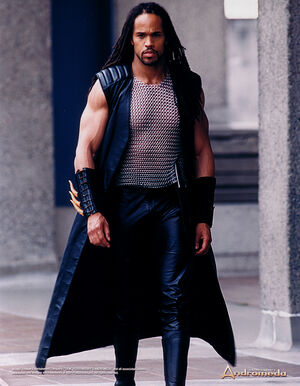
Probably the favorite character of just about every fan was Tyr Anasazi (Keith Hamilton Cobb, whom Jason Momoa can probably thank for his whole career).  Tyr was Dylan Hunt's constant rival, the consummate Nietzschean, incredibly cool, you name it.  When the decision was made to switch focus more heavily on Dylan, every fan assumed this would be at the expense of Tyr most of all.  His great arc begins with this episode, however, after the switch, as he conceives a son destined to be the messiah of his people (and genetic reincarnation of Drago Museveni , a name so awesome I could not pass up the opportunity to put in this series recap) and suddenly his loyalties, always reluctantly in Dylan's favor, shift.  The best character in his best episode.

4. "The Lone and Level Sands" (third season)
via Veehd
The great Tony Todd guest-stars in this episode that features the Andromeda version of Star Trek.

5. "The Unconquerable Man" (third season)
via Veehd
Is that Rhade, the dead Nietzschean, again?  Indeed!  This is before his genetic reincarnation, introduced in "Home Fires" a season earlier, becomes a regular in the fourth season.  That means this is the original, in an alternate life where he's the one, not Dylan, who survived the fight in "Under the Night."  Andromeda frequently meditated on fate, but this is certainly one of its more interesting efforts in that regard.

6. "Shadows Cast by a Final Salute" (third season)
via Sidereel
Although he returns for a handful of appearances in the fourth season (to be killed off), Tyr's farewell must be considered the highlight of Andromeda's stream of ambitious season finales.  This is the man bowing out on his own terms, switching allegiances but getting fond farewells from everyone anyway.

7. "The Heart of the Journey, Parts One and Two" (fifth season)
via OV Guide
The series finale, in which everything is resolved, including the Seefra System tangle, Trance's true nature and ultimate role, the fate of the Commonwealth.  Typically, Andromeda goes out big.

I haven't even mentioned Beka (Lisa Ryder), Rommie! (Lexa Doig), or Doyle (Brandy Ledford), three more strong ladies, or Beka's Uncle Sid (John de Lancie), or any number of exceptional elements or moments from the series.  If anyone ever made a movie out of Andromeda, I think more people would understand how awesome it really was.

LinkWithin

Related Posts Plugin for WordPress, Blogger...