Next year we'll get to further the conversation about Zack Snyder's Superman, once Batman v Superman: Dawn of Justice is finally released. Snyder's Man of Steel has been endlessly debated as being too dark, too unrepresentative of Superman in, ah, his best light.
Which prompts the question: What is Superman in his best light? Those who consider Snyder's Superman as too dark insist that the character should be beyond ordinary human pettiness, that he's a paragon of virtue, much like the old mantra of "Truth, Justice, and the American Way" always suggested, or the nickname pegging him as the Big Blue Boy Scout. After years of one-dimensional but crowd-pleasing movies based on Marvel comic book superheroes, Snyder's Superman is uncomfortably associated with Christopher Nolan's Batman (two out of three with titles literally including the word "dark," apparently just so there was no confusion).
They use as justification that Superman's origins include the famous adoption by a kindly Kansas farmer, who instilled in him good old American values. All this is very curious, however, because Superman's appearance in Man of Steel is in response, in many ways, to another ongoing debate entirely, to whether or not the character is still relevant at all. America has been at the reluctant forefront of the globalization idea for decades at this point. To say "...and the American Way" has been a part of Superman's legacy that has undergone as much reconsideration as Star Trek's "...where no man has gone before" (revised in The Next Generation to read "where no one has gone before"). So whose values does Superman represent? If we remove one part of the equation, where does the rest end up?
Actually, Superman's comic book counterpart has been examining that for years, mostly in obvious but interesting ways. One of the most famous examples is Superman: Red Son, in which the rocket from Krypton lands in Soviet Russia instead of Kansas. Interestingly, even though he becomes a Communist dynamo, Superman is still a hero with exceptional morals. If not Jonathan Kent, then who?
The question here is really the classic nature versus nurture. Superman's nature is actually pretty straightforward to analyze, not because of his alien origins but his awareness of them, his emerging abilities and what they mean about how he'll be able to interact with the world around him. Superman is a story about an outsider. This is what the best writers understand. That he chooses to help rather than hurt is an example all its own, and because he's the most famous superhero, by default Superman has always represented superheroes as a whole. But at the character's heart is something more complicated than that.
Defensive mechanisms always spring from ideas that are at first rejected by society as a whole. Tim Burton's Batman rejected Adam West's, went completely the other way, just as Joel Schumacher's was crafted as a response to Burton's, and Nolan's as a response to Schumacher's. Bryan Singer's Superman was meant as a continuation of Richard Donner's, the rare instance of accepting rather than rejecting (which isn't odd at all, since Singer's X-Men movies were patently created as allegories for the gay community, and his later visits have been to reintegrate new interpretations with the old) something that has come before. And yet, Snyder's Superman was clearly a rejection of Singer's (even while it was a continuation of Nolan's work).
Marvel's characters are only just beginning to see reinvention come into play (even though the Hulk took three tries to reach popular approval). Spider-Man's second cinematic life was rejected mostly because his first is still roundly celebrated. The Fantastic Four have gotten a reboot because their first appearances were deemed unsatisfying. Daredevil has gotten a new incarnation. You can imagine how poorly it'll go when Iron Man is played by someone else for the first time. Can you say George Lazenby?
When Snyder focuses on the effect Superman has around him, lets us see how the world develops around him, we see the character from an entirely new perspective. Superman normally is depicted as nearly instantly formed, everything he needed coming from his Smallville upbringing. He's seen as Moses to some people(rocket for a basket), and Jesus (another obscured development of a savior) to others. Yet he's just a comic book character, and he only means as much as the stories he's in, the impact he's allowed to have. If he's presented as "just" a great heroic figure, then he becomes just another action hero. Movies have plenty of those. What they don't have is Superman, one whose presentation is as confident as his legacy in the culture is to date. Later generations, you may need reminding, won't know or care what we thought. If the material doesn't speak for itself, Superman will slip into oblivion.
He has a chance to become something greater. Snyder recognizes that. He has a chance to embody everything his character suggests. If reduced to mere functionality, he's nothing. That's the simple truth. What does he say about good? What does he say about evil? Superman becomes a hero, in Man of Steel, because he doesn't have a choice. He feels compelled. He can do a thing, and so he does. He rescues people. His father, Jonathan Kent, cautions him to be fearful of the reaction. Because people fear what they don't understand. He'll be hounded. Nolan had his Batman hounded, too, but that was because he really was just a man. He could be chased. So inevitably, he would be. The consequences are different, however. Batman was always subject to human laws. Superman isn't. He transcends all of them. In time, this is something everyone is bound to discover. He's more than a man. He's an idea.
People tend to try and make every fictional character from the past to be a real person. They want to find the historical Robin Hood, the historical King Arthur. Or they want to make real people into fictional characters. They say Homer didn't exist, that Shakespeare didn't. People can be funny. They want Superman to transcend the one thing he shouldn't, which is internal logic. If presented with a given set of circumstances, despite variations, the end result is a man who becomes Superman. He's more than a superhero. If you believe that your life can have an impact on the world, you will believe in Superman. But to have that chance, you have to overcome great odds. So does Superman.
To achieve that, you have to overcome great obstacles. In Greek myth, Hercules (to be completely accurate, Heracles) had to undergo a series of legendary labors. This part of his story is thrilling. Less so the part where he's murdered by his ex-wife. Yet without that murder, the story is incomplete. You can't tell Superman's story properly without delving into the dark. Because otherwise he doesn't have a chance to shine.
Showing posts with label comic books. Show all posts
Showing posts with label comic books. Show all posts
Monday, July 20, 2015

Sunday, January 18, 2015
#788. The Top Ten Characters from America in the Past Hundred Years
 |
| via Paltry Meanderings |
Debuted in MASH: A Novel About Three Army Doctors (1968)
After more than a decade of Alan Alda's portrayal in the classic sitcom, it might need reminding that "Hawkeye" didn't even debut in the 1970 movie (played by Donald Sutherland), but in the pages of the Richard Hooker book. Thanks to the show, however, the character became arguably the iconic voice of 20th century war weariness, although equally an anti-authoritarian prankster and womanizer. Since Alda, it's become difficult to think of the good doctor in any other context, but the history alone has primed the character for further exploits, perhaps even centered squarely on him (which has already happened for his pal "Trapper" John, by the way). As the obvious leader of an ensemble, he always stood out anyway, and would likely do so all over again should he remain in that context.
 |
| via Comic Vine |
Debuted in: True Grit (1968)
After the Coens adapted the book a second time, everyone had a chance to remember that this character debuted in a novel by Charles Portis, not the John Wayne film adaptation from a year later. Yet the Civil War veteran's significance in Wayne's own history stands tall, not just for the fact that it earned him his Oscar, but remains one of the few names of any character fans will be able to remember with little effort, a fact that helped lead to a rare sequel, the eponymous 1975 film. That helps distinguish Cogburn as the most iconic fictional cowboy of the 20th century, when the archetype experienced a renaissance. But it may perhaps be more notable still that the focus isn't even on Cogburn himself, but the young girl he helps find justice.
 |
| via Entertainment Weekly |
Debuted in: The Terminator (1984)
The biggest surprise of the testosterone-heavy '80s action movies era is that its biggest icon is a woman, the mother of the hero. Sarah Connor's significance increased still more in the sequel, Judgment Day, when she has to prove she isn't crazy (a theme shared by many fictional female icons, including one on this list, and Ellen Ripley), and the later Sarah Connor Chronicles TV series. Before her son John could grow up to defeat the robotic uprising, Sarah not only had to survive attempts on her own life, but protect them both in further harrowing attacks from the future. Oh, and make time to romance the guy who happens to be the father. But you don't see him getting his own TV show, do you?
 |
| via Empire Online |
Debuted in: Red Dragon (1981)
"Hannibal the Cannibal" is a true 20th century monster, who needed only a handful of minutes of portrayal by Anthony Hopkins in the 1991 film Silence of the Lambs to become ingrained in popular culture. The creation of novelist Thomas Harris, who wrote four books, all of them adapted into film, based on the character, Lecter debuted onscreen in the 1986 thriller Manhunter, later remade after its namesake, Red Dragon. Recently revived all over again for television, Lecter's strange combination of cultural refinement and abject sadism is a stark update of the monster archetype, a symbol of the continuing obsession with serial killers, and is perhaps assured greater longevity in his original form than either "Hawkeye" Pierce or Rooster Cogburn, proving all over again the endurance of the written word.
 |
| via Oz and Ends |
Debuted in: The Wonderful Wizard of Oz (1900)
The lost little Kansas girl who introduced us to Oz is the oldest character on the list, the L. Frank Baum whose legacy grew substantially with the huge success of Judy Garland's portrayal in 1939's film adaptation, which wasn't even, in fact not nearly, the first such attempt. Dorothy appears in thirteen of Baum's original fourteen novels, not always as the lead. She made a return to the big screen in 1985's Return to Oz, which was controversial in the sense that she was no longer portrayed by Garland, she didn't sing, and yes, like Sarah Connor later, had ended up being considered crazy. Zooey Deschanel plays a contemporary version of Dorothy, "D.G.," in the 2007 TV miniseries Tin Man. A classic literary orphan figure, Dorothy's defeat of the Wicked Witch has lately begun to be overshadowed by the Wicked Witch herself, starting with Gregory Maguire's 1995 book Wicked, whose popularity increased when it was adapted to stage. For now, however, Dorothy remains the most popular Oz figure.
 |
| via Genius |
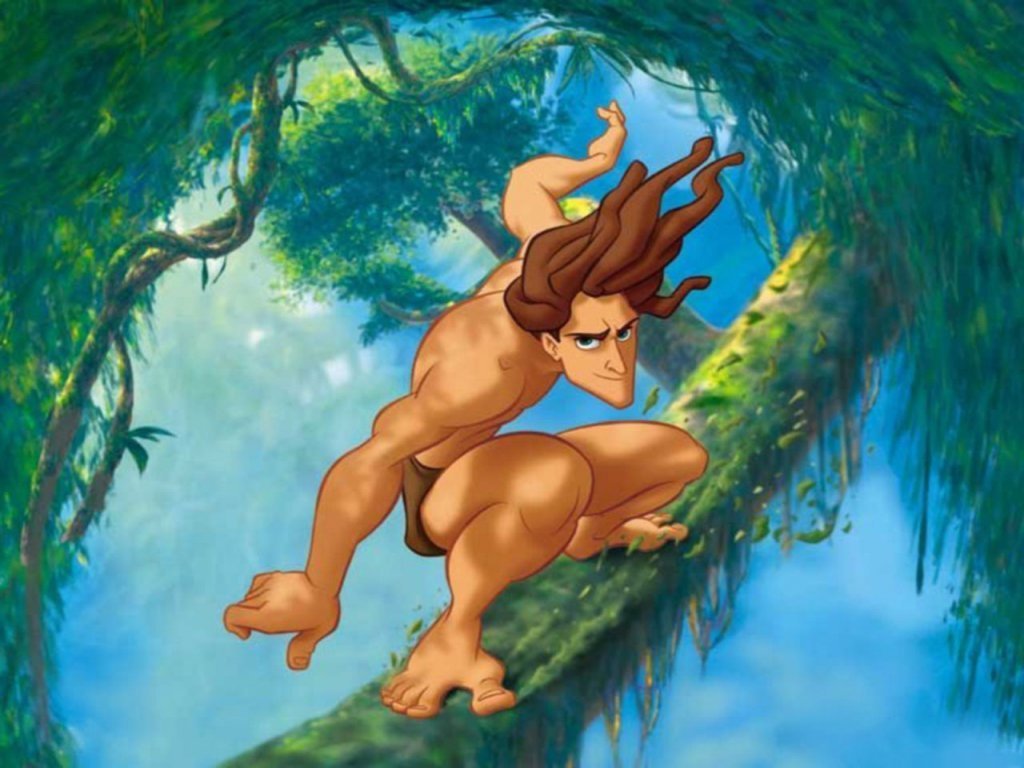
Debuted in: Tarzan of the Apes (1912)
Edgar Rice Burroughs first published Tarzan's debut in the pulp All-Story Magazine, then two years later on its own. Hollywood quickly and wildly embraced the character, a prototypical civilized man in an uncivilized world. A number of TV adaptations have also appeared, and among recent film appearances are 1984's live action Greystoke and Disney's animated version. It's worth noting that comic books have any number of characters inspired by Tarzan, from Ka-Zar to Sheena to Kraven the Hunter.
 |
| via Hollywood Reporter |
Debuted in: All-Story Weekly #2 (1919)
Another icon to emerge from the pulps is Johnston McCulley's creation, who like Tarzan has long been a favorite of Hollywood. A direct precursor to the idea of the superhero, much like the earlier Scarlet Pimpernel, Zorro is as much known for his mask as the man beneath it, an aristocrat who scoffs at the vigilante's adventures in his personal time. Clearly an inspiration for another character on the list, and in fact some versions literally an element of their origin, Zorro continues to be revived periodically, recently in the pages of comic books, which have curiously tended to leave him behind. Also of note is Isabel Allende's 2005 fictional revival, which took the character in more of a literary direction.
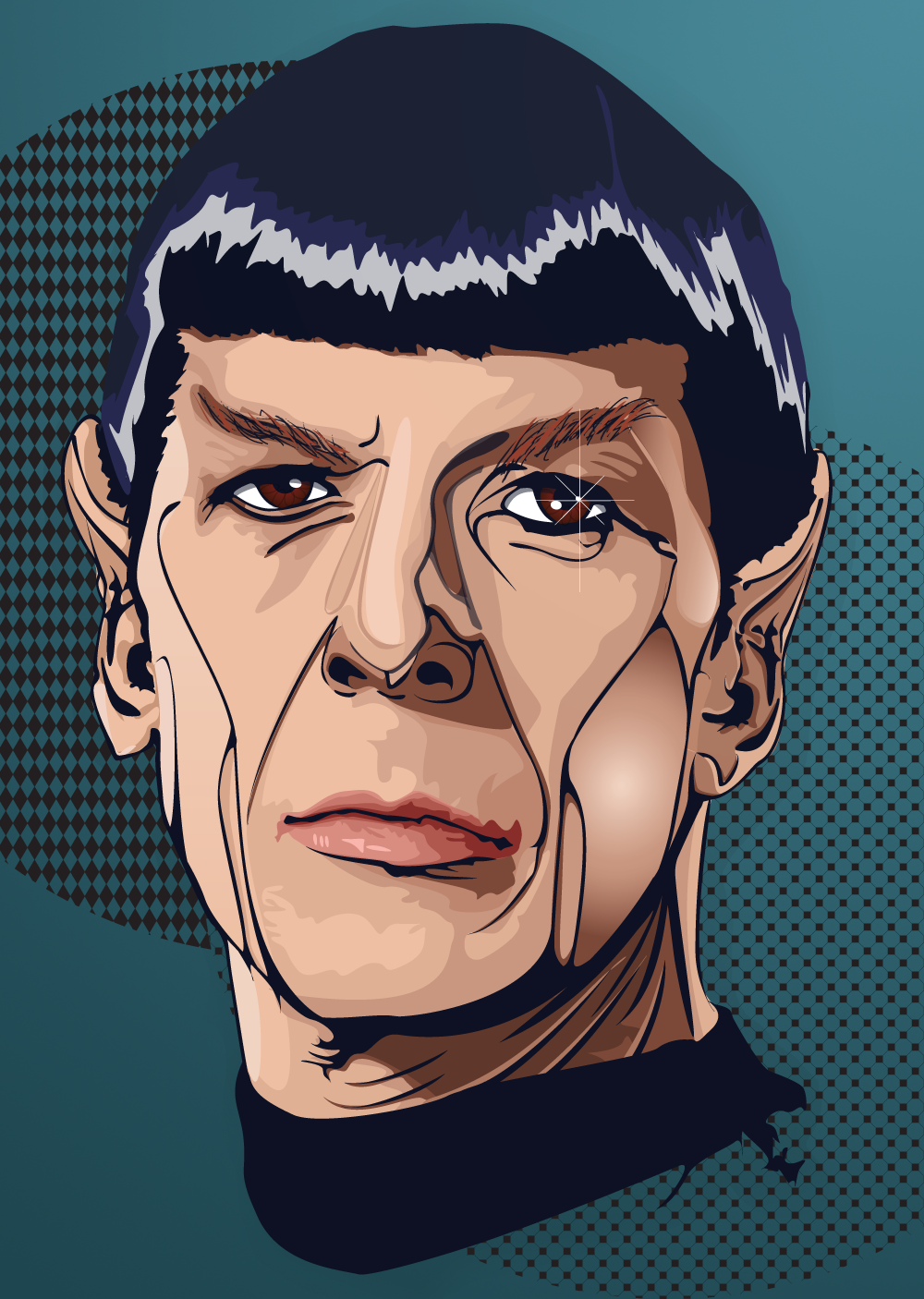
3. Spock
 |
| via The Plumber 702 |
Debuted in: "Where No Man Has Gone Before" (1966)
The lone holdover between the two pilots commissioned for the original Star Trek ("The Cage" was later spliced into the two-part "The Menagerie"), Spock is the iconic alien of the 20th century, and he looks very much human, doesn't he? A true representation of both our fears and hopes in that regard, Spock is a much-cherished colleague and friend who nonetheless still encounters xenophobic hostility. His cultural norms, and the ways he practices them, set Spock apart as much as his pointed ears. Spock quickly leaped ahead of Kirk, the intended lead character of what would become a whole franchise, a point emphasized in the 2009 reboot when the only returning actor, Leonard Nimoy, appeared alongside his successor in the role.
 |
| via Alpha Coders |
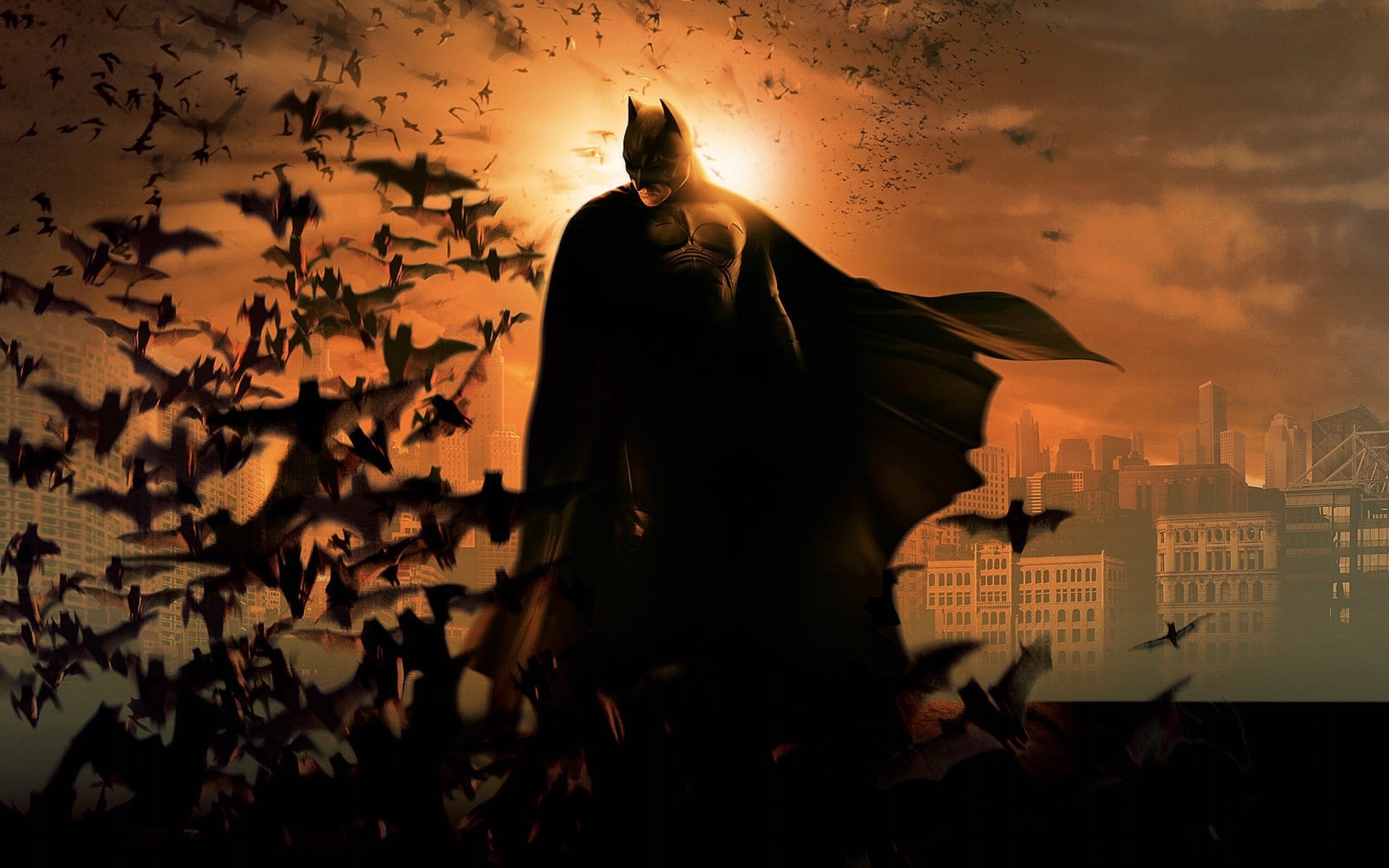
Debuted in: Detective Comics #27 (1939)
In a century dominated by superheroes, which is a phenomenon we see continue at the movies today, there remains none more iconic than Batman, created by Bill Finger and Bob Kane, a character that has weathered numerous interpretations, from the self-deprecating Adam West portrayal in the 1960s TV series to the brooding Christopher Nolan cinematic vision epitomized by 2008's The Dark Knight, as well as a constant surge of comic books from such creators as Alan Moore, Frank Miller, and Grant Morrison, all of whom converged in the late '80s to explore his past, present, and even future.
 |
| via Today |
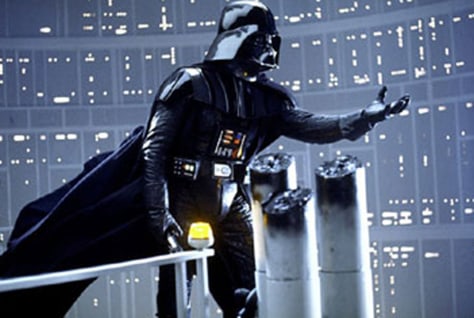
Debuted in: Star Wars (1977)
It's rare that the villain so decisively outshines the hero, but that's exactly what Darth Vader did from the start. In George Lucas's original vision, Vader as he's known now is nowhere to be found, but his screen debut proved immediately compelling, and the twist ending of The Empire Strikes Back created the opportunity to change the saga forever, which is what happened in a separate series of films as Anakin Skywalker's transformation from naive recruit to tragic figure and finally villain is explored in detail. A new kind of fictional icon that forever changed the landscape around him, Vader's is the story of a true antihero, whose improbable redemption comes in the form of a son who refuses to give up on him.
Sunday, January 11, 2015
#787. The Top Ten Characters from the British Isles of the Past Hundred Years
 |
| via Above Top Secret |
Debuted in: Hitchhiker's Guide to the Galaxy: The Primary Phase - Fit the Second (1978)
Douglas Adams made a huge impact on pop culture across radio, literature, television, and film with his creation of The Hitchhiker's Guide to the Galaxy. Out of all the memorable characters to populate what became best known for the original five books (Hitchhikers; The Restaurant at the End of the Universe; Life, the Universe, and Everything; So Long, and Thanks for all the Fish; Mostly Harmless), choosing the obnoxious Galactic President Zaphod seems like the best choice for an era filled with politicians most people would rather forget. Later featured in a spin-off short story (Young Zaphod Plays It Safe), this parody is so spot-on that the longer H2G2 endures the more likely that future iterations will gravitate more in Zaphod's direction, whenever someone has the opportunity to follow-up on Eoin Colfer's headstart (And Another Thing...). In the 2005 Hollywood version of Hitchhikers, Sam Rockwell offers an amusing taste of things to come.
 |
| via Comic Vine |
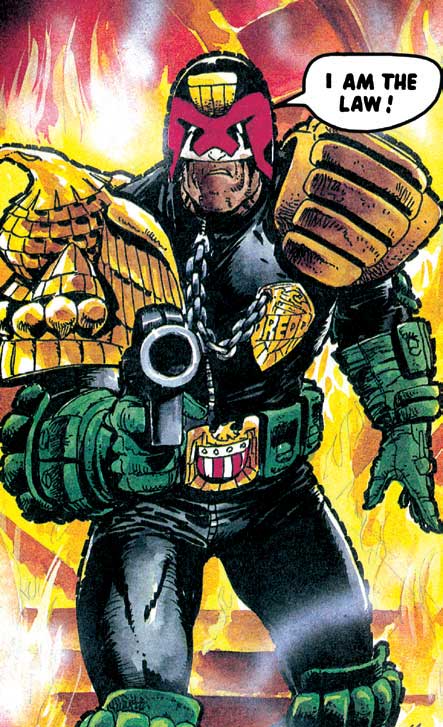
Debuted in: 2000 AD No. 2 (1977)
This iconic British creation is actually an American character, part of a future filled with a version of law enforcement that reflects its bleak landscape. A reliable comic book presence that has crossed over from his country of origin to series published by DC and IDW in the United States, Dredd has also been the subject of two films (1995's Judge Dredd and 2012's Dredd). Dredd's endurance over the years belies a relatively low profile compared to other creations on this list, but with his continued appearances makes a bigger and bigger statement to long-term viability.
 |
| via Comic Vine |
Debuted in: Sandman #1 (1989)
Neil Gaiman's version of a classic comic book superhero quickly became a full-blown literary phenomenon, helping launch DC's Vertigo line and establishing Gaiman's later widespread success. The original seventy-five issues of the series gave way to much-celebrated returns in the pages of Endless Nights and The Dream Hunters, as well as the current Overture. Joseph Gordon-Levitt is currently working on the character's big screen debut. Dream's sister Death, who became the quintessential Goth Girl, is another reason this one continues to endure in pop culture. Dream is also known as Morpheus, and represents one of the more philosophical creations from any culture in the past hundred years.
 |
| via Wired |
7. Gollum
6. Aslan
5. Mary Poppins
1. Harry Potter
Debuted in: The Hobbit (1937)
It's safe to say that J.R.R. Tolkien, like Douglas Adams, is responsible for more than one memorable character, but Gollum in particular skyrocketed in the popular consciousness after Peter Jackson's depiction of him in his adaptations of The Lord of the Rings, particularly thanks to the much-acclaimed motion-capture performance of Andy Serkis. A portrait of abject corruption, Gollum is surprisingly one of the more nuanced characters on this list, a conflicted individual who sometimes literally argues with himself over doing the right thing. His first appearance, however, depicted a still more complicated version, as a playful Sphinx figure who delights in riddles. Not bad for someone who embodies obsession...
 |
| via Narnia Wikia |
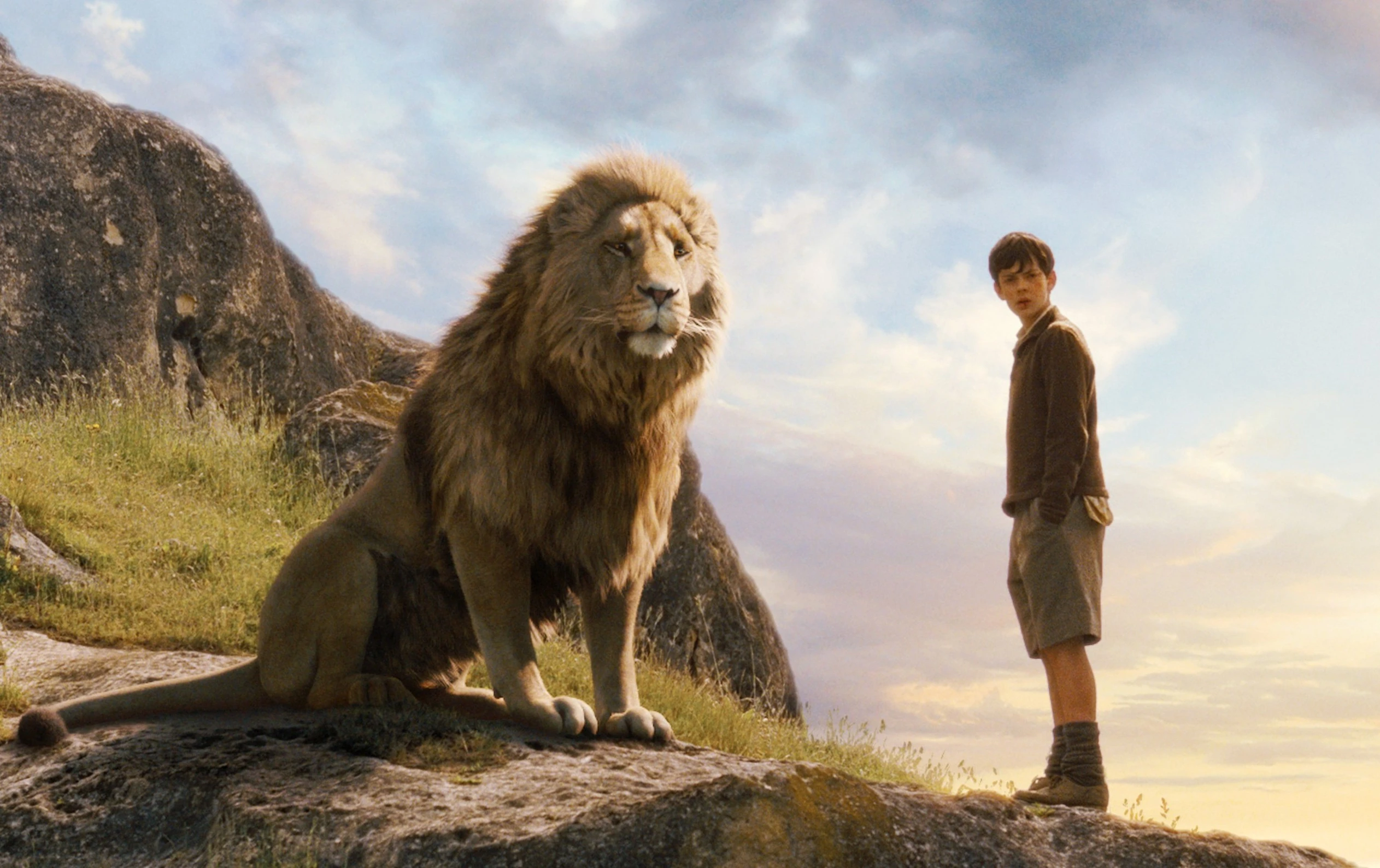
Debuted in: The Lion, the Witch, and the Wardrobe (1950)
Well, unlike Adams and Tolkien, C.S. Lewis probably knew exactly which character from his books outshone the rest. That would be the eponymous lion, Aslan, who leads the Pevensie kids and later groups of Narnia heroes to eventual victory in The Last Battle. Various screen adaptations led to Liam Neeson voicing him starting with 2005's Lion. Lewis plainly used Aslan as a religious allegory, but you don't need to care about the symbolism to know that his brutal murder in Lion is the most affecting scene of the series and one of the defining moments for any character on this list.
 |
| via Broadway |
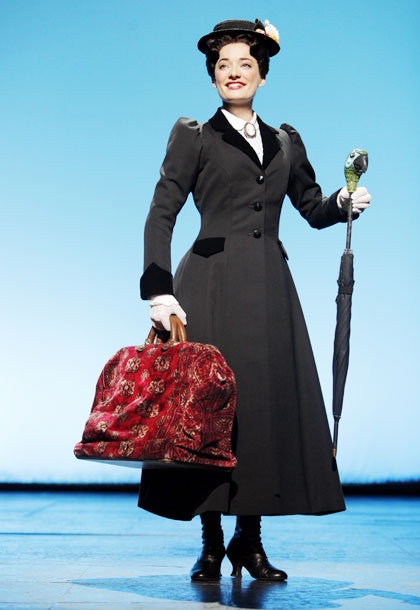
Debuted in: Mary Poppins (1934)
The star of eight books (Poppins, Mary Poppins Comes Back, Mary Poppins Opens the Door, Mary Poppins in the Park, Mary Poppins From A to Z, Mary Poppins in the Kitchen, Mary Poppins in Cherry Tree Lane, and Mary Poppins and the House Next Door) was popular before the 1964 film, but chances are she endures most because of the film. The torturous journey from book to film was the subject of the 2013 movie Saving Mr. Banks, in which a battle of wills is pitched between creator P.L. Travers and Walt Disney. Mary may be reflective of how others from the list may age as the years advance, but she's a remarkable entirely of her own accord, a modern fairy tale creation about the transformative potential in both kids and adults.
 |
| via Audioboom |
4. Doctor Who
Debuted in: Doctor Who: An Unearthly Child (1963)
The Doctor's significance has increased in recent years as he becomes more and important as the most significant British TV character around the world. It doesn't hurt that after fifty years he remains one of the most unique fictional creations to emerge from anywhere, who has survived more than a dozen portrayals (including an unofficial one in the form of Peter Cushing from 1965's Doctor Who and the Daleks and 1966's Daleks - Invasion Earth: 2150) without skipping a beat thanks to a built-in explanation concerning regeneration. In recent years Doctor Who has even had a number of spin-offs (Torchwood and The Sarah Jane Adventures). It might also be noted that Douglas Adams first envisioned H2G2 as a story of the Doctor.
3. James Bond
2. Peter Pan
 |
| via NPR |
Debuted in: Casino Royale (1953)
Ian Fleming created a prototypical spy in his fourteen books, but he likely had no idea how big 007 would become after Sean Connery appeared as the character for the first time in 1962's Dr. No. Bond had previously been adapted to screen in a 1954 TV version of Royale, which was also adapted in one of several noncanonical films, with David Niven's portrayal in 1967 and later again with the reboot films starring Daniel Craig. Various authors have continued the literary exploits, but Bond, James Bond has become one of the most significant film characters ever, arguably the single most important one.
 |
| via Today |
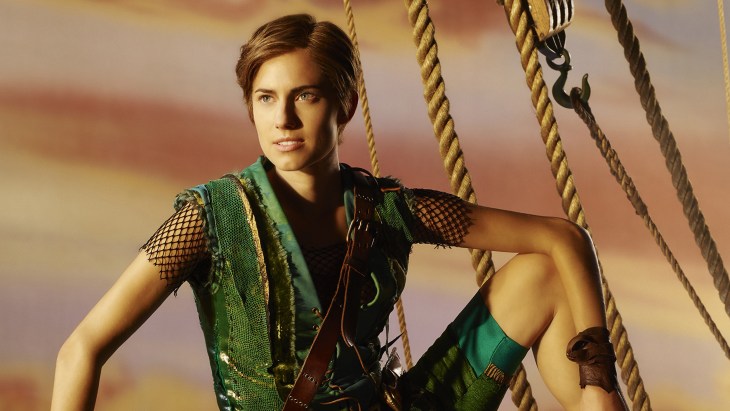
Debuted in: The Little White Bird (1902)
The oldest character on this list had a complicated path to full-blown exposure. Author J.M. Barrie adapted his creation for the stage in 1904's Peter Pan, or the Boy Who Wouldn't Grow Up, and then back into literature for 1911's Peter and Wendy. Yet his legacy kept building. Disney included him in its series of animated films with 1953's Peter Pan, a modern live adaptation was made in 2003, Spielberg created his version of a sequel with 1991's Hook, and Barrie's own story was told in 2004's Finding Neverland. Dave Barry and Ridley Pearson have a series of books that take an alternate look at the mythology that were later adapted to stage as Peter and the Starcatcher. 2006's Peter Pan in Scarlet was officially commissioned by the Great Ormond Street Hospital, which received the copyright from Barrie in 1929. The Doctor, Bond, and Peter all serve as unique insights into modern England, how its countrymen view themselves. Notably, they're all isolated figures who can count on the support of others, but most often exist in isolation, surely a statement on the post-empire era.
 |
| via Geek Tyrant |
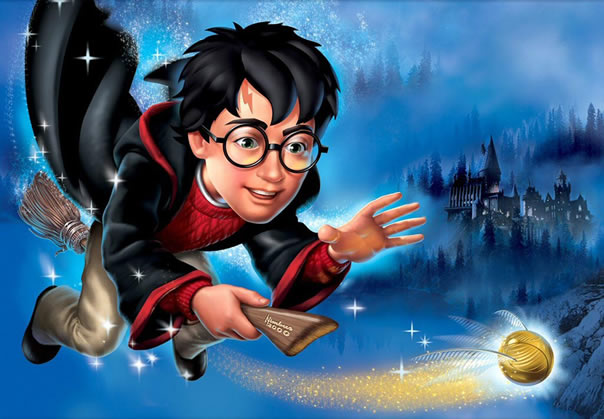
Debuted in: Harry Potter and the Philosopher's Stone (1997)
Is it too early? Does Mary Poppins offer an example of what early fame can lead to, without the intervention of other media? Except Harry has already leaped into the adaptation phase, and led the whole modern thrust for franchises at the box office. By the time of 2004's Harry Potter and the Goblet of Fire, J.K. Rowling's creation had become a global phenomenon, a series of books that children of all ages eagerly embraced. Harry's world includes the sum of every other character on this list (the Doctor himself is a space-age wizard), an orphan figure on a massive quest against evil and general acceptance, who navigates a story filled with every imaginable obstacle, dirty politicians, self-centered jerks, secret agents, committed allies, and nurturing support that otherwise keeps him learning his own lessons. Since 2007's Harry Potter and the Deathly Hallows, Rowling has insisted she won't write anymore Harry Potter adventures themselves (echoing the most significant British character of a century earlier, Sherlock Holmes), though she has since written additional stories around him. Like Star Wars before him, Harry is a perfect representation of what it takes to dominate pop culture, make an impact early and make it stick. Will kids still read the books as eagerly as they did a decade ago, will the films last? The further careers of Daniel Radcliffe and Emma Watson may be one indication. Yet in time, there will be other adaptations, and if history is any proof, Rowling won't stay away from Harry forever, whatever that ultimately means, whether additional short looks as she's done lately, or more books...Harry is a statement on tradition, the present, and a cautionary tale for the future. Countless imitators and competitors sprang up in his wake, yet none of them have captured the sheer breadth of his achievements to date. As with the others on this list, this is a story that continues. And that's what it's all about.
Sunday, January 04, 2015
#784. Do not go gentle into that good night
Dylan Thomas originally published the poem "Do not go gentle into that good night" in 1952. I'm writing about it today because it seems to have become the latest go-to poem in pop culture, succeeding Yeats' "The Second Coming."
Need reminding what "...into that good night" is? Here it is:
Do not go gentle into that good night,
Old age should burn and rave at close of day;
Rage, rage against the dying of the light.
Though wise men at their end know dark is right,
Because their words had forked no lightning they
Do not go gentle into that good night.
Good men, the last wave by, crying how bright
Their frail deeds might have danced in a green bay,
Rage, rage against the dying of the light.
Wild men who caught and sang the sun in flight,
And learn, too late, they grieved it on its way,
Do not go gentle into that good night.
Grave men, near death, who see with blinding sight
Blind eyes could blaze like meteors and be gay,
Rage, rage against the dying of the light.
And you, my father, there on the sad height,
Curse, bless, me now with your fierce tears, I pray.
Do not go gentle into that good night.
Rage, rage against the dying of the light.
Most notably, Michael Caine recites it in Christopher Nolan's Interstellar:
Strangely, wrestler John Cena has also done a version:
And I've seen it referenced in the pages of Grant Morrison's Annihilator. I am likely among a very select few to have noticed such a common link, between movies, professional wrestling, and comic books.
Caine's reading is particularly haunting as he intones "rage, rage" in his deepest range, creating an evocative effect as his character propels a team of astronauts into the unknown. It's a message, I think, that like "The Second Coming" speaks to our uncertainties about the future, which seems to have become the mantra of our modern age, though issued as a note of defiance. (In case you were wondering, WWE, like Levis, does tend to use classic literary references more often than you'd think.)
As a student of literature, I like seeing nods like this, especially if they're striking, as this one is in each of the instances I've spotted it lately.
Need reminding what "...into that good night" is? Here it is:
Do not go gentle into that good night,
Old age should burn and rave at close of day;
Rage, rage against the dying of the light.
Though wise men at their end know dark is right,
Because their words had forked no lightning they
Do not go gentle into that good night.
Good men, the last wave by, crying how bright
Their frail deeds might have danced in a green bay,
Rage, rage against the dying of the light.
Wild men who caught and sang the sun in flight,
And learn, too late, they grieved it on its way,
Do not go gentle into that good night.
Grave men, near death, who see with blinding sight
Blind eyes could blaze like meteors and be gay,
Rage, rage against the dying of the light.
And you, my father, there on the sad height,
Curse, bless, me now with your fierce tears, I pray.
Do not go gentle into that good night.
Rage, rage against the dying of the light.
Most notably, Michael Caine recites it in Christopher Nolan's Interstellar:
Strangely, wrestler John Cena has also done a version:
And I've seen it referenced in the pages of Grant Morrison's Annihilator. I am likely among a very select few to have noticed such a common link, between movies, professional wrestling, and comic books.
Caine's reading is particularly haunting as he intones "rage, rage" in his deepest range, creating an evocative effect as his character propels a team of astronauts into the unknown. It's a message, I think, that like "The Second Coming" speaks to our uncertainties about the future, which seems to have become the mantra of our modern age, though issued as a note of defiance. (In case you were wondering, WWE, like Levis, does tend to use classic literary references more often than you'd think.)
As a student of literature, I like seeing nods like this, especially if they're striking, as this one is in each of the instances I've spotted it lately.
Wednesday, July 30, 2014
#760. Return of the Outlaw
As a big fan of Colin Farrell, I like rewatching his films. Even the ones I'm not immediately a big fan of. Sometimes especially those, to figure out if he might have a dud in his filmography. The last time I successfully changed my opinion of one, it was Pride and Glory. It's one I liked in the past, but never really completely got. But originally, I didn't and probably couldn't properly appreciate the creative minds behind it, namely screenwriter Joe Carnahan and director Gavin O'Connor. Carnahan's reputation has inexplicably dropped over the years, but I still love him. He's the director behind films like Narc and Smokin' Aces (his most recent release was The Grey, although his latest one, Stretch, lost its release date earlier this year and its fate is still undetermined). O'Connor is the director behind one of my instant all-time favorites, Warrior. Pride and Glory itself is a a wonderful mix between Carnahan and O'Connor's best instincts. Farrell plays Edward Norton's adopted brother. It's one of those cops-behaving-badly movies, but it's more about the nature of personal compromise. Norton's character isn't clean himself, but he's trying to do the right thing. There's a moment where Farrell's character realizes he's made a terrible mistake, but he's still headed toward an ending similar to Training Day's.
Anyway, the most recent rewatch effort was American Outlaws. This was Farrell's first Hollywood effort after his sensational breakthrough role in Tigerland. In a lot of ways, Outlaws is a kind of sequel. In Tigerland he plays an Army recruit who bucks the system as he prepares to ship out to Vietnam. In Outlaws he's Jesse James. I always had a problem getting into it because it's relatively lighthearted (director Les Mayfield is appropriately better known for his comedies like Blue Streak and Flubber), and really, by the time I'd caught up with it, I was better acquainted with the cinematic Jesse James in The Assassination of Jesse James by the Coward Robert Ford (another instant all-time favorite). Outlaws is the opposite of Coward Robert Ford (the outlaw in question there is played by Brad Pitt). But last night I think I successfully stayed awake during the whole thing for the first time (despite how that sounds, I can fall asleep during any movie).
And I kind of like it better. It's no classic, but it does explain the idea of the charismatic outlaw pretty well. This is an archetype that has a long history in the lore of the West. Not the Western, but the West. From Moses to Robin Hood to Jesse James, those who buck the system tend to claim outsize reputations in the popular imagination. We're constantly sold on the idea that it's best to be the mainstream, to position yourself to represent the mainstream, or outright reject it. But to take it on is another matter entirely. Outlaws aren't always criminals. But they're harder to find than it might seem. More like Malcolm X than Martin Luther King, Jr.
The idea of cowboys and certainly their traditional depiction in the movies, all those Westerns, seems to have tried it best to avoid the idea of the outlaw. I'm not talking about the white hats, the good guys like the Lone Ranger, John Wayne and the Man With No Name. No matter how tenuously these cowboys interact with society at large, they don't separate themselves because they have to but because they want to. The outlaw never has that choice. They take an unpopular stance and stake their life on it.
Now, whatever Jesse James actually was, it's likely he doesn't fit the romantic ideal of the outlaw. Robin Hood he was not. But he's pretty close. So his return to the movies, starting with American Outlaws (the romantic interpretation) and culminating in Assassination of Jesse James (the realist interpretation) is an interesting development.
My argument is about to shift to different territory, by the way.
I believe these movies may have made it safe for something else to change. Comic book superheroes, to be exact. Since their inception these characters have always been seen as vigilantes, sure, some of them moreso than others. Yet very few writers have ever explored what that actually means. I'm not talking how "dark" the depiction. I'm talking about their relationship to society at large. Not in an X-Men sense. Not quibbling over what powers they have, if people are supposed to be bigots about them. As to whether or not they are, well, outlaws.
Starting with Christopher Nolan's The Dark Knight, I think that changed. Westerns hadn't been popular for years. Jesse James became acceptable material the more subversive the genre could become again. And because of that, these films opened room for the archetype of the outlaw to be reintroduced. Nolan realized this opportunity. One of my favorite moments in Dark Knight was its ending, when Batman realizes that in order to have a semblance of victory he would have to transform himself into a pariah. His activities, naturally, were never sanctioned by the law. Tolerated, yes, considered useful. But he was always on the right side of society. He was a good guy. Until he had to make it look otherwise. And so he officially became an outlaw.
Grant Morrison picked up this thread in his run on Action Comics with Superman. He claimed he was drawing inspiration from the icon's origins, but if that's true, it's a legacy that has been completely forgotten. This was a Superman who was not afraid of taking on the establishment, fighting corruption at the very top. It's a notion that was carried over into Man of Steel, where Superman is an outsider instantly mistrusted not by Lex Luthor but the U.S. government.
I mean, everyone thinks of Superman as the Big Blue Boy Scout, right?
And yet, with just a little effort, he too becomes an outlaw. This is not a darkening of the character. This is an acknowledgment that superheroes, basically, are inherently outlaws. It's taken the bulk of century to realize, but there it is.
I think this is a good thing. Cultural critics have often deemed superheroes to be a juvenile concept. Who else but children and entertainment escapists could take them seriously? Even with the current cinematic popularity they enjoy, most of those hits come from movies that take them with a grain of salt. Films like The Dark Knight and Man of Steel are the exception.
They ought to become the rule.
Americans love their outlaws. Our whole country was built on outlaws. Somewhere along the way, I think we forgot that. This is not necessarily a bad thing. I'm not advocating some weird political agenda here, but rather suggesting that perhaps it's time to remember that fact. We need figures who are comfortable bucking the mainstream. Fighting it. Well, not so much fighting it as fighting for it. These figures don't have to be real. Most of the time they aren't.
The real Jesse James doubtlessly sported a lot of rough edges. But the idea of Jesse James endures. And lives on in Batman, in Superman. Movies have a unique ability to remind us of this. Even the ones that seem like throwaway adventures might have something profound to say. Even if the audience isn't listening, filmmakers themselves are. And they respond to each other. American Outlaws itself is similar to the earlier Young Guns, a movie about Billy the Kid. But I like to think because of Outlaws we got The Dark Knight, and the Superman in Man of Steel. Which I think is a good thing.
Perhaps that's why he always fought for "truth, justice, and the American way."
Anyway, the most recent rewatch effort was American Outlaws. This was Farrell's first Hollywood effort after his sensational breakthrough role in Tigerland. In a lot of ways, Outlaws is a kind of sequel. In Tigerland he plays an Army recruit who bucks the system as he prepares to ship out to Vietnam. In Outlaws he's Jesse James. I always had a problem getting into it because it's relatively lighthearted (director Les Mayfield is appropriately better known for his comedies like Blue Streak and Flubber), and really, by the time I'd caught up with it, I was better acquainted with the cinematic Jesse James in The Assassination of Jesse James by the Coward Robert Ford (another instant all-time favorite). Outlaws is the opposite of Coward Robert Ford (the outlaw in question there is played by Brad Pitt). But last night I think I successfully stayed awake during the whole thing for the first time (despite how that sounds, I can fall asleep during any movie).
And I kind of like it better. It's no classic, but it does explain the idea of the charismatic outlaw pretty well. This is an archetype that has a long history in the lore of the West. Not the Western, but the West. From Moses to Robin Hood to Jesse James, those who buck the system tend to claim outsize reputations in the popular imagination. We're constantly sold on the idea that it's best to be the mainstream, to position yourself to represent the mainstream, or outright reject it. But to take it on is another matter entirely. Outlaws aren't always criminals. But they're harder to find than it might seem. More like Malcolm X than Martin Luther King, Jr.
The idea of cowboys and certainly their traditional depiction in the movies, all those Westerns, seems to have tried it best to avoid the idea of the outlaw. I'm not talking about the white hats, the good guys like the Lone Ranger, John Wayne and the Man With No Name. No matter how tenuously these cowboys interact with society at large, they don't separate themselves because they have to but because they want to. The outlaw never has that choice. They take an unpopular stance and stake their life on it.
Now, whatever Jesse James actually was, it's likely he doesn't fit the romantic ideal of the outlaw. Robin Hood he was not. But he's pretty close. So his return to the movies, starting with American Outlaws (the romantic interpretation) and culminating in Assassination of Jesse James (the realist interpretation) is an interesting development.
My argument is about to shift to different territory, by the way.
I believe these movies may have made it safe for something else to change. Comic book superheroes, to be exact. Since their inception these characters have always been seen as vigilantes, sure, some of them moreso than others. Yet very few writers have ever explored what that actually means. I'm not talking how "dark" the depiction. I'm talking about their relationship to society at large. Not in an X-Men sense. Not quibbling over what powers they have, if people are supposed to be bigots about them. As to whether or not they are, well, outlaws.
Starting with Christopher Nolan's The Dark Knight, I think that changed. Westerns hadn't been popular for years. Jesse James became acceptable material the more subversive the genre could become again. And because of that, these films opened room for the archetype of the outlaw to be reintroduced. Nolan realized this opportunity. One of my favorite moments in Dark Knight was its ending, when Batman realizes that in order to have a semblance of victory he would have to transform himself into a pariah. His activities, naturally, were never sanctioned by the law. Tolerated, yes, considered useful. But he was always on the right side of society. He was a good guy. Until he had to make it look otherwise. And so he officially became an outlaw.
Grant Morrison picked up this thread in his run on Action Comics with Superman. He claimed he was drawing inspiration from the icon's origins, but if that's true, it's a legacy that has been completely forgotten. This was a Superman who was not afraid of taking on the establishment, fighting corruption at the very top. It's a notion that was carried over into Man of Steel, where Superman is an outsider instantly mistrusted not by Lex Luthor but the U.S. government.
I mean, everyone thinks of Superman as the Big Blue Boy Scout, right?
And yet, with just a little effort, he too becomes an outlaw. This is not a darkening of the character. This is an acknowledgment that superheroes, basically, are inherently outlaws. It's taken the bulk of century to realize, but there it is.
I think this is a good thing. Cultural critics have often deemed superheroes to be a juvenile concept. Who else but children and entertainment escapists could take them seriously? Even with the current cinematic popularity they enjoy, most of those hits come from movies that take them with a grain of salt. Films like The Dark Knight and Man of Steel are the exception.
They ought to become the rule.
Americans love their outlaws. Our whole country was built on outlaws. Somewhere along the way, I think we forgot that. This is not necessarily a bad thing. I'm not advocating some weird political agenda here, but rather suggesting that perhaps it's time to remember that fact. We need figures who are comfortable bucking the mainstream. Fighting it. Well, not so much fighting it as fighting for it. These figures don't have to be real. Most of the time they aren't.
The real Jesse James doubtlessly sported a lot of rough edges. But the idea of Jesse James endures. And lives on in Batman, in Superman. Movies have a unique ability to remind us of this. Even the ones that seem like throwaway adventures might have something profound to say. Even if the audience isn't listening, filmmakers themselves are. And they respond to each other. American Outlaws itself is similar to the earlier Young Guns, a movie about Billy the Kid. But I like to think because of Outlaws we got The Dark Knight, and the Superman in Man of Steel. Which I think is a good thing.
Perhaps that's why he always fought for "truth, justice, and the American way."
Sunday, April 06, 2014
#718. I owe an apology to the Geek Twins
So, I owe an apology to the Geek Twins. The Twins are also known as Nigel and Maurice Mitchell (I have no idea if they have particular preferences as to which one's name is listed first when they aren't referred to merely as the Twins; this could be like Lennon & McCartney, Simon & Garfunkel, Batman & Robin, and now I owe them another apology).
Back on St. Patrick's Day, they talked about an appropriately green-themed topic, the Incredible Hulk, some of the things a new movie might do should Marvel ever get around to it. You can read it here. In the comments section, you can read what I said and why I'm apologizing now, because I've reconsidered. I think it probably would be pretty cool to feature the likes of Rick Jones, Doc Sampson, and The Leader in a new Hulk movie.
Now, it's also necessary to talk about the other Hulk movies to date. There have, of course, been two solo adventures as well as his memorable theft of The Avengers itself. Seriously, isn't that one more appropriately known as Hulk & the Avengers (rather than, say, The Avengers & Hulk)?
I'm actually a pretty big fan of the 2003 Ang Lee effort Hulk. This was one of the original Marvel universe movies. Only Blade, X-Men, Blade II, Spider-Man, X2: X-Men United, and Daredevil precede it (effectively predating Hulk to the whole Fantastic Four and Avengers franchises). While that list certainly makes Hulk seem like a regular Johnny Come Lately, the fact that Lee directed it puts the movie in a different tradition than it's generally considered. Without Lee it's possible we would never have had Christopher Nolan do Batman. Famously, a different actor has portrayed Bruce Banner in each of his cinematic appearances to date. The first was Eric Bana, a hugely talented, unorthodox actor who is known for a subdued presence, which is about as opposite as you can have for the jade giant known as the Hulk. Besides Bana there's also Jennifer Connelly (always an asset) as Betty Ross and Nick Nolte as Banner's father David, who does end up becoming a typically overblown villain. But what I love about the movie is that it also tries to be Shakespearean with the Banner family, which is probably also why fans ended up scratching their heads over the effort. Shakespearean? In a Hulk movie? It's actually the Hulk moments I don't particularly care for, the big dumb idiot bouncing around, battling Hulk dogs, tanks, etc. Everything the movie is otherwise is lost in those moments, as far as I'm concerned exposing the true weakness of the character by demonstrating he can be reduced to something so ridiculously simple, not even a monster to be rooted for. Just the man who doesn't want to become it. And with good reason, all the way around!
Right after the release of Iron Man, the start of the Avengers cycle, the second release was The Incredible Hulk in 2008, starring Edward Norton, another long-time favorite actor, known for his cerebral approach. The fact that the movie didn't really know what to do with Norton pretty much explains everything that's wrong with it, as well as the fact that it was equally at a loss with Jeff Bridges, a year away from winning Best Actor at the Oscars for Crazy Heart. The story certainly does a number of things right, the classic Hulk story of being on the run (which was the whole Fugitive approach of the 1977-1982 TV series starring Lou Ferrigno) as well as the debut of Doc Sampson (portrayed by Ty Burrell!). It ties in well with Hulk's later appearance in The Avengers. Generally, though, this one's considered even more of a failure than its predecessor. You know it had to be when every Avengers flick since then has been favorably received.
Speaking of which, Avengers itself was one of the biggest blockbusters ever, and a considerable portion of its success is owed to Hulk, this time portrayed by Mark Ruffalo. I can't say I'm nearly as big a fan of Ruffalo as Bana or Norton, but I certainly respect him, best known until turning green for his quiet presence in much smaller dramas. And he's absolutely perfect in the role, probably much more natural than the other two, thanks in large part to the fact that in a reduced presence much greater focus was necessary, so that it was much easier to nail what exactly Banner, and the Hulk, needed to accomplish.
It might also be noted that one of the strengths of Ruffalo's portrayal was that he had someone to work off of, Scarlet Johansson's Black Widow. And this is where my apology begins. I originally noted in the Geek Twins' observations that the character of Betty Ross (who in Incredible Hulk was played by Liv Tyler) served the function of the bridge between Banner and Hulk adequately and therefore it was unnecessary to present someone else in a similar position. I didn't see how it would do much good to have another comic book character with a basically similar dynamic (albeit minus romantic elements!).
Then I started absorbing the trailers for Captain America: The Winter Soldier. I've never really understood the point of the Falcon character. In the comics, as far as I can tell he's just kind of there, a random partner. In Marvel logic, you can throw anyone together as a team. It just doesn't matter. Luke Cage & Iron Fist. Cable & Deadpool. Spider-Man & the Avengers. Captain America, of course, once had the sidekick Bucky, who was lost in WWII.
But in the trailers, Falcon shows up and...he's seems to become the bridge. He's someone who accepts Captain America as something other than the dude who was woken up from the WWII era to become a member of the Avengers. No other member of the team has an ally like that. Thor certainly wouldn't consider Loki that way, not even the Warriors Three. Iron Man? James Rhodes sort of counts. Okay, he's about as close as they come. (It doesn't hurt that Rhodes has been played by a couple of excellent actors in Terrence Howard and Don Cheadle, just as Falcon is by Anthony Mackie, who's been a favorite since We Are Marshall.)
Hulk probably needs someone like Falcon. And he's got some supporting characters like that, including Doc Sampson. I didn't want to consider Doc a possibility, because I feared he'd become just another idiotic foe who smashes things on the screen. In the comics, he can be enemy and ally. In the movies, it seems guaranteed he would an enemy, at least at some point in the story. He's one of several characters who has also gotten a dose of gamma radiation, which has had vague effects on him. What Doc could easily do is give Hulk a counterpoint, something that could give him hope and also show how things could be worse. He could even become a professional athlete, subtly point out the PED analogies that already exist in the character of Captain America that haven't really been addressed. He could even be the bridge between Hulk and the Captain (which as of Incredible Hulk also exists in the movies as part of their origin stories). That would be pretty awesome.
The Leader I was equally fearful of, because two Hulk movies have already given us a pair of villains who have been blown up to Hulk proportions to give him another monster adversary, and no matter what Leader's character description in the comics, you know the movies would want more of a fight than a cerebral showdown. But it could work both ways! The Leader's gamma radiation made him smarter. Like Doc Sampson he got something totally different from it than Bruce Banner. He serves, then, as a counterpoint to our main character. He could very easily taunt Banner, goad him into becoming, well, a big dumb monster, the opposite of the Leader, force Banner to either evolve or die. That sort of thing. (The Twins also wanted Hulk to talk a little more. This would certainly force that.) Even if they don't actually fight each other, it could be Leader who forces Hulk into becoming known as the public menace that the comics like to make him out to be (such as in the "World War Hulk" arc or the original Ultimates comics that also gave us, well, the Samuel L. Jackson Nick Fury and the Avengers movies themselves). And that would be pretty epic.
Now what to do with Rick Jones? I objected to Rick because, well, he's a scrawny little thing who's...just kind of Hulk's friend. The comics have often had a hard time figuring out what to do with Rick, too. At one point he was drafted into becoming Marvel's surrogate for Billy Batson when it decided to make its Captain Marvel more similar to the other Captain Marvel, the human who changes places with the hero. He was Marvel's Snapper Carr. Have no idea who Snapper Carr is? Well, that's about as much about Rick Jones as I need to explain. He's an anachronism, basically totally unnecessary for modern requirements.
But. As the Twins themselves point out, Rick is also kind of the reason Bruce Banner became the Hulk in the first place. And so maybe it's Rick who carries the guilt that works so well in other Marvel properties like Spider-Man, who is perhaps used as a pawn by the Leader. (I tend to connect everything together. So of course if Doc Sampson, the Leader, and Rick Jones exist at all in the movies, they have to be part of the same story.) If Rick is the reason Banner was irradiated in the first place, that guilt he's been carrying around since then could become a tremendous bargaining chip.
Hulk does kind of need these figures in his movie appearances. He needs people to ground him, put him into context. That's why his appearance in Avengers had such an effect, because it was filled with context. When the Hulk shows up, he's not some freak who smashes things, a monster who must immediately be removed from any regular context in order to work. He's a Hulk who interacts, not just smashes. And the more characters you give him to interact with, the better.
Yes, the better. So I apologize. Hulk smash!
Back on St. Patrick's Day, they talked about an appropriately green-themed topic, the Incredible Hulk, some of the things a new movie might do should Marvel ever get around to it. You can read it here. In the comments section, you can read what I said and why I'm apologizing now, because I've reconsidered. I think it probably would be pretty cool to feature the likes of Rick Jones, Doc Sampson, and The Leader in a new Hulk movie.
Now, it's also necessary to talk about the other Hulk movies to date. There have, of course, been two solo adventures as well as his memorable theft of The Avengers itself. Seriously, isn't that one more appropriately known as Hulk & the Avengers (rather than, say, The Avengers & Hulk)?
I'm actually a pretty big fan of the 2003 Ang Lee effort Hulk. This was one of the original Marvel universe movies. Only Blade, X-Men, Blade II, Spider-Man, X2: X-Men United, and Daredevil precede it (effectively predating Hulk to the whole Fantastic Four and Avengers franchises). While that list certainly makes Hulk seem like a regular Johnny Come Lately, the fact that Lee directed it puts the movie in a different tradition than it's generally considered. Without Lee it's possible we would never have had Christopher Nolan do Batman. Famously, a different actor has portrayed Bruce Banner in each of his cinematic appearances to date. The first was Eric Bana, a hugely talented, unorthodox actor who is known for a subdued presence, which is about as opposite as you can have for the jade giant known as the Hulk. Besides Bana there's also Jennifer Connelly (always an asset) as Betty Ross and Nick Nolte as Banner's father David, who does end up becoming a typically overblown villain. But what I love about the movie is that it also tries to be Shakespearean with the Banner family, which is probably also why fans ended up scratching their heads over the effort. Shakespearean? In a Hulk movie? It's actually the Hulk moments I don't particularly care for, the big dumb idiot bouncing around, battling Hulk dogs, tanks, etc. Everything the movie is otherwise is lost in those moments, as far as I'm concerned exposing the true weakness of the character by demonstrating he can be reduced to something so ridiculously simple, not even a monster to be rooted for. Just the man who doesn't want to become it. And with good reason, all the way around!
Right after the release of Iron Man, the start of the Avengers cycle, the second release was The Incredible Hulk in 2008, starring Edward Norton, another long-time favorite actor, known for his cerebral approach. The fact that the movie didn't really know what to do with Norton pretty much explains everything that's wrong with it, as well as the fact that it was equally at a loss with Jeff Bridges, a year away from winning Best Actor at the Oscars for Crazy Heart. The story certainly does a number of things right, the classic Hulk story of being on the run (which was the whole Fugitive approach of the 1977-1982 TV series starring Lou Ferrigno) as well as the debut of Doc Sampson (portrayed by Ty Burrell!). It ties in well with Hulk's later appearance in The Avengers. Generally, though, this one's considered even more of a failure than its predecessor. You know it had to be when every Avengers flick since then has been favorably received.
Speaking of which, Avengers itself was one of the biggest blockbusters ever, and a considerable portion of its success is owed to Hulk, this time portrayed by Mark Ruffalo. I can't say I'm nearly as big a fan of Ruffalo as Bana or Norton, but I certainly respect him, best known until turning green for his quiet presence in much smaller dramas. And he's absolutely perfect in the role, probably much more natural than the other two, thanks in large part to the fact that in a reduced presence much greater focus was necessary, so that it was much easier to nail what exactly Banner, and the Hulk, needed to accomplish.
It might also be noted that one of the strengths of Ruffalo's portrayal was that he had someone to work off of, Scarlet Johansson's Black Widow. And this is where my apology begins. I originally noted in the Geek Twins' observations that the character of Betty Ross (who in Incredible Hulk was played by Liv Tyler) served the function of the bridge between Banner and Hulk adequately and therefore it was unnecessary to present someone else in a similar position. I didn't see how it would do much good to have another comic book character with a basically similar dynamic (albeit minus romantic elements!).
Then I started absorbing the trailers for Captain America: The Winter Soldier. I've never really understood the point of the Falcon character. In the comics, as far as I can tell he's just kind of there, a random partner. In Marvel logic, you can throw anyone together as a team. It just doesn't matter. Luke Cage & Iron Fist. Cable & Deadpool. Spider-Man & the Avengers. Captain America, of course, once had the sidekick Bucky, who was lost in WWII.
But in the trailers, Falcon shows up and...he's seems to become the bridge. He's someone who accepts Captain America as something other than the dude who was woken up from the WWII era to become a member of the Avengers. No other member of the team has an ally like that. Thor certainly wouldn't consider Loki that way, not even the Warriors Three. Iron Man? James Rhodes sort of counts. Okay, he's about as close as they come. (It doesn't hurt that Rhodes has been played by a couple of excellent actors in Terrence Howard and Don Cheadle, just as Falcon is by Anthony Mackie, who's been a favorite since We Are Marshall.)
Hulk probably needs someone like Falcon. And he's got some supporting characters like that, including Doc Sampson. I didn't want to consider Doc a possibility, because I feared he'd become just another idiotic foe who smashes things on the screen. In the comics, he can be enemy and ally. In the movies, it seems guaranteed he would an enemy, at least at some point in the story. He's one of several characters who has also gotten a dose of gamma radiation, which has had vague effects on him. What Doc could easily do is give Hulk a counterpoint, something that could give him hope and also show how things could be worse. He could even become a professional athlete, subtly point out the PED analogies that already exist in the character of Captain America that haven't really been addressed. He could even be the bridge between Hulk and the Captain (which as of Incredible Hulk also exists in the movies as part of their origin stories). That would be pretty awesome.
The Leader I was equally fearful of, because two Hulk movies have already given us a pair of villains who have been blown up to Hulk proportions to give him another monster adversary, and no matter what Leader's character description in the comics, you know the movies would want more of a fight than a cerebral showdown. But it could work both ways! The Leader's gamma radiation made him smarter. Like Doc Sampson he got something totally different from it than Bruce Banner. He serves, then, as a counterpoint to our main character. He could very easily taunt Banner, goad him into becoming, well, a big dumb monster, the opposite of the Leader, force Banner to either evolve or die. That sort of thing. (The Twins also wanted Hulk to talk a little more. This would certainly force that.) Even if they don't actually fight each other, it could be Leader who forces Hulk into becoming known as the public menace that the comics like to make him out to be (such as in the "World War Hulk" arc or the original Ultimates comics that also gave us, well, the Samuel L. Jackson Nick Fury and the Avengers movies themselves). And that would be pretty epic.
Now what to do with Rick Jones? I objected to Rick because, well, he's a scrawny little thing who's...just kind of Hulk's friend. The comics have often had a hard time figuring out what to do with Rick, too. At one point he was drafted into becoming Marvel's surrogate for Billy Batson when it decided to make its Captain Marvel more similar to the other Captain Marvel, the human who changes places with the hero. He was Marvel's Snapper Carr. Have no idea who Snapper Carr is? Well, that's about as much about Rick Jones as I need to explain. He's an anachronism, basically totally unnecessary for modern requirements.
But. As the Twins themselves point out, Rick is also kind of the reason Bruce Banner became the Hulk in the first place. And so maybe it's Rick who carries the guilt that works so well in other Marvel properties like Spider-Man, who is perhaps used as a pawn by the Leader. (I tend to connect everything together. So of course if Doc Sampson, the Leader, and Rick Jones exist at all in the movies, they have to be part of the same story.) If Rick is the reason Banner was irradiated in the first place, that guilt he's been carrying around since then could become a tremendous bargaining chip.
Hulk does kind of need these figures in his movie appearances. He needs people to ground him, put him into context. That's why his appearance in Avengers had such an effect, because it was filled with context. When the Hulk shows up, he's not some freak who smashes things, a monster who must immediately be removed from any regular context in order to work. He's a Hulk who interacts, not just smashes. And the more characters you give him to interact with, the better.
Yes, the better. So I apologize. Hulk smash!
Sunday, December 22, 2013
#655. 101 books from 2013
Way back at the start of November, Pat Dilloway did a recap of all the books he'd read in 2013. Don't tell him I said so, but it got me thinking. I've logged all the books I've read this year at my Goodreads account, making it easy to keep score. Why not do a recap myself? And while I didn't get anywhere near as impressive as Dilloway's 200+, I hit 101, and thought that was a pretty good number, so that was all the motivation I needed to do this. And because I'm obsessive like that, I'm ranking them based on the star scores I originally gave them...
- The Savage Detectives by Roberto Bolano
- The Casual Vacancy by J.K. Rowling
- The Cuckoo's Calling by Robert Galbraith
- Insane City by Dave Barry
- Zulu by Caryl Ferey
- The Skating Rink by Roberto Bolano
- The Annotated Sandman Vol. 1 by Neil Gaiman, Leslie S. Klinger/various
- How to Live Safely in a Science Fictional Universe by Charles Yu
- Star Trek: Deep Space Nine - The Never-Ending Sacrifice by Una McCormack
- The Spy Who Came In from the Cold by John le Carre
- Ilustrado by Miguel Syjuco
- A Most Wanted Man by John le Carre
- Mason & Dixon by Thomas Pynchon
- Call for the Dead by John le Carre
- Monsieur Pain by Roberto Bolano
- Batman and Robin: Pearl by Peter J. Tomasi, Patrick Gleason
- The Lorax by Dr. Seuss
- Green Lantern: Rebirth by Geoff Johns, Ethan Van Sciver
- G.I. Joe: Cobra - Son of the Snake by Mike Costa, Antonio Fuso
- A Murder of Quality by John le Carre
- Between Parentheses by Roberto Bolano
- Lunatics by Dave Barry, Alan Zweibel
- Death: The Deluxe Edition by Neil Gaiman/various
- Little Mouse Gets Ready by Jeff Smith
- The Starman Omnibus Vol. 6 by James Robinson/various
- War of the Green Lanterns by Geoff Johns/various
- The Final Solution by Michael Chabon
- The Mysterious Flame of Queen Loana by Umberto Eco
- Doom Patrol: The Painting That Ate Paris by Grant Morrison/various
- Doom Patrol: Down Paradise Way by Grant Morrison/various
- 7 Against Chaos by Harlan Ellison, Paul Chadwick
- The Crying of Lot 49 by Thomas Pynchon
- How I Became Stupid by Martin Page
- Ask the Dust by John Fante
- Blood Meridian by Cormac McCarthy
- The Friedkin Connection by William Friedkin
- Horton Hears a Who by Dr. Seuss
- Scott Pilgrim's Finest Hour by Bryan Lee O'Malley
- Scott Pilgrim vs. the Universe by Bryan Lee O'Malley
- Scott Pilgrim Gets It Together by Bryan Lee O'Malley
- Hellblazer: Rare Cuts by various
- The Otter, the Spotted Frog, and the Great Flood by Gerald Hausman
- Cave of the Dark Wind by Dave Barry, Ridley Pearson
- The Boy Who Played with Dark Matter by Holy Ghost Writer
- 11/22/63 by Stephen King
- "Ikibukuro West Gate Park" by Ira Ishida from Digital Geishas and Talking Frogs
- Doctor Who: Shada by Gareth Roberts
- The Black Album by Hanif Kureishi
- Day of Judgment by Geoff Johns, Matt Smith
- The End of the Affair by Graham Greene
- Over the Hedge: Stuffed Animals by Michael Fry, T. Lewis
- If on a Winter's Night a Traveler by Italo Calvino
- The Curious Incident of the Dog in the Night-Time by Mark Haddon
- The Good Man Jesus and the Scoundrel Christ by Philip Pullman
- None Died in Vain by Robert Leckie
- Kaboom! by Jeph Loeb, Jeff Matsuda
- Supergods by Grant Morrison
- The Insufferable Gaucho by Roberto Bolano
- Strange and Amazing Facts About Star Trek by Daniel Cohen
- The March by E.L. Doctorow
- The Daughter of Time by Josephine Tey
- Specimen Days by Michael Cunningham
- Fated by S.G. Browne
- The New Teen Titans Archives Vol. 1 by Marv Wolfman, George Perez
- Green Lantern: Brightest Day by Geoff Johns/various
- Olympus by Geoff Johns/various
- Martin Monsterman by Manny Trembley
- The Gettysburg Address: A Graphic Adaptation by Jonathan Hennessey, Aaron McConnell
- Mockingjay by Suzanne Collins
- Blockade Billy by Stephen King
- The New Avengers Vol. 1 by Brian Michael Bendis, Stuart Immonen
- CassaStorm by Alex J. Cavanaugh
- Bayou Vol. 1 by Jeremy Love
- Flashpoint: The World of Flashpoint featuring Superman by various
- Star Trek Online: The Needs of the Many by Michael A. Martin
- Gone to Amerikay by Derek McCulloch, Colleen Doran
- Captain America and Bucky: The Life Story of Bucky Barnes by Ed Brubaker, Chris Samnee
- Star Trek: Deep Space Nine - Prophecy and Change by various
- We Are Now by various
- Batman: No Man's Land Vol. 4 by various
- Circuits of the Wind Vol. 1 by Michael Stutz
- Naked Lunch by William S. Burroughs
- Fanon by John Edgar Wideman
- Rez Salute by Jim Northrup
- The Memory Palace of Matteo Ricci by Jonathan D. Spence
- Astronauts in Trouble by Larry Young/various
- The Best American Comics 2007 by various
- A Hero's Journey by P.T. Dilloway
- Star Trek: Enterprise - The Good That Men Do by Andy Mangels, Michael A. Martin
- Star Trek: Department of Temporal Investigations - Watching the Clock by Christopher L. Bennett
- JSA: Fair Play by Geoff Johns/various
- Sky Pirates of Valendor Vol. 1 by Everett Soares
- Fables: Legends in Exile by Bill Willingham/various
- The Curse of Selwood by Martin T. Ingham
- The Tattered Banner by Duncan M. Hamilton
- Circuits of the Wind Vol. 2 by Michael Stutz
- Circuits of the Wind Vol. 3 by Michael Stutz
- Noah's Ark by Andrew J. Morgan
- Azlander: Second Nature by Gabriel Brunsdon
- Manifesto by Anonymous
- Why I Became a Muslim by Ian Nisbet
Saturday, November 02, 2013
#623. Ode-athon!

Today begins the Ode-athon!
For the purposes of this occasion, we’re considering our favorite writers, the ones who inspire us, whether merely as readers or even as writers ourselves. They’re the ones we couldn’t live without, and have treasured for years (unless we just discovered them this year!), reading them religiously, waiting breathlessly for their next release (unless they’re dead), recommending them without reserve to all your friends.
Here’s my list, because I hate to narrow my options:
Peter Ackroyd
I fell in love with instantly when I randomly discovered his then-recent release The Plato Papers at my university bookstore at the start of the millennium. I’ve since come to appreciate his deep sense of history and his continuing patronage of the arts in various fiction and nonfiction works (although there’s so much of it I shudder at the task of reading all of it!). Personal favorite: still The Plato Papers, a parable about the vagaries of reputation and the certainties of civilization (where I got the “mouldwarp” from Scouring Monk’s URL).
Douglas Adams
Hardly needs an introduction, but he’s one of the seminal writers I borrowed from grade school classmates and subsequently made my own (Jerry Spinelli is another). Known best for the Hitchhiker’s, er, “trilogy,” Adams also created holistic detective Dirk Gently, and wrote a number of nonfiction works I still hope to catch upon some day. Personal favorite: The Long Dark Tea-time of the Soul, the second Dirk Gently book, which cleverly updates Norse mythology.
Dave Barry
Fell in love with him thanks to a syndicated humor column he wrote for years, but my appreciation only deepened when he delved into fiction, sometimes on his own but also with Ridley Pearson in the Peter Pan prequel books featuring the Starcatchers. Of all the writers in my selections, I’ve easily read the most from Dave. When I use the phrase “would make a great name for a rock band,” that’s a deliberate callback to one of his trademarks. Personal favorite: Insane City, which the best (and most recent) of his solo works of fiction, although following the same basic pattern of chaotic events following a given set of individuals.
Roberto Bolano
The best pure literary voice I’ve yet discovered, and continually readable as I delve deeper into his catalog, an ongoing process. Personal favorite: 2666, his most ambitious and accomplished book.
Jerome Charyn
Like an American Peter Ackroyd, Charyn wears his love of culture and history on his sleeve, although he’s decidedly more mischievous about it. He also has plenty of books I’m still in the early stages of appreciating, but I have yet to be disappointed no matter his risks. Personal favorite: The Green Lantern (not to be confused with the comic book character), Charyn’s take on Russian literature.
Fyodor Dostoyevsky
Speaking of Russian literature, as far as I’m concerned this is the master. Personal favorite: The Brothers Karamazov, an amazing tour-de-force that to my mind eclipses the more acclaimed Crime and Punishment.
Stephen King
Growing up deep in the heart of King territory made it all but mandatory to read him, but I took my time getting around to it, so it was all the more gratifying to discover how much I truly admired him. However, for everything I’ve read from King so far, I haven’t really touched his horror, which of course is what he’s best known for. Personal favorite: The Stand, his epic take on post-apocalyptic fiction.
David Maine
Like Ackroyd and Charyn, Maine takes his inspiration from the stories he loves the most, and most of the time they happen to come from the Bible, but he’s also written about classic movie monsters. Personal favorite: Fallen, based on the biblical story of creation, and the four humans unlucky enough to be there, each of them nursing their own private pain. This one may be written most eloquently, tracing backward rather than forward and being all the richer for it.
Herman Melville
Everyone knows Moby Dick, and I actually enjoyed it, but I discovered to my delight that there’s plenty of truly excellent material that he wrote after it. Personal favorite: The Confidence Man, a clever social satire that seems to have been completely forgotten.
Grant Morrison
To my mind the best of the comic book writers, endlessly inventive and immersive in his Byzantine explorations of superhero archetypes both with icons and more obscure figures, while also taking the time to come up with his own myths. Personal favorite: Joe the Barbarian, which as I think about it more and more is the 21st century equivalent of Alice in Wonderland, and deserves to become a classic of any literary medium in its own right.
Thomas Pynchon
Seems to write almost exclusively in giant literary epics, and that’s perfectly okay with me, since he’s certainly expansive and wildly creative enough to repeatedly accomplish it. Personal favorite: Mason & Dixon, which will have you reconsidering the earliest days of United States.
J.K. Rowling
Perfectly well-known and hardly needing me to sell more books, but there you are. I devoured seven Harry Potter adventures, and was pleased to see that her magic exists outside of them. Personal favorite: Harry Potter and the Prisoner of Azkaban, which exploded that whole series into an intensely personal affair.
Salman Rushdie
Bold doesn’t begin to describe the writer who had a fatwa issued against him, but his talent is phenomenal and style as creative as you’re ever likely to find without the need of gimmicks. Personal favorite: The Satanic Verses (source of said fatwa). Brave the risk and treasure it for yourself.
Bill Watterson
I couldn’t possibly omit the cartoonist who defined my childhood, whose retirement in 1994 hardly affected his ongoing legacy. Personal favorite: Calvin & Hobbes (yes, by default but by no means in a limiting way), the great chronicle of the ultimate 20th century nonconformist and his best friend.
Special bonuses!
These guys don't write fiction, or books specifically, which was the focus of my list, but I still wanted to mention them:
William Least Heat-Moon
Best understands the United States because he’s traveled it a number of different ways and always written brilliantly about it. Personal favorite: PrairyErth, a “deep map” that saw him explore an entire rural county on foot.
Robert Pirsig
As far as I’m concerned, the definitive 20th century philosopher from the States. Personal favorite: Zen and the Art of Motorcycle Maintenance.
Quentin Tarantino
The best screenwriter, knows film better than anyone, is still evolving. Personal favorite: Kill Bill Volume 2 if we’re talking strictly screenplay. It’s his most assured, least showy storytelling.
The Ode-athon continues!
11/4 David Walston at Blah Blah Blah Yackity Smackity
11/5 Pat Dilloway at PT Dilloway
11/7 Nigel and Maurice Mitchell at The Geek Twins
11/8 The Armchair Squid at The Armchair Squid
11/9 and back to me at Scouring Monk and Tony Laplume
Wednesday, September 18, 2013
#605. The Star Wars from 1974!
Dark Horse has been publishing Star Wars comics for twenty years. There's nothing much to say about a new title from them, then, right?
Except with this one, there's plenty. I'm talking about The Star Wars, the new eight-issue mini-series that adapts George Lucas's original screenplay, the one he developed before his vision became a phenomenon. Plenty of names and concepts remain familiar, but they all seem to be playing from a different set of rules. And best of all, Dark Horse made sure it reads as brilliantly as the idea of releasing it in the first place.
J. W. Rinzler is in charge of adapting the script. He's previously made a name for himself as the chief archivist for books about the creation and world of Star Wars. If anyone knows the saga backwards and forwards, it's this guy, which makes him the ideal candidate to interpret and translate a completely different version.
The artist is Mike Mayhew (not related to Peter), who has been active in comics for years, but may have found his defining project here. His stuff is breathtaking, and integral to pulling the whole thing off. The characters all look unique (except for one who looks like a pint-sized version of Luke Skywalker from A New Hope), while certain ships and locations evoke familiar images from the films, as is acknowledged in accompanying concept sketches.
The opening issue makes it clear that George Lucas extrapolated a lot of what became the later six film saga from the original effort. There are strong traces of The Phantom Menace (specifically the politics of Naboo), in case you're still wondering how much of the prequel trilogy came from the formative development of the Star Wars universe. The central ideas of the Jedi and the Empire are here, as well as many names and personalities, all of them shifted just to the side.
It will be intriguing to read the whole thing, and I'm willing to bet that the resulting trade collection will become a staple for all true Star Wars aficionados.
This sort of thing has almost happened for fans before. Timothy Zahn's original Thrawn trilogy, the books that launched the entire expanded universe outside of Dark Horse's initial efforts, for instance, or Shadow of the Empire. I still hold to the idea that Lucas remains the heart of the whole thing, and that it's not really, or not enough, Star Wars without a Skywalker at the center worrying about their place in the universe.
With new films on the horizon from people other than George Lucas, this may be the first test of how well that will actually work. If the films are anything like this, I think we're good.
Except with this one, there's plenty. I'm talking about The Star Wars, the new eight-issue mini-series that adapts George Lucas's original screenplay, the one he developed before his vision became a phenomenon. Plenty of names and concepts remain familiar, but they all seem to be playing from a different set of rules. And best of all, Dark Horse made sure it reads as brilliantly as the idea of releasing it in the first place.
J. W. Rinzler is in charge of adapting the script. He's previously made a name for himself as the chief archivist for books about the creation and world of Star Wars. If anyone knows the saga backwards and forwards, it's this guy, which makes him the ideal candidate to interpret and translate a completely different version.
The artist is Mike Mayhew (not related to Peter), who has been active in comics for years, but may have found his defining project here. His stuff is breathtaking, and integral to pulling the whole thing off. The characters all look unique (except for one who looks like a pint-sized version of Luke Skywalker from A New Hope), while certain ships and locations evoke familiar images from the films, as is acknowledged in accompanying concept sketches.
The opening issue makes it clear that George Lucas extrapolated a lot of what became the later six film saga from the original effort. There are strong traces of The Phantom Menace (specifically the politics of Naboo), in case you're still wondering how much of the prequel trilogy came from the formative development of the Star Wars universe. The central ideas of the Jedi and the Empire are here, as well as many names and personalities, all of them shifted just to the side.
It will be intriguing to read the whole thing, and I'm willing to bet that the resulting trade collection will become a staple for all true Star Wars aficionados.
This sort of thing has almost happened for fans before. Timothy Zahn's original Thrawn trilogy, the books that launched the entire expanded universe outside of Dark Horse's initial efforts, for instance, or Shadow of the Empire. I still hold to the idea that Lucas remains the heart of the whole thing, and that it's not really, or not enough, Star Wars without a Skywalker at the center worrying about their place in the universe.
With new films on the horizon from people other than George Lucas, this may be the first test of how well that will actually work. If the films are anything like this, I think we're good.
Friday, August 09, 2013
#598. Monk in Maine
In about a month, I'll be living in Maine again.
I've been living in Colorado Springs for six years now, and before that Massachusetts for three, and before that, Maine, where I grew up and spent most of my college years as well. Every time I move, that means all my stuff moves, too, and for someone who's a collector, that means "my stuff" translates roughly to all the things I've tended to talk about here (and my other mostly aborted blogs). That means my collections of books, music, movies, and comic books.
We'll start with the last of those. When I moved to Massachusetts, I initially left my comic books behind, only bringing them over later, comics I'd been collecting for years, although it wasn't until Massachusetts that I started doing so again. A year back, I sold all those comics. During the time since I've come up with a smaller collection of those, and yet I will be selling them again. I've learned that no matter how much of a collector I can sometimes be, comics will always be one of the hardest things to justify keeping around. If you read a lot of comics, like I've tended to, they begin to be that much harder to go back and reread. (I'm not a collector who obsesses over future value.) Instead I've become what I sometimes dreaded in the past, more of a reader of collected editions than individual issues. Things change. But that's something that I won't have to worry about moving this time.
Then there's music. For me, music still exists on CD. Yes, I am the Monkasaur. All the hep kids transitioned to digital music back when people still thought it was perfectly okay to steal it (it never was), and then everyone else started to join them when it went mainstream (which is the reason why we now have tiny computer that do a lot of tricks but far less than actual computers). But I still have my collection. But it had to be thinned. So I thinned it, and I was surprised that there were artists I'd devoted myself to collecting that I was okay with thinning, among other cuts. Shows that I shouldn't have been collecting the way I'd been in the first place. Unlike comics, I'll admit that about the music.
Same with the movie collection. Yes, still in physical form, and never in Blu-ray (which the Great Recession exposed for what it really was, merely an expensive variant on its immediate predecessor). Actually, I still had a good number of VHS editions. "Had" because I don't have them anymore, even though there were a lot of movies I'd never replaced with DVD editions. But I had plenty of DVDs. Plenty. And so I had to thin through them. Some of them were movies that I wouldn't have parted with had I not forced myself into thinning the herd. Some of them were exposed as movies I probably never really had to have in the first place. Such is life.
Yet the biggest sacrifice was in the books. I've been amassing books all my life. I've eliminated selections from this pack in the past. My pre-college library stuck around Maine for the most part, and I was fine with leaving most of those behind. And yet I had a very big collection of books. So many books that several years ago I instituted my Reading List to try and prioritize them. I always figured I would get around to all of them in time. And yet with books, this can get a little ridiculous. I still hadn't read books I'd gotten ten years ago. And I just kept collecting them. Actually, as I was shedding books, I even eliminated some from the current Reading List, and even, beyond a few key books, I guess I abandoned even that, at least for the time being.
I quickly learned that selling to used books store is not a great way to make a profit. These days it's hard to tell how much anyone values books. In a blogging community like this one you can sometimes have a distorted view of something like that. Now, I'm not talking about all the independent authors hawking their own books (even me), or the books of their friends. I value the Cephalopod Coffeehouse these days because it's the rare public acknowledgment that people are really still reading, and not just supporting the latest popular release. I'm all for bandwagons, don't get me wrong. Otherwise history never remembers anything. But I value discoveries of truly great works, too, and I don't think bandwagons always discover those. I've discovered that a lot in my reading. It's always possible that the greatness I see now but seems absent from anyone else's radar will be discovered by later generations. Perhaps it's even likely. And some future kid will hate reading what I treasure now.
I've discovered time and again that the books I thought would definitely stand out from the pack didn't live up to my expectations. I think I learned that my discretion wasn't always as filled with discretion as I believed at the time. That's why it was easy to shed so many of my books, and music, and movies, and even comic books. (Although in comics, it's never a given that the best work will end up in collected editions, and that's something that still bothers me about some of the stuff I don't have anymore.)
As I prepare to move again, I do sometimes curse that I have anything to move at all. Humans have a collector's mentality. Some of us have reacted against this by saying we don't need anything, and that the best way to live is minimally. But I see the true purpose of living as experiencing the very best there is to experience, and for me the best resides in the arts, in the entertainment that we're able to preserve. And because few people seem to have the very same tastes, it's sometimes necessary to have personalized collections, and thus my dilemma.
In this streamlining effort, I'm learning more and more about what matters most to me. I don't curse myself too harshly, because these things take time. It's a whole process. There aren't strictly delineated Points A and B, but many points, and if just one of them were missed, everything would be different now, and as far as what I've discovered, I'm pretty happy with what I've experienced so far. I tell that to myself after every disappointment, by the way, no matter how screwed up my life can sometimes seem. I think the worst anyone could say is that they can imagine their life as very different from what they already know. There's a lot that we can't control, but we control more than we think. If you try, you can find the best of even the worst life can throw at you.
I've considered moving back to Maine quite a few times over the years. And yet if it had ever been at any other point, everything would be different, and there's too much that I'd rather keep as it is, no matter how much I'd like to change, to even consider what might have been if I'd moved back at any other point. I've been reducing what I have, but the accumulated experiences will never leave me. And that's all that matters.
I've been living in Colorado Springs for six years now, and before that Massachusetts for three, and before that, Maine, where I grew up and spent most of my college years as well. Every time I move, that means all my stuff moves, too, and for someone who's a collector, that means "my stuff" translates roughly to all the things I've tended to talk about here (and my other mostly aborted blogs). That means my collections of books, music, movies, and comic books.
We'll start with the last of those. When I moved to Massachusetts, I initially left my comic books behind, only bringing them over later, comics I'd been collecting for years, although it wasn't until Massachusetts that I started doing so again. A year back, I sold all those comics. During the time since I've come up with a smaller collection of those, and yet I will be selling them again. I've learned that no matter how much of a collector I can sometimes be, comics will always be one of the hardest things to justify keeping around. If you read a lot of comics, like I've tended to, they begin to be that much harder to go back and reread. (I'm not a collector who obsesses over future value.) Instead I've become what I sometimes dreaded in the past, more of a reader of collected editions than individual issues. Things change. But that's something that I won't have to worry about moving this time.
Then there's music. For me, music still exists on CD. Yes, I am the Monkasaur. All the hep kids transitioned to digital music back when people still thought it was perfectly okay to steal it (it never was), and then everyone else started to join them when it went mainstream (which is the reason why we now have tiny computer that do a lot of tricks but far less than actual computers). But I still have my collection. But it had to be thinned. So I thinned it, and I was surprised that there were artists I'd devoted myself to collecting that I was okay with thinning, among other cuts. Shows that I shouldn't have been collecting the way I'd been in the first place. Unlike comics, I'll admit that about the music.
Same with the movie collection. Yes, still in physical form, and never in Blu-ray (which the Great Recession exposed for what it really was, merely an expensive variant on its immediate predecessor). Actually, I still had a good number of VHS editions. "Had" because I don't have them anymore, even though there were a lot of movies I'd never replaced with DVD editions. But I had plenty of DVDs. Plenty. And so I had to thin through them. Some of them were movies that I wouldn't have parted with had I not forced myself into thinning the herd. Some of them were exposed as movies I probably never really had to have in the first place. Such is life.
Yet the biggest sacrifice was in the books. I've been amassing books all my life. I've eliminated selections from this pack in the past. My pre-college library stuck around Maine for the most part, and I was fine with leaving most of those behind. And yet I had a very big collection of books. So many books that several years ago I instituted my Reading List to try and prioritize them. I always figured I would get around to all of them in time. And yet with books, this can get a little ridiculous. I still hadn't read books I'd gotten ten years ago. And I just kept collecting them. Actually, as I was shedding books, I even eliminated some from the current Reading List, and even, beyond a few key books, I guess I abandoned even that, at least for the time being.
I quickly learned that selling to used books store is not a great way to make a profit. These days it's hard to tell how much anyone values books. In a blogging community like this one you can sometimes have a distorted view of something like that. Now, I'm not talking about all the independent authors hawking their own books (even me), or the books of their friends. I value the Cephalopod Coffeehouse these days because it's the rare public acknowledgment that people are really still reading, and not just supporting the latest popular release. I'm all for bandwagons, don't get me wrong. Otherwise history never remembers anything. But I value discoveries of truly great works, too, and I don't think bandwagons always discover those. I've discovered that a lot in my reading. It's always possible that the greatness I see now but seems absent from anyone else's radar will be discovered by later generations. Perhaps it's even likely. And some future kid will hate reading what I treasure now.
I've discovered time and again that the books I thought would definitely stand out from the pack didn't live up to my expectations. I think I learned that my discretion wasn't always as filled with discretion as I believed at the time. That's why it was easy to shed so many of my books, and music, and movies, and even comic books. (Although in comics, it's never a given that the best work will end up in collected editions, and that's something that still bothers me about some of the stuff I don't have anymore.)
As I prepare to move again, I do sometimes curse that I have anything to move at all. Humans have a collector's mentality. Some of us have reacted against this by saying we don't need anything, and that the best way to live is minimally. But I see the true purpose of living as experiencing the very best there is to experience, and for me the best resides in the arts, in the entertainment that we're able to preserve. And because few people seem to have the very same tastes, it's sometimes necessary to have personalized collections, and thus my dilemma.
In this streamlining effort, I'm learning more and more about what matters most to me. I don't curse myself too harshly, because these things take time. It's a whole process. There aren't strictly delineated Points A and B, but many points, and if just one of them were missed, everything would be different now, and as far as what I've discovered, I'm pretty happy with what I've experienced so far. I tell that to myself after every disappointment, by the way, no matter how screwed up my life can sometimes seem. I think the worst anyone could say is that they can imagine their life as very different from what they already know. There's a lot that we can't control, but we control more than we think. If you try, you can find the best of even the worst life can throw at you.
I've considered moving back to Maine quite a few times over the years. And yet if it had ever been at any other point, everything would be different, and there's too much that I'd rather keep as it is, no matter how much I'd like to change, to even consider what might have been if I'd moved back at any other point. I've been reducing what I have, but the accumulated experiences will never leave me. And that's all that matters.
Tuesday, May 14, 2013
#582. Fan Tango Tuesday
subject: Green Lantern
overview: I've been obsessed with Green Lantern for decades. I've mentioned before that this obsession began when I realized he featured my favorite color as his entire modus operandi. And the funny thing is, Green Lantern isn't even any one character. There are hundreds of distinct Green Lanterns.
The first was introduced in the Golden Age era. His name was Alan Scott and he really has nothing to do with the rest of the Green Lantern saga. Plenty of writers have twisted themselves into knots trying to explain how he is, but he really isn't. The most flippant thing you can say about him is that his weakness was wood. The more traditional Green Lanterns used to have a weakness to the color yellow. The Big Bang Theory joke was that you could take out both versions with a Number 2 pencil. Rim shot!
The Silver Age and still best-known version is Hal Jordan. He was a test pilot who happened to be closest to the crash site of Abin Sur, the dying Green Lantern of Sector 2814 (there are 3600 in all). The Green Lantern Corps was the creation of the Guardians of the Universe, wise little blue people who have been alive for countless millennia. Its members are essentially space cops. The term "Green Lantern" technically refers to the power battery that charges the ring Green Lanterns use to draw on their willpower to effect superpowers, whatever their imagination can provide them. The power ring has been described as the most powerful weapon in the universe.
I say Hal got the ring because he was the closest to Abin Sur since there were several other available candidates, those who have the ability to overcome great fear. The first was Guy Gardner, who later became famous for his brash personality. The other was John Stewart, who is by far the most sober of any of the existing human Green Lanterns. Both got the chance to sling the ring after Hal decided he didn't like the constraints imposed by the Guardians on his activities. Hal is a free spirit. It's funny, because he's got Air Force experience, and so he definitely knows from discipline, but even as a test pilot he tended to buck tradition, which is probably why he and perennial love interest Carol Ferris are one of the few romantic couples in comic books to have never settled down.
Guy is an even bigger maverick than Hal. That's why John had a shot. Of course, every time Hal walks away from his responsibilities as Green Lantern, he ends up coming back, because above all else he also has a strong sense of duty. The biggest challenge he ever faced in this ongoing struggle, as later explained by Geoff Johns in Green Lantern: Rebirth, was when he lost his hometown of Coast City to alien conqueror Mongul, events that took place during Superman's return from the dead. Hal lost it, as chronicled in "Emerald Twilight" and Zero Hour, obliterating the Corps and the Guardians and becoming the all-powerful Parallax in the process. Except unbeknownst to Hal and everyone else, Parallax wasn't just an identity he assumed, but the personification of fear.
Another wrinkle in this puzzle is Sinestro, once the self-proclaimed Greatest Green Lantern of Them All. He was so self-assured that he shaped his entire home planet of Korugar in his image, imposing a tyrannical order so that nothing ever went wrong according to his very strict standards. When the Guardians found out, they expelled him from the Corps. In retaliation, he had a yellow ring of fear forged, which functioned in much the same way as a Green Lantern's, but he became the very image of the mustache-twirling villain, and Hal's natural rival. When Hal got better (after redemptive arcs in The Final Night and Day of Judgment), it was Sinestro who took the vanguard of fear in gusto, until a series of crises helped him see things more soberly and gave him his own shot at redemption.
Half of what I love so much about Green Lantern is that it's the least static superhero franchise imaginable. No matter how little things seem to change, they always are. The characters are always shifting in their perspectives, growing.
John Stewart, for example, lost his faith in himself when he inadvertently allowed an entire planet to be destroyed on his watch during Cosmic Odyssey. During the renaissance periods that followed, he was a prime candidate for great character exploration. In Green Lantern: Mosaic, he was a better Hal than Hal, questioning all the typical Guardian logic. When Kyle Rayner accepted responsibility as apparently the last of the Green Lanterns, John was one of his greatest mentors (Alan Scott, ironically, was another). John has been a stalwart member again under the revived Corps, even though his demons frequently try to make him stumble. He's the Green Lantern fans of the animated Justice League knew. He's a far more acceptable alternative than Guy.
Guy was the Green Lantern taken out with a single punch by Batman. He was the one oblivious enough to temporarily use Sinestro's yellow ring for himself. He's had questionable fashion sense. But he did open a bar named Warriors, and that was pretty cool.
When Geoff Johns began writing Green Lantern tales in 2004, I was skeptical. I had been a big fan of the Kyle Rayner era. All these humans Green Lanterns stick around because fans grow attached to them. No other sector has more than one representative as a rule. Now Earth even has Simon Baz, the first post-9/11 addition to the fold, and it shows. Anyone can be a Green Lantern, provided they fit the code.
Green Arrow, Oliver Queen, couldn't be one, though. Hal and Ollie went on a famous road trip exploring the American social landscape. Ollie is a hopeless liberal. Hal is a hopeless conservative. The only thing they share is the word "green" in their superhero names. Ollie shoots arrows at people. Hal prefers a giant boxing glove. I just thought you should know about that part of the legacy. The famed odd couple archetype.
Johns has created an entire expanded landscape. Carol Ferris had long pulled double duties as Star Sapphire. Johns expanded that into the love corps. Sinestro already represented the fear corps. Johns created the greed corps (hilariously personified by Larfleeze), the redemptive corps (the Indigo Tribe), the compassion corps (the Blue Lanterns embodied by Saint Walker), the dead corps (the Black Lanterns, glorified zombies led by Black Hand), the rage corps (the Red Lanterns), and one corps to rule them all (the White Lantern). Some people would call that silly. But if you start questioning comic book logic, there's really no convenient place to stop.
The mythology has always fascinated me. Green Lantern exists in the DC landscape. Remember earlier when I mentioned the Silver Age? This was an era where superheroes came back into fashion after falling out of favor following WWII. The Golden Age Flash was replaced by the Silver Age Flash just like the Green Lanterns shuffle. Except these Flashes famously met. It was the start of DC's whole concept of the multiverse, parallel realities with different versions of the same basic concepts. It was revealed that the mad guardian Krona was responsible for this when he attempted to observe the moment of the Big Bang. This is DC's version of Pandora's Box.
That's how I'll end the overview.
highlights:
Showcase #22 (1959) The debut of Hal Jordan and all of modern Green Lantern lore.
Green Lantern #76 (1970) The start of the Green Lantern/Green Arrow "Hard Traveling Heroes" arc.
Justice League #5 (1987) The "one punch" issue featuring Guy Gardner and Batman.
Cosmic Odyssey (1988) Event that saw John Stewart lose a planet.
Green Lantern: Emerald Dawn (1989-1990) An updated version of Hal's formative development.
Green Lantern: Emerald Dawn II (1991) An updated version of Sinestro's formative development.
"Emerald Twilight" (1994) The arc that saw Hal Jordan temporarily end the entire Green Lantern legacy and transform into Parallax, followed an issue later by the debut of Kyle Rayner, who subsequently became known as the torchbearer.
Zero Hour (1994) The event that saw Hal's ambitions as Parallax nearly play out. It's Green Arrow who puts an end to the scheme with an arrow to the chest.
The Final Night (1996) Event that saw Hal Jordan reclaim his heroic identity long enough to sacrifice himself in order to save Earth.
Day of Judgment (1999) Event that saw Hal Jordan temporarily become the new host for the Spectre, the Spirit of Vengeance.
Green Lantern #154 (2001) Kyle Rayner's friend Terry becomes the victim of a hate crime, one of the first notable instances where homosexuality is addressed directly in comics.
Green Lantern: Rebirth (2004-2005) Hal Jordan returns, the whole Parallax thing is explained, and widespread appreciation of the franchise begins.
Green Lantern (2011) The movie that proved the limits of that widespread appreciation. Naturally I loved it.
Green Lantern #0 (2012) First appearance of Simon Baz.
overview: I've been obsessed with Green Lantern for decades. I've mentioned before that this obsession began when I realized he featured my favorite color as his entire modus operandi. And the funny thing is, Green Lantern isn't even any one character. There are hundreds of distinct Green Lanterns.
The first was introduced in the Golden Age era. His name was Alan Scott and he really has nothing to do with the rest of the Green Lantern saga. Plenty of writers have twisted themselves into knots trying to explain how he is, but he really isn't. The most flippant thing you can say about him is that his weakness was wood. The more traditional Green Lanterns used to have a weakness to the color yellow. The Big Bang Theory joke was that you could take out both versions with a Number 2 pencil. Rim shot!
The Silver Age and still best-known version is Hal Jordan. He was a test pilot who happened to be closest to the crash site of Abin Sur, the dying Green Lantern of Sector 2814 (there are 3600 in all). The Green Lantern Corps was the creation of the Guardians of the Universe, wise little blue people who have been alive for countless millennia. Its members are essentially space cops. The term "Green Lantern" technically refers to the power battery that charges the ring Green Lanterns use to draw on their willpower to effect superpowers, whatever their imagination can provide them. The power ring has been described as the most powerful weapon in the universe.
I say Hal got the ring because he was the closest to Abin Sur since there were several other available candidates, those who have the ability to overcome great fear. The first was Guy Gardner, who later became famous for his brash personality. The other was John Stewart, who is by far the most sober of any of the existing human Green Lanterns. Both got the chance to sling the ring after Hal decided he didn't like the constraints imposed by the Guardians on his activities. Hal is a free spirit. It's funny, because he's got Air Force experience, and so he definitely knows from discipline, but even as a test pilot he tended to buck tradition, which is probably why he and perennial love interest Carol Ferris are one of the few romantic couples in comic books to have never settled down.
Guy is an even bigger maverick than Hal. That's why John had a shot. Of course, every time Hal walks away from his responsibilities as Green Lantern, he ends up coming back, because above all else he also has a strong sense of duty. The biggest challenge he ever faced in this ongoing struggle, as later explained by Geoff Johns in Green Lantern: Rebirth, was when he lost his hometown of Coast City to alien conqueror Mongul, events that took place during Superman's return from the dead. Hal lost it, as chronicled in "Emerald Twilight" and Zero Hour, obliterating the Corps and the Guardians and becoming the all-powerful Parallax in the process. Except unbeknownst to Hal and everyone else, Parallax wasn't just an identity he assumed, but the personification of fear.
Another wrinkle in this puzzle is Sinestro, once the self-proclaimed Greatest Green Lantern of Them All. He was so self-assured that he shaped his entire home planet of Korugar in his image, imposing a tyrannical order so that nothing ever went wrong according to his very strict standards. When the Guardians found out, they expelled him from the Corps. In retaliation, he had a yellow ring of fear forged, which functioned in much the same way as a Green Lantern's, but he became the very image of the mustache-twirling villain, and Hal's natural rival. When Hal got better (after redemptive arcs in The Final Night and Day of Judgment), it was Sinestro who took the vanguard of fear in gusto, until a series of crises helped him see things more soberly and gave him his own shot at redemption.
Half of what I love so much about Green Lantern is that it's the least static superhero franchise imaginable. No matter how little things seem to change, they always are. The characters are always shifting in their perspectives, growing.
John Stewart, for example, lost his faith in himself when he inadvertently allowed an entire planet to be destroyed on his watch during Cosmic Odyssey. During the renaissance periods that followed, he was a prime candidate for great character exploration. In Green Lantern: Mosaic, he was a better Hal than Hal, questioning all the typical Guardian logic. When Kyle Rayner accepted responsibility as apparently the last of the Green Lanterns, John was one of his greatest mentors (Alan Scott, ironically, was another). John has been a stalwart member again under the revived Corps, even though his demons frequently try to make him stumble. He's the Green Lantern fans of the animated Justice League knew. He's a far more acceptable alternative than Guy.
Guy was the Green Lantern taken out with a single punch by Batman. He was the one oblivious enough to temporarily use Sinestro's yellow ring for himself. He's had questionable fashion sense. But he did open a bar named Warriors, and that was pretty cool.
When Geoff Johns began writing Green Lantern tales in 2004, I was skeptical. I had been a big fan of the Kyle Rayner era. All these humans Green Lanterns stick around because fans grow attached to them. No other sector has more than one representative as a rule. Now Earth even has Simon Baz, the first post-9/11 addition to the fold, and it shows. Anyone can be a Green Lantern, provided they fit the code.
Green Arrow, Oliver Queen, couldn't be one, though. Hal and Ollie went on a famous road trip exploring the American social landscape. Ollie is a hopeless liberal. Hal is a hopeless conservative. The only thing they share is the word "green" in their superhero names. Ollie shoots arrows at people. Hal prefers a giant boxing glove. I just thought you should know about that part of the legacy. The famed odd couple archetype.
Johns has created an entire expanded landscape. Carol Ferris had long pulled double duties as Star Sapphire. Johns expanded that into the love corps. Sinestro already represented the fear corps. Johns created the greed corps (hilariously personified by Larfleeze), the redemptive corps (the Indigo Tribe), the compassion corps (the Blue Lanterns embodied by Saint Walker), the dead corps (the Black Lanterns, glorified zombies led by Black Hand), the rage corps (the Red Lanterns), and one corps to rule them all (the White Lantern). Some people would call that silly. But if you start questioning comic book logic, there's really no convenient place to stop.
The mythology has always fascinated me. Green Lantern exists in the DC landscape. Remember earlier when I mentioned the Silver Age? This was an era where superheroes came back into fashion after falling out of favor following WWII. The Golden Age Flash was replaced by the Silver Age Flash just like the Green Lanterns shuffle. Except these Flashes famously met. It was the start of DC's whole concept of the multiverse, parallel realities with different versions of the same basic concepts. It was revealed that the mad guardian Krona was responsible for this when he attempted to observe the moment of the Big Bang. This is DC's version of Pandora's Box.
That's how I'll end the overview.
highlights:
Showcase #22 (1959) The debut of Hal Jordan and all of modern Green Lantern lore.
Green Lantern #76 (1970) The start of the Green Lantern/Green Arrow "Hard Traveling Heroes" arc.
Justice League #5 (1987) The "one punch" issue featuring Guy Gardner and Batman.
Cosmic Odyssey (1988) Event that saw John Stewart lose a planet.
Green Lantern: Emerald Dawn (1989-1990) An updated version of Hal's formative development.
Green Lantern: Emerald Dawn II (1991) An updated version of Sinestro's formative development.
"Emerald Twilight" (1994) The arc that saw Hal Jordan temporarily end the entire Green Lantern legacy and transform into Parallax, followed an issue later by the debut of Kyle Rayner, who subsequently became known as the torchbearer.
Zero Hour (1994) The event that saw Hal's ambitions as Parallax nearly play out. It's Green Arrow who puts an end to the scheme with an arrow to the chest.
The Final Night (1996) Event that saw Hal Jordan reclaim his heroic identity long enough to sacrifice himself in order to save Earth.
Day of Judgment (1999) Event that saw Hal Jordan temporarily become the new host for the Spectre, the Spirit of Vengeance.
Green Lantern #154 (2001) Kyle Rayner's friend Terry becomes the victim of a hate crime, one of the first notable instances where homosexuality is addressed directly in comics.
Green Lantern: Rebirth (2004-2005) Hal Jordan returns, the whole Parallax thing is explained, and widespread appreciation of the franchise begins.
Green Lantern (2011) The movie that proved the limits of that widespread appreciation. Naturally I loved it.
Green Lantern #0 (2012) First appearance of Simon Baz.
Subscribe to:
Posts (Atom)
LinkWithin
