Monday, February 09, 2015

#791. Birdman


Birdman, currently in the running for Best Picture at the Oscars (of the other nominees, I've seen American Sniper, which I would also endorse above and beyond its apparently compulsive popularity), is a remarkable experience.

Directed by Alejandro Gonzalez Inarritu and starring Michael Keaton, it joins a growing list of films that take a more surrealistic approach to film storytelling.  You may know it best as the movie that trades on Keaton's two turns as Batman as well as his subsequent relative obscurity.  Since 1992's Batman Returns, his most notable projects have been 1996's Multiplicity (an attempt to remind everyone that he was previously a comedic actor) and various supporting roles (including a turn in Quentin Tarantino's Jackie Brown).


Gonzales Inarritu, I'm convinced, pursued Birdman partly out of frustration with critics.  My personal previous experience with him was the excellent Babel, a comparable experience to the more acclaimed ensemble dramas Traffic and Crash.  Birdman is in part a statement about how critics find it difficult to give credit where credit is due because they're often too busy fixating on something other than what they're supposed to be reviewing.  In Birdman it's the main character's past as a superhero.  In the case of Babel it was that there had already been two acclaimed version of that story template.


Ironically, Birdman's chances at winning an Oscar this year are improved by how it continues a different tradition entirely.  Several, actually.  One is that it continues a trend the Academy previously relished in the career of director Darren Aronofsky, who this year angered critics by creating Noah but previously pleased them with efforts such as The Wrestler and Black Swan, both of which depicted the later careers of performance artists struggling with their futures.  Black Swan in particular is relevant to Birdman in Natalie Portman's Best Actress-winning main character, who experiences a problem similar to the one in Birdman, in that reality is something that is frequently interrupted by fantasy sequences.


Birdman is similar to The Wrestler in another regard, in that it is a film that will garner critical acclaim for a genre far more frequently used to receiving none of it.  The Wrestler, of course, features Mickey Rourke as a professional wrestler.


In Birdman it's superheroes.  Christopher Nolan's Batman films, The Dark Knight particularly, with Heath Ledger's Best Supporting Actor win, being probably as close as any superhero movie will come to experiencing such acclaim directly.  The same goes to other effects-driven genre films other than the anomalous Lord of the Rings films, capped by Best Picture-awarded The Return of the King.

Keaton is supported by two other actors familiar with superhero movies, Emma Stone and Edward Norton.  Stone has appeared in The Amazing Spider-Man and The Amazing Spider-Man 2, while Norton was The Incredible Hulk (for one movie; no doubt he sympathized a great deal with Birdman's main character in walking away from a lucrative franchise).  They're joined by Naomi Watts, a member of the Gonzalez Inarritu repertory (she's also appeared in 21 Grams), Zach Galifianakis, and Amy Ryan.

Birdman follows another Academy-friendly tradition, taking a look behind the scenes of a production, whether in film (The Artist) or the stage (Shakespeare in Love).  That alone ought to assure it excellent odds at capturing Best Picture.

It's also known for appearing to be one long tracking shot, which is an especially tricky thing to pull off.  Children of Men garnered praise for one such sequence, while Russian Ark is another film that took on the full challenge.


Birdman interested me from the moment I heard of it, which is something There Will Be Blood also did, but in this instance, the end result is as satisfying as I thought it would be, much as how many movie-goers experienced Gravity.

There's a lot to love about it, and despite all the traditions it continues, Birdman still manages to be a wholly original experience.

Tuesday, February 03, 2015

#790. Star Wars: Strange Magic?

One of this year's earliest releases ended up being what should have been considered inevitable: a fully animated George Lucas film.


This was Strange Magic, which like 2012's Red Tails and two out of the six original Star Wars films was directed by someone else, but the George Lucas is strong in it.  Specifically because the Star Wars is strong in it.

After reading the Dark Horse comic book adaptation of The Star Wars, the original vision of the saga, in which names and situations are familiar, but everything's scrambled compared to what ended up on the screen, it's become hard for me to separate Lucas from his variations.  Strange Magic, in some sense, is the courtship of Padme and Anakin all over again.

Although to be more specific, it might even be an alternate version of Darth Vader himself, the later fully villainous version of Anakin Skywalker.  Strange Magic's Bog King is an unhappy fellow who has instituted an oppressive regime, much as how Vader first appears in A New Hope.

It's worth noting how even in the films as they have been presented, Star Wars still remains difficult to completely reconcile.  Luke and Leia being siblings was something that kind of happened in Return of the Jedi.  Anyone familiar with the novel Splinter of the Mind's Eye will remember what New Hope and even The Empire Strikes Back implies about their relationship.

Lucas involved triangle romances, or implied triangle romances, in the Star Wars prequels, as Anakin believes Obi-Wan Kenobi is somehow involved with Padme by Revenge of the Sith.  This is one of the singular misunderstandings about the saga yet simultaneously one of its most popular elements, insofar as the romance between Leia and Han Solo, as emphasized in Empire Strikes Back, which also introduced Vader being Luke's father.

Lucas working with complicated relationships was evident in American Graffiti, a film about high school students.  To some extent, how much a fan understands or appreciates what Lucas has done throughout his career, and not just Star Wars, affects how they view Star Wars itself and their ability to interpret what is and isn't accomplished in it with regards to the prequels.  Yet Lucas himself always viewed Star Wars as far more fluid than the fans would, which has contributed to a widening distance between his impact on what makes Star Wars what it is and what the fans think about that.  This is where Strange Magic enters the equation, again.

This is a movie that makes it clear how different Star Wars can be, in any number of ways.  The Bog King softens when he realizes Marianne can see him as something other than a monster, and the idea of true love as a source of power akin to the Force represented by the presence of an imp who could very easily be seen as a variation on Yoda, whom Lucas once referenced as a classic magical bunny, as in Alice in Wonderland, who randomly appears to facilitate matters.  Now, seeing Yoda as just a "magical bunny" is difficult in itself, because his original appearance in Empire Strikes Back as a wise sage instead of the strange little miscreant he first seems to be drastically affected any other interpretation.  The Yoda in the prequels has a far more gleeful attitude, especially around young Padawan learners (as seen in Attack of the Clones), something that seemed impossible in Empire Strikes Back and even The Phantom Menace.

Yet context is always key.  In one context, Vader is no Bog King, Luke and Leia had no potential for romance at all, and Yoda is too busy being sage to bother with being playful.  In another, everything is different.  Yet, in the mind of George Lucas, the same.

Strange Magic failed at the box office because it wasn't really a children's animated film at all.  Maybe it was supposed to be, but it might better be appreciated for what it really is, a commentary on Star Wars and how its creator continues to see it.  Lucas is famously uninvolved in the Disney version of Star Wars that begins with The Force Awakens, but he still has things left to say.  Far too often, the conversation has leaned toward the fans being tired of Lucas changing things.  But it's worth remembering that for longer than the fans knew anything about Star Wars, George Lucas was already changing things.

It actually deepens the experience.

#789. The Gilliam Theorem


I'm a huge fan of Terry Gilliam.  That being said, being a huge fan of Terry Gilliam can be a lot of work.  Hence, the Gilliam Theorem.

Gilliam started his popular career as the lone American in Monty Python, and his first (co-)directing credit was Monty Python and the Holy Grail (1975).  I'm going to go out on a limb and suggest he's the member of the troupe who most eagerly embraced the challenge of advancing his ambitions past Monty Python itself.

Which is not to say the others (Graham Chapman has certainly looked better, though) have slacked off, but their projects have had a much looser continuity.  That's also to say, Gilliam is the one who has had the highest profile in terms of what he's done, which is to continue directing films, so that when you say John Cleese, you think of Fawlty Towers or A Fish Called Wanda and scores of comedic supporting roles, or say Eric Idle and think of Spamalot! or Not the Messiah or even The Rutles, and whatever it is you think of in association with Terry Jones (who was the other co-director of Holy Grail, by the way, and for me personally known for writing Douglas Adams's Starship Titanic) or Michael Palin (not related to that other Palin).

Anyway, the point is, the parrot has ceased to be, and I won't go on insulting Monty Python, but rather discuss Terry Gilliam...


After Holy Grail, Gilliam went about crafting the rest of his directorial career, which began with a Python-esque effort called Jabberwocky (1977).  He went on to begin forming his own legacy with the more distinctive Time Bandits (1981), which is usually considered his first notable effort.  It's certainly a very interesting film.


His most universally acclaimed film, Brazil (1985), followed, also the one that began Gilliam's career of trying to catch up with whatever he was supposed to be doing.  Which is to say, in a different way entirely, Gilliam inadvertently became the modern Orson Welles, the director who constantly has to prove himself all over again, if he's to do his own projects at all, with studio meddling constantly getting in the way.  Time Bandits, like Citizen Kane, proved perhaps too much to live up to, and so the more he wanted to explore his personal creative vision, the more interference Gilliam experienced.


He followed with The Adventures of Baron Munchausen (1988), which is something I saw for the first time in college, and maybe that was the best possible time to discover Gilliam post-Python, because Munchausen is pretty weird but also wildly imaginative in exactly the way a college student can appreciate.  (Really, there is hardly any period better than college than to discover a passion for film.)


Gilliam's biggest mainstream hit was The Fisher King (1991) featuring Jeff Bridges and Robin Williams, which perhaps worked because of the straight man routine, in that Bridges grounds the film in reality while observing Williams, who seems to be utterly insane.  But the truth turns out to be the first instance of Gilliam finding a more transcendent tone.  If you find yourself unfamiliar with Gilliam's work, this would be the ideal introduction.


His biggest box office hit, though, was Twelve Monkeys (1995), featuring a time traveling Bruce Willis and an insane Brad Pitt, which borrows some of what Gilliam learned making Fisher King, allowing the real world to be present but in a very unreal way, which may be the best way to describe his instincts as a filmmaker.


Following that was Fear and Loathing in Las Vegas (1998), a movie about Hunter S. Thompson.  It's Gilliam's only attempt to date at depicting the real world as an inherently surreal experience.


There's a long break until The Brothers Grimm (2005), which begins Gilliam's recent instinct to revisit his earlier work and see what else he can say about it.  In a lot of ways, Grimm is an updated Jabberwocky.  It's also his first collaboration with the late Heath Ledger.


I didn't even know Tideland (2006) existed until recently, which is a clear indication of the direction Gilliam's mainstream career has gone.


My favorite Gilliam is The Imaginarium of Doctor Parnassus (2009), which received any attention at all because it was the project Ledger was filming at the time of his death.  The Ledger everyone cared about, however, had already been immortalized in The Dark Knight, a singular performance in an otherwise still-underrated career that still has yet to be fully appreciated.  Much as Gilliam's, really.  Gilliam chose, within the existing framework of his story, to fill out Ledger's remaining work by casting three replacements, Johnny Depp, Jude Law, and Colin Farrell.  Yet the best thing about it is Christopher Plummer, who plays a kind of Gandalf or Dumbledore if they had never met Bilbo or Harry Potter, someone forced to make a Faustian deal (with a Devil played by Tom Waits, whom many observers have remarked Ledger based his Joker on) against his daughter's future.  Also worth noting that it features the mainstream debut of Andrew Garfield.


The Zero Theorem (2014) is a kind of Brazil revisited, in some ways, an office worker-of-a-kind making an existential breakthrough, but in a thoroughly Imaginarium way.  The star is Christoph Waltz, who has been so sensational in two successive Quentin Tarantino films (Inglourious Basterds and Django Unchained, both winning him Best Supporting Actor honors at the Oscars), and I thought his presence alone might have been enough to make Gilliam creatively visible again.  Clearly I was wrong.

The problem, as introduced in Brazil, is that Gilliam has become something of a Sisyphus, pushing a boulder up a hill endlessly.  Nowhere is that more evident than in Lost in La Mancha, a documentary about his previous attempt to make what is once again his current project, The Man Who Killed Don Quixote.  In Lost, all the forces imaginable worked against him, and film production was ultimately cancelled.


All of which has resulted in making a very visible creator an obscure personality during the height of his career.  Gilliam has never lacked for ambition, and he has seized every opportunity presented him, but he has tended to be out of sync with just about everyone.  The '80s were a perfect decade for his instincts, and he proved eminently adaptable in the '90s, but he's played catch-up ever since.  People are always asking where all the creativity is in film, and arguably no director has ever demonstrated as much of it as Gilliam, yet seldom has anyone acknowledged that.  It's always about timing, of course, and whether or not his instincts have been agreeable to wide audiences.

The Gilliam Theorem suggests that creativity alone isn't always what audiences want, no matter what they say.  They want familiarity.  When Gilliam has done work that looks like what others are doing, with his own elements peaking at the edges, he's been successful.  When he's pushed his own elements to the forefront, he ends up marginalized.  The only comparable filmmaker I can think of is Tarsem, responsible for the genius of The Fall but still best known for his first film, The Cell.  Tarsem tends to tell his stories from established vantage points (The Cell is a story about a serial killer, The Fall about a little girl hearing stories from a suicidal stunt man...which I guess is less of a good example than it seems; Immortals, meanwhile, is another Greek myth movie, while Mirror Mirror is Snow White).

Like Christopher Nolan's Interstellar, Gilliam attempts to answer the big questions in Zero Theorem (such as, you know, the meaning of life, this time with far less Python!).  By necessity, and because he tends to swing for the fences with every project, Gilliam has had to go back over territory familiar from his own work, but that will leave future fans with a much richer tapestry to examine.  He will be a director still worth talking about years from now precisely for the challenges he has continually embraced, his interest in pushing boundaries.  Commercially, it can be a recipe for disaster.  But in terms of results, a feast.  Every creator does that, by the way, but few of them do it as fruitfully.  They're learning at slower speeds.  Working in Monty Python pushed Gilliam further and faster than most, presenting a whole set of challenges he was eager to embrace.  How quickly he reached new milestones became almost insurmountable for others to continue following.  And yet he kept going.

Sunday, January 18, 2015

#788. The Top Ten Characters from America in the Past Hundred Years

via Paltry Meanderings
10. Benjamin Franklin "Hawkeye" Pierce

Debuted in MASH: A Novel About Three Army Doctors (1968)

After more than a decade of Alan Alda's portrayal in the classic sitcom, it might need reminding that "Hawkeye" didn't even debut in the 1970 movie (played by Donald Sutherland), but in the pages of the Richard Hooker book.  Thanks to the show, however, the character became arguably the iconic voice of 20th century war weariness, although equally an anti-authoritarian prankster and womanizer.  Since Alda, it's become difficult to think of the good doctor in any other context, but the history alone has primed the character for further exploits, perhaps even centered squarely on him (which has already happened for his pal "Trapper" John, by the way).  As the obvious leader of an ensemble, he always stood out anyway, and would likely do so all over again should he remain in that context.

via Comic Vine
9. Rooster Cogburn

Debuted in: True Grit (1968)

After the Coens adapted the book a second time, everyone had a chance to remember that this character debuted in a novel by Charles Portis, not the John Wayne film adaptation from a year later.  Yet the Civil War veteran's significance in Wayne's own history stands tall, not just for the fact that it earned him his Oscar, but remains one of the few names of any character fans will be able to remember with little effort, a fact that helped lead to a rare sequel, the eponymous 1975 film.  That helps distinguish Cogburn as the most iconic fictional cowboy of the 20th century, when the archetype experienced a renaissance.  But it may perhaps be more notable still that the focus isn't even on Cogburn himself, but the young girl he helps find justice.

via Entertainment Weekly
8. Sarah Connor

Debuted in: The Terminator (1984)

The biggest surprise of the testosterone-heavy '80s action movies era is that its biggest icon is a woman, the mother of the hero.  Sarah Connor's significance increased still more in the sequel, Judgment Day, when she has to prove she isn't crazy (a theme shared by many fictional female icons, including one on this list, and Ellen Ripley), and the later Sarah Connor Chronicles TV series.  Before her son John could grow up to defeat the robotic uprising, Sarah not only had to survive attempts on her own life, but protect them both in further harrowing attacks from the future.  Oh, and make time to romance the guy who happens to be the father.  But you don't see him getting his own TV show, do you?


via Empire Online
7. Hannibal Lecter

Debuted in: Red Dragon (1981)

"Hannibal the Cannibal" is a true 20th century monster, who needed only a handful of minutes of portrayal by Anthony Hopkins in the 1991 film Silence of the Lambs to become ingrained in popular culture.  The creation of novelist Thomas Harris, who wrote four books, all of them adapted into film, based on the character, Lecter debuted onscreen in the 1986 thriller Manhunter, later remade after its namesake, Red Dragon.  Recently revived all over again for television, Lecter's strange combination of cultural refinement and abject sadism is a stark update of the monster archetype, a symbol of the continuing obsession with serial killers, and is perhaps assured greater longevity in his original form than either "Hawkeye" Pierce or Rooster Cogburn, proving all over again the endurance of the written word.

via Oz and Ends
6. Dorothy Gale

Debuted in: The Wonderful Wizard of Oz (1900)

The lost little Kansas girl who introduced us to Oz is the oldest character on the list, the L. Frank Baum whose legacy grew substantially with the huge success of Judy Garland's portrayal in 1939's film adaptation, which wasn't even, in fact not nearly, the first such attempt.  Dorothy appears in thirteen of Baum's original fourteen novels, not always as the lead.  She made a return to the big screen in 1985's Return to Oz, which was controversial in the sense that she was no longer portrayed by Garland, she didn't sing, and yes, like Sarah Connor later, had ended up being considered crazy.  Zooey Deschanel plays a contemporary version of Dorothy, "D.G.," in the 2007 TV miniseries Tin Man.  A classic literary orphan figure, Dorothy's defeat of the Wicked Witch has lately begun to be overshadowed by the Wicked Witch herself, starting with Gregory Maguire's 1995 book Wicked, whose popularity increased when it was adapted to stage.  For now, however, Dorothy remains the most popular Oz figure.

via Genius
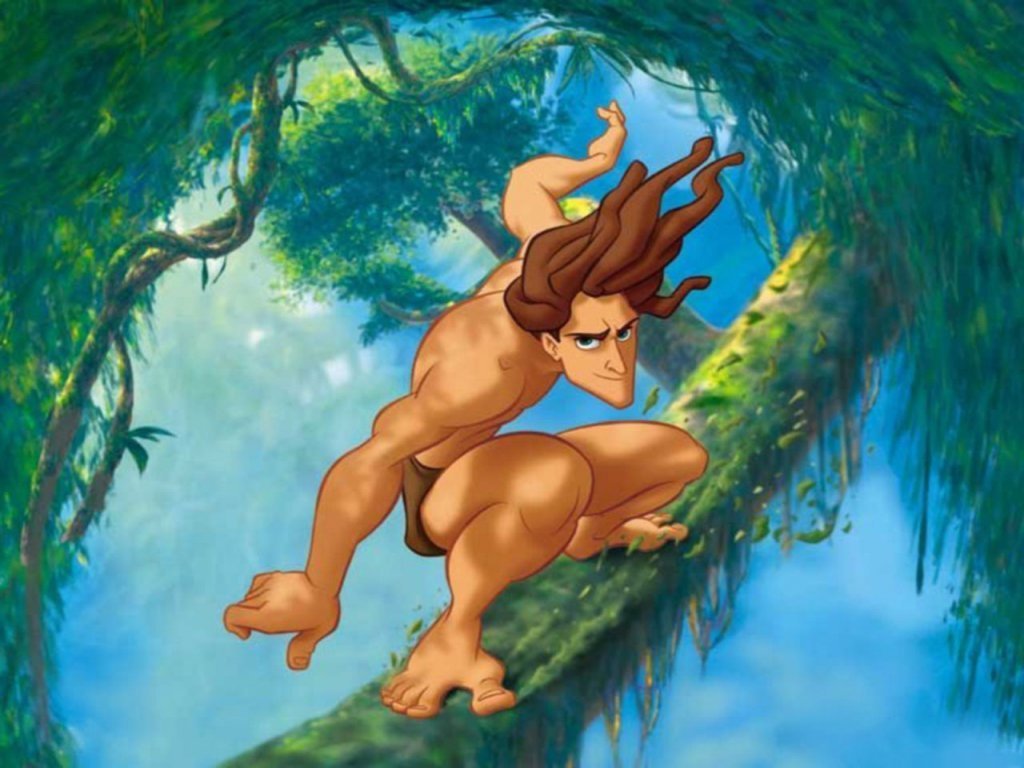
5. Tarzan

Debuted in: Tarzan of the Apes (1912)

Edgar Rice Burroughs first published Tarzan's debut in the pulp All-Story Magazine, then two years later on its own.  Hollywood quickly and wildly embraced the character, a prototypical civilized man in an uncivilized world.  A number of TV adaptations have also appeared, and among recent film appearances are 1984's live action Greystoke and Disney's animated version.  It's worth noting that comic books have any number of characters inspired by Tarzan, from Ka-Zar to Sheena to Kraven the Hunter.

via Hollywood Reporter
4. Zorro


Debuted in: All-Story Weekly #2 (1919)

Another icon to emerge from the pulps is Johnston McCulley's creation, who like Tarzan has long been a favorite of Hollywood.  A direct precursor to the idea of the superhero, much like the earlier Scarlet Pimpernel, Zorro is as much known for his mask as the man beneath it, an aristocrat who scoffs at the vigilante's adventures in his personal time.  Clearly an inspiration for another character on the list, and in fact some versions literally an element of their origin, Zorro continues to be revived periodically, recently in the pages of comic books, which have curiously tended to leave him behind.  Also of note is Isabel Allende's 2005 fictional revival, which took the character in more of a literary direction.


via The Plumber 702
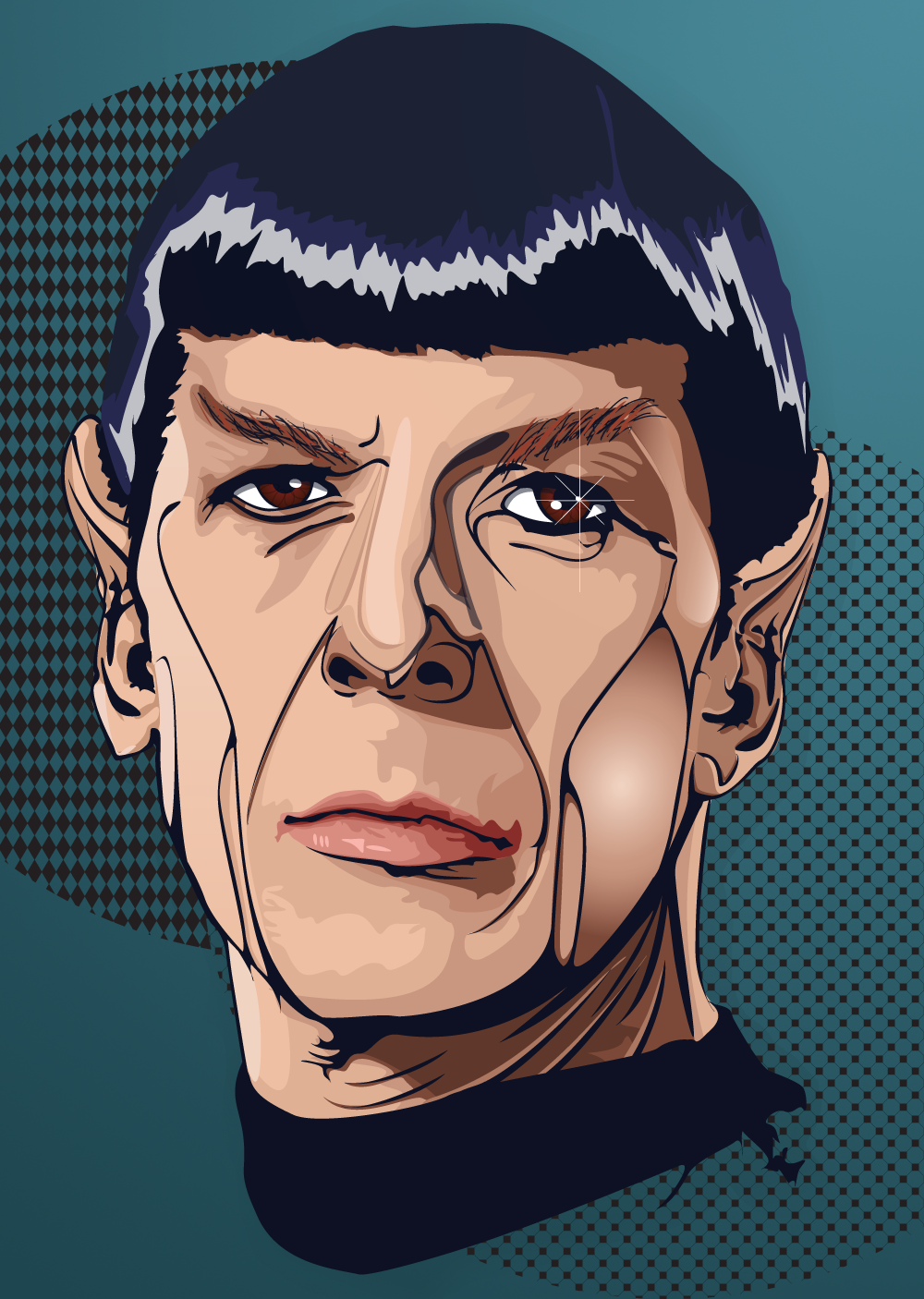
3. Spock

Debuted in: "Where No Man Has Gone Before" (1966)

The lone holdover between the two pilots commissioned for the original Star Trek ("The Cage" was later spliced into the two-part "The Menagerie"), Spock is the iconic alien of the 20th century, and he looks very much human, doesn't he?  A true representation of both our fears and hopes in that regard, Spock is a much-cherished colleague and friend who nonetheless still encounters xenophobic hostility.  His cultural norms, and the ways he practices them, set Spock apart as much as his pointed ears.  Spock quickly leaped ahead of Kirk, the intended lead character of what would become a whole franchise, a point emphasized in the 2009 reboot when the only returning actor, Leonard Nimoy, appeared alongside his successor in the role.

via Alpha Coders
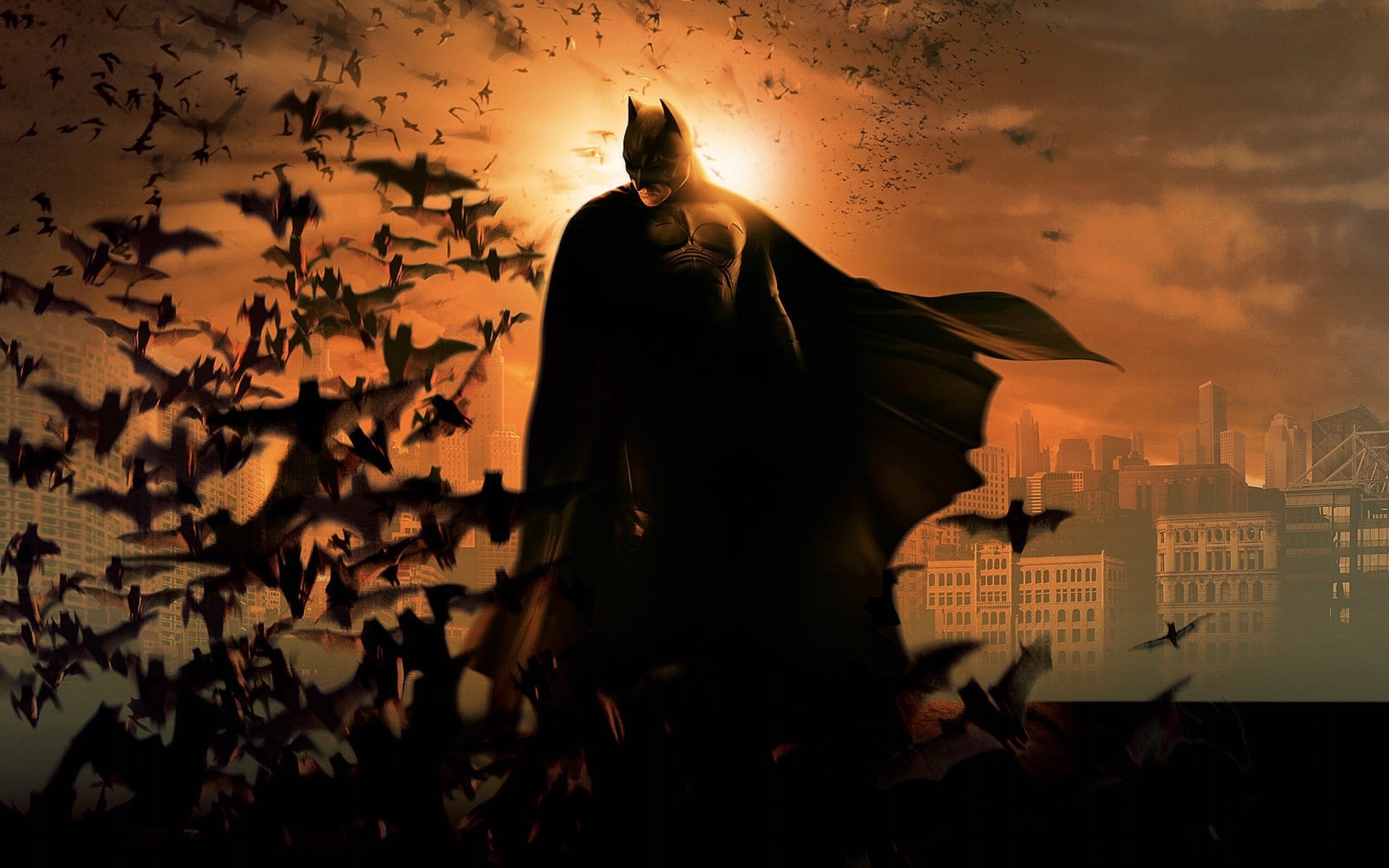
2. Batman

Debuted in: Detective Comics #27 (1939)

In a century dominated by superheroes, which is a phenomenon we see continue at the movies today, there remains none more iconic than Batman, created by Bill Finger and Bob Kane, a character that has weathered numerous interpretations, from the self-deprecating Adam West portrayal in the 1960s TV series to the brooding Christopher Nolan cinematic vision epitomized by 2008's The Dark Knight, as well as a constant surge of comic books from such creators as Alan Moore, Frank Miller, and Grant Morrison, all of whom converged in the late '80s to explore his past, present, and even future.  

via Today
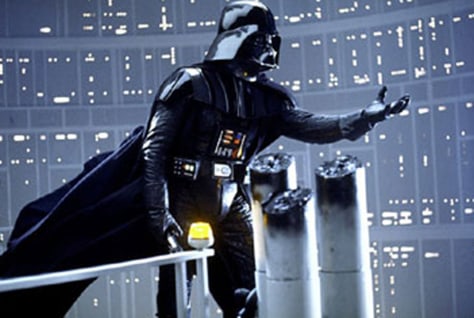
1. Darth Vader

Debuted in: Star Wars (1977)

It's rare that the villain so decisively outshines the hero, but that's exactly what Darth Vader did from the start.  In George Lucas's original vision, Vader as he's known now is nowhere to be found, but his screen debut proved immediately compelling, and the twist ending of The Empire Strikes Back created the opportunity to change the saga forever, which is what happened in a separate series of films as Anakin Skywalker's transformation from naive recruit to tragic figure and finally villain is explored in detail.  A new kind of fictional icon that forever changed the landscape around him, Vader's is the story of a true antihero, whose improbable redemption comes in the form of a son who refuses to give up on him.

Sunday, January 11, 2015

#787. The Top Ten Characters from the British Isles of the Past Hundred Years

via Above Top Secret
10. Zaphod Beeblebrox

Debuted in: Hitchhiker's Guide to the Galaxy: The Primary Phase - Fit the Second (1978)

Douglas Adams made a huge impact on pop culture across radio, literature, television, and film with his creation of The Hitchhiker's Guide to the Galaxy.  Out of all the memorable characters to populate what became best known for the original five books (HitchhikersThe Restaurant at the End of the Universe; Life, the Universe, and Everything; So Long, and Thanks for all the Fish; Mostly Harmless), choosing the obnoxious Galactic President Zaphod seems like the best choice for an era filled with politicians most people would rather forget.  Later featured in a spin-off short story (Young Zaphod Plays It Safe), this parody is so spot-on that the longer H2G2 endures the more likely that future iterations will gravitate more in Zaphod's direction, whenever someone has the opportunity to follow-up on Eoin Colfer's headstart (And Another Thing...).  In the 2005 Hollywood version of Hitchhikers, Sam Rockwell offers an amusing taste of things to come.

via Comic Vine
9. Judge Dredd

Debuted in: 2000 AD No. 2 (1977)

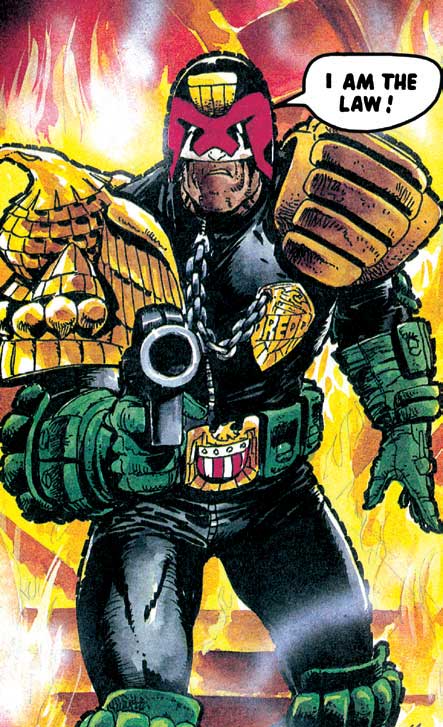
This iconic British creation is actually an American character, part of a future filled with a version of law enforcement that reflects its bleak landscape.  A reliable comic book presence that has crossed over from his country of origin to series published by DC and IDW in the United States, Dredd has also been the subject of two films (1995's Judge Dredd and 2012's Dredd).  Dredd's endurance over the years belies a relatively low profile compared to other creations on this list, but with his continued appearances makes a bigger and bigger statement to long-term viability.


via Comic Vine
8. Dream

Debuted in: Sandman #1 (1989)

Neil Gaiman's version of a classic comic book superhero quickly became a full-blown literary phenomenon, helping launch DC's Vertigo line and establishing Gaiman's later widespread success.  The original seventy-five issues of the series gave way to much-celebrated returns in the pages of Endless Nights and The Dream Hunters, as well as the current Overture.  Joseph Gordon-Levitt is currently working on the character's big screen debut.  Dream's sister Death, who became the quintessential Goth Girl, is another reason this one continues to endure in pop culture.  Dream is also known as Morpheus, and represents one of the more philosophical creations from any culture in the past hundred years.

via Wired


7. Gollum

Debuted in: The Hobbit (1937)

It's safe to say that J.R.R. Tolkien, like Douglas Adams, is responsible for more than one memorable character, but Gollum in particular skyrocketed in the popular consciousness after Peter Jackson's depiction of him in his adaptations of The Lord of the Rings, particularly thanks to the much-acclaimed motion-capture performance of Andy Serkis.  A portrait of abject corruption, Gollum is surprisingly one of the more nuanced characters on this list, a conflicted individual who sometimes literally argues with himself over doing the right thing.  His first appearance, however, depicted a still more complicated version, as a playful Sphinx figure who delights in riddles.  Not bad for someone who embodies obsession...

via Narnia Wikia
6. Aslan

Debuted in: The Lion, the Witch, and the Wardrobe (1950)

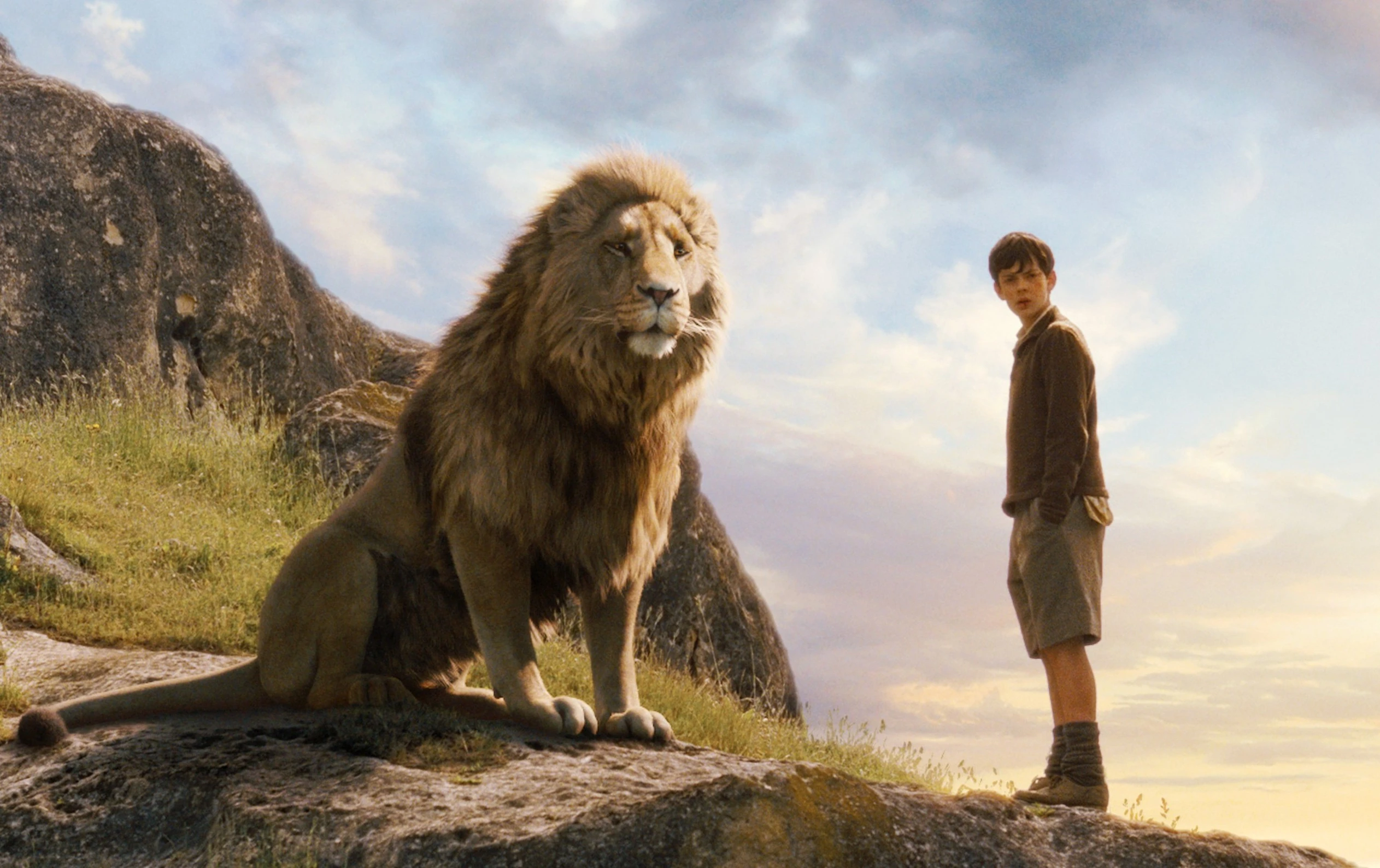
Well, unlike Adams and Tolkien, C.S. Lewis probably knew exactly which character from his books outshone the rest.  That would be the eponymous lion, Aslan, who leads the Pevensie kids and later groups of Narnia heroes to eventual victory in The Last Battle.  Various screen adaptations led to Liam Neeson voicing him starting with 2005's Lion.  Lewis plainly used Aslan as a religious allegory, but you don't need to care about the symbolism to know that his brutal murder in Lion is the most affecting scene of the series and one of the defining moments for any character on this list.

via Broadway
5. Mary Poppins

Debuted in: Mary Poppins (1934)

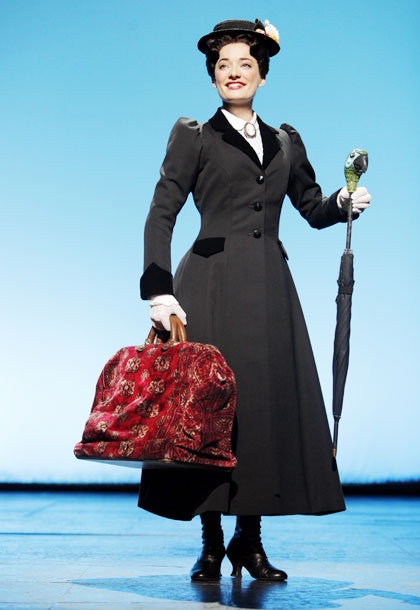
The star of eight books (Poppins, Mary Poppins Comes Back, Mary Poppins Opens the Door, Mary Poppins in the Park, Mary Poppins From A to Z, Mary Poppins in the Kitchen, Mary Poppins in Cherry Tree Lane, and Mary Poppins and the House Next Door) was popular before the 1964 film, but chances are she endures most because of the film.  The torturous journey from book to film was the subject of the 2013 movie Saving Mr. Banks, in which a battle of wills is pitched between creator P.L. Travers and Walt Disney.  Mary may be reflective of how others from the list may age as the years advance, but she's a remarkable entirely of her own accord, a modern fairy tale creation about the transformative potential in both kids and adults.

via Audioboom

4. Doctor Who

Debuted in: Doctor Who: An Unearthly Child (1963)

The Doctor's significance has increased in recent years as he becomes more and important as the most significant British TV character around the world.  It doesn't hurt that after fifty years he remains one of the most unique fictional creations to emerge from anywhere, who has survived more than a dozen portrayals (including an unofficial one in the form of Peter Cushing from 1965's Doctor Who and the Daleks and 1966's Daleks - Invasion Earth: 2150) without skipping a beat thanks to a built-in explanation concerning regeneration.  In recent years Doctor Who has even had a number of spin-offs (Torchwood and The Sarah Jane Adventures).  It might also be noted that Douglas Adams first envisioned H2G2 as a story of the Doctor.

via NPR
3. James Bond

Debuted in: Casino Royale (1953)

Ian Fleming created a prototypical spy in his fourteen books, but he likely had no idea how big 007 would become after Sean Connery appeared as the character for the first time in 1962's Dr. No.  Bond had previously been adapted to screen in a 1954 TV version of Royale, which was also adapted in one of several noncanonical films, with David Niven's portrayal in 1967 and later again with the reboot films starring Daniel Craig.  Various authors have continued the literary exploits, but Bond, James Bond has become one of the most significant film characters ever, arguably the single most important one.

via Today
2. Peter Pan

Debuted in: The Little White Bird (1902)

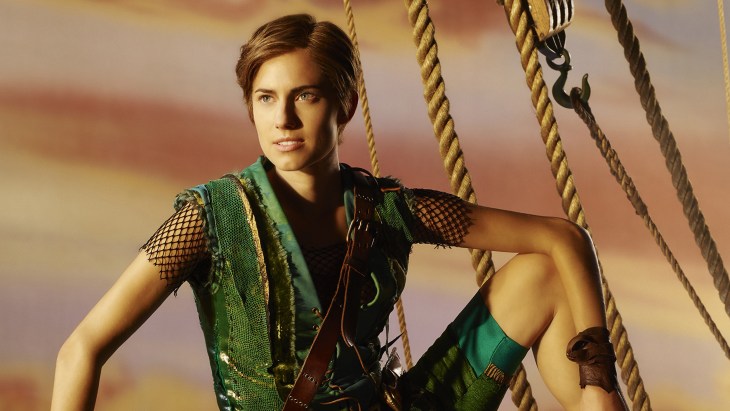
The oldest character on this list had a complicated path to full-blown exposure.  Author J.M. Barrie adapted his creation for the stage in 1904's Peter Pan, or the Boy Who Wouldn't Grow Up, and then back into literature for 1911's Peter and Wendy.  Yet his legacy kept building.  Disney included him in its series of animated films with 1953's Peter Pan, a modern live adaptation was made in 2003, Spielberg created his version of a sequel with 1991's Hook, and Barrie's own story was told in 2004's Finding Neverland.  Dave Barry and Ridley Pearson have a series of books that take an alternate look at the mythology that were later adapted to stage as Peter and the Starcatcher.  2006's Peter Pan in Scarlet was officially commissioned by the Great Ormond Street Hospital, which received the copyright from Barrie in 1929.  The Doctor, Bond, and Peter all serve as unique insights into modern England, how its countrymen view themselves.  Notably, they're all isolated figures who can count on the support of others, but most often exist in isolation, surely a statement on the post-empire era.

via Geek Tyrant
1. Harry Potter

Debuted in: Harry Potter and the Philosopher's Stone (1997)

Is it too early?  Does Mary Poppins offer an example of what early fame can lead to, without the intervention of other media?  Except Harry has already leaped into the adaptation phase, and led the whole modern thrust for franchises at the box office.  By the time of 2004's Harry Potter and the Goblet of Fire, J.K. Rowling's creation had become a global phenomenon, a series of books that children of all ages eagerly embraced.  Harry's world includes the sum of every other character on this list (the Doctor himself is a space-age wizard), an orphan figure on a massive quest against evil and general acceptance, who navigates a story filled with every imaginable obstacle, dirty politicians, self-centered jerks, secret agents, committed allies, and nurturing support that otherwise keeps him learning his own lessons.  Since 2007's Harry Potter and the Deathly Hallows, Rowling has insisted she won't write anymore Harry Potter adventures themselves (echoing the most significant British character of a century earlier, Sherlock Holmes), though she has since written additional stories around him.  Like Star Wars before him, Harry is a perfect representation of what it takes to dominate pop culture, make an impact early and make it stick.  Will kids still read the books as eagerly as they did a decade ago, will the films last?  The further careers of Daniel Radcliffe and Emma Watson may be one indication.  Yet in time, there will be other adaptations, and if history is any proof, Rowling won't stay away from Harry forever, whatever that ultimately means, whether additional short looks as she's done lately, or more books...Harry is a statement on tradition, the present, and a cautionary tale for the future.  Countless imitators and competitors sprang up in his wake, yet none of them have captured the sheer breadth of his achievements to date.  As with the others on this list, this is a story that continues.  And that's what it's all about.

Friday, January 09, 2015

#786. Mock Squid Soup: Better Off Dead

via Entertainment Weekly
I'm the mock squid this month!  (To be clear, there is no "mock squid" in the Mock Squid Soup club.  "Mock" refers to the proprietor of What's up, Mock?, just as "Squid" refers to the host of Armchair Squid; Mock and Squid are the founders of our little film society.  As far as I know, there is no "Soup."  Although if there were, what would be your pleasure, and do you often have soup while watching movies?)

I'm the theoretical mock squid because this is the first month in which I have not seen the selected movie, 1985's Better Off Dead, starring someone who is apparently obsessed with Q-tips.  Incidentally, if you remove said Q-tips, the pictured actor looks a little like How I Met Your Mother's Josh Radnor.  Upon reflection, Better Off Dead could almost read like something Radnor's character Ted Mosby would have done.  This sounds all too plausible, actually...

But the actor in question is not Josh Radnor, it's John Cusack, who is famously tall.  Although he's really only 6'2", which would be short for, say, a professional wrestler, or Shaq.  Apparently Tom Cruise is not the only short actor...

Cusack would be a pretty good reason for me to have watched Better Off Dead (although I had every intention to, and simply let the calendar get away from me).  He's pretty darn great in Grosse Pointe Blank (which is itself pretty darn great in general!), and Martian Child is quite amusing.  That is more or less the extent of my first-hand experience with John Cusack.  I've probably seen more of his sister Joan's work.  Or maybe it just seems that way?

I've never seen Say Anything..., which features one of the iconic images of '80s movies, John holding a boombox above his head (this is one of those things that cannot be duplicated today, along with disco), but, and no offense to Mock Squid Soup or Better Off Dead, I would probably prefer to have watched Say Anything... as my '80s John Cusack movie over Better Off Dead.

I'm sorely deficient in my '80s teen angst movies in general.  I've never even seen The Breakfast Club.  I did see Risky Business, which features Tom Cruise, a shorter actor than John Cusack (although Shaq is taller).  Also, Ferris Bueller's Day Off, and of course Bill and Ted's Excellent Adventure, which was excellent.  Does Back to the Future count, or does the image of Michael J. Fox and the actress playing his mom in the backseat of a car cancel out that sick guitar solo?  Jumping gigawatts!

Bueller?

Thursday, January 08, 2015

#785. The Portman Wars

Natalie Portman recently spoke about how doing Star Wars nearly ruined her career.  Now let's set the record straight:

That's a complete exaggeration.  All it really amounts to is a classic instance of someone disassociating themselves from an experience they now regret.  For famous people, this is Appease the Fans Syndrome.  In other words, everyone says she was horrible in the Star Wars prequels, and so now Portman wants us to believe it nearly ruined her career.  #SympathyTears.  Everyone feels better.  The end.

Except it's not even remotely believable, no matter how accurate it might be to what she actually experienced.  Today, Portman is an Oscar-winning actress who can choose whatever she wants to do, even when she works.  Quite an enviable position to be in, even better than starring in three of the biggest blockbusters of all-time, as far as living arrangements go.  But let's rewind a little and see how we got there, shall we?

In 1999, Portman is featured in the hotly-anticipated Star Wars: Episode I - The Phantom Menace.  Previous to this, her biggest claims to fame were a child actor performance in 1994's Leon: The Professional and supporting roles in 1996's Everyone Says I Love You and Mars Attacks!  There's a three-year gap between Attacks! and Phantom Menace.  Following her casting in Star Wars, Portman stars in Anywhere But Here and Where the Heart Is, both of which are box office misfires ($18 mil for the former, $34 the latter) despite being fairly generic feel-good movies featuring a suddenly high profile actress.

Now, according to Portman, after the horrid reception (although, of course, giant box office returns) of Phantom Menace, she became persona non grata, and could only subsist on personal recommendation.  Which would be fine if this were somehow a span of many more years than we're actually talking about.  And yet just a year after the release of her second Star Wars film, 2002's Attack of the Clones, Portman co-stars in her second biggest non-blockbuster hit to date, 2003's Cold Mountain (hey, would you like to read a completely unrelated rant concerning Jude Law and how he starred in a thousand movies at the time, had this one hit, and actually became persona non grata for years?), and then a couple of smaller releases in 2004's Garden State and Closer.  Then 2005's final Star Wars, Revenge of the Sith.  And then V for Vendetta.  And eventually, 2010's Black Swan.

The thing casting directors love above all else is casting to type.  They love that.  It's the rare actor who manages to avoid that, but even then, versatility is a type, too.  Portman's type, for all intents and purposes, was created in Phantom Menace.  And it wasn't Slightly Terrible Actress (because of the directing, apologetic nerds scream!) but rather, Girl Most Likely to Have Unfortunate Relationship.

That's exactly what she is in Star Wars.  And that's what she is in V for Vendetta.  That's Black Swan, the full art version.  Portman has a fairly limited range.  Her acting, if you care to watch, say, Revenge of the Sith and Black Swan back-to-back, doesn't vary that greatly.  The feel of the material changes, certainly.  But not the acting.

I'm not saying Natalie Portman is a bad actress, or a good actress, or a mediocre actress who keeps getting high profile gigs regardless of her talent.  Landing Star Wars made her career.  Don't even make the Professional argument.  Most child actors have no adult career.  That's a fact.  And when they do, they certainly don't go on to win Oscars.

But Portman's type rang true for casting directors.  That's how she landed Cold Mountain, which if you've never seen it is all about people whose lives were made miserable by the Civil War, but in this instance in an Odyssey kind of way.  Portman plays third fiddle in the actress side of the film, to Nicole Kidman and Renee Zellweger (I'd ask whatever happened to her, but if you've heard about her new face, then everything else is semantics, isn't it?).  If she needed special favors to get a minor role, then so be it.

Garden State is Zach Braff's best-known film to date.  The would-be new Woody Allen had a window where he could do whatever he wanted, and co-starring with Natalie Portman sounded like a pretty good thing.  Portman made a cameo in 2001's Zoolander, which is a good way to let everyone know you don't take yourself too seriously (although Zoolander is seriously hilarious; after I finish writing this up, I'm going to practice my Blue Steel!), which is another way of saying, Portman had a shrewd sense concerning her career prospects from the start.

Making a string of minor art films starting with 2006's Paris, je t'aime, was another shrewd decision.  After the fiasco of the mainstream effort following her initial casting in Star Wars, Portman knew she had to reconsider her options.  Prior to Star Wars she effectively had no real public profile.  She opted to build her indy and critical cred.  Even a notorious flop like 2007's Mr. Magorium's Wonder Emporium  couldn't slow her down at that point.  2008's more successful The Other Boleyn Girl probably helped with that.  Suddenly she was visible for something other than Star Wars, and it was a relatively good thing (and also just about Eric Bana's last visible mainstream release, and once again, unlike Portman he's never managed to turn it around).

So Black Swan comes around, everyone loves it, Portman unleashes a flood of new movies.  And then does the Thor movies.

All of which is to say, Star Wars didn't ruin Portman's career.  And word of mouth from sympathetic filmmakers didn't save it.  This is not a story that confirms how bad the prequels were.  It's all about an actress who maneuvered her career in ways few others would have considered, and had remarkable success at it.  Everyone regrets decisions they've made.  I'm sure Portman regrets Wonder Emporium far more than Star Wars.

Sunday, January 04, 2015

#784. Do not go gentle into that good night

Dylan Thomas originally published the poem "Do not go gentle into that good night" in 1952.  I'm writing about it today because it seems to have become the latest go-to poem in pop culture, succeeding Yeats' "The Second Coming."

Need reminding what "...into that good night" is?  Here it is:

Do not go gentle into that good night,
Old age should burn and rave at close of day;
Rage, rage against the dying of the light.

Though wise men at their end know dark is right,
Because their words had forked no lightning they
Do not go gentle into that good night.

Good men, the last wave by, crying how bright
Their frail deeds might have danced in a green bay,
Rage, rage against the dying of the light.

Wild men who caught and sang the sun in flight,
And learn, too late, they grieved it on its way,
Do not go gentle into that good night.

Grave men, near death, who see with blinding sight
Blind eyes could blaze like meteors and be gay,
Rage, rage against the dying of the light.

And you, my father, there on the sad height,
Curse, bless, me now with your fierce tears, I pray.
Do not go gentle into that good night.
Rage, rage against the dying of the light.

Most notably, Michael Caine recites it in Christopher Nolan's Interstellar:

Strangely, wrestler John Cena has also done a version:

And I've seen it referenced in the pages of Grant Morrison's Annihilator.  I am likely among a very select few to have noticed such a common link, between movies, professional wrestling, and comic books.

Caine's reading is particularly haunting as he intones "rage, rage" in his deepest range, creating an evocative effect as his character propels a team of astronauts into the unknown.  It's a message, I think, that like "The Second Coming" speaks to our uncertainties about the future, which seems to have become the mantra of our modern age, though issued as a note of defiance.  (In case you were wondering, WWE, like Levis, does tend to use classic literary references more often than you'd think.)

As a student of literature, I like seeing nods like this, especially if they're striking, as this one is in each of the instances I've spotted it lately.

Sunday, December 28, 2014

#783. Seven Best Movies of 2014

1.) Interstellar
I've already called this one my pick for the year's best movie.  The reception otherwise seems to be lukewarm (the lack of Golden Globe nominations just one recent reminder), but that's the fickle public for you, after three huge blockbusters (The Dark Knight and Inception especially, and The Dark Knight Rises to a lesser extent, and perhaps now clearly the beginning of the cooling process).  This is Christopher Nolan's opus, in a career that seems already full of them.  What makes this so special is that it's the first time that the director has grounded his story less in flashy concept than the human drama that roots it.  All around it's Nolan pushing all of his instincts to the next level.  he was already among the elite.  Now he's making a bid for something greater.

2.) Winter's Tale
Based on the Mark Helprin novel, this is the second of three high concept movies that converged to make 2014 truly exceptional in that degree, movies that didn't merely suggest but demand their ideas take center stage.  Out of the three, it's no surprise that Winter's Tale ultimately proved the hardest to swallow.  This was Akiva Goldsman's directorial debut.  He's previously been known for his screenwriting, where no doubt opinions might rightly be split on his efforts (Batman Forever and Batman & Robin on one side, A Beautiful Mind and Cinderella Man on the other, say).  I think his true apprenticeship for this movie came from his time working on Fringe, a TV series that sought to challenge audiences with the same mix of intimate character work and the baffling events that surrounded them.  Obviously, the fact that it stars Colin Farrell made me interested to begin with, but Winter's Tale itself continues to fascinate me.

3.) Noah
Darren Aronofsky's sixth movie may be his best.  This is a bold statement, in that his previous movies have a great deal of critical approval behind them (starting with Pi and continued through Requiem for a Dream, The Wrestler, and Black Swan).  Only The Fountain has stymied the critics to the extent Noah has, and that one fell through so many cracks I bet most people still haven't even heard of it.  Noah was always going to have an unavoidable profile, given that it's a biblical epic.  Sixty years ago this would have been an acceptable part of the mainstream.  Only this year have critics begun to speak of the controversial Passion of the Christ positively, and that one was released a decade ago to famously spectacular box office success.  The thing about Noah is that it's not "acceptable" by either mainstream or religious standards.  Aronofsky made an Aronofsky movie.  Anyone who saw Requiem will recognize its DNA in Noah.  Like Winter's Tale, Russell Crowe and Jennifer Connelly are featured.  Crowe does some of his best work in a career filled with exceptional acting, portraying a man tortured by what he believed has been asked of him.  I've experienced many different versions of this story, and I've been fortunate to experience several good ones.  This is definitely one of them.

4.) Locke
The only actor to appear in the whole movie is Tom Hardy.  Released early in the year, it received a little bit of attention given that fact, but it's been forgotten largely overlooked, and that's unfortunate.  After everyone discovered Hardy in Christopher Nolan's Inception, it became harder to overlook the actor's incredible ability to reinvent himself in each new role, which is to say, acknowledge his considerable talent.  He's not the first person to be the only actor in a major motion picture (a recent example would be Robert Redford in All is Lost, a kind of more subdued Castaway), but this is literally a whole movie of watching Hardy drive.  He takes a series of phone calls, and as they continue, the drama escalates, because the pressure of the situation builds.  This is a life that has already come undone, but over the course of the movie, it becomes obvious how.  It's quite remarkable.

5.) The Amazing Spider-Man 2
In a year filled with excellent superhero movies, it's the one that the fewest truly seemed to enjoy that is arguably the best.  Maybe I was biased, given how much I enjoyed director Marc Webb's earlier (500) Days of Summer, but this is the best Spider-Man movie yet, one that truly appreciates the complexities of Peter Parker's life and explores it in ways many comic books have tried over the years, but never to this emotional degree.   The villains are the one concession Amazing Spider-Man 2 makes to what most other superhero movies have done.  The rest of it is what it proves can still be done, if only filmmakers make the effort.

6.) Sin City: A Dame to Kill For
I liked the first one, but the second one is better.  Oh, it's better.  Critics have gotten audiences to agree with them that Robert Rodriguez and Frank Miller have been collaborating on a glorified novelty act, one that is relentlessly misogynistic, but if that were the case, I wouldn't expect Eva Green and Jessica Alba to have been the best parts of A Dame to Kill For.  Green has been a bombshell of a different kind for nearly a decade at this point, blazing new ground in the mainstream since Casino Royale, and only recently has she begun to find roles worthy of her.  I suspect the best is yet to come.  Alba wouldn't get anywhere close to this kind of material from anyone but Rodriguez, which makes me anticipate the next time they work together.  Throw in Joseph Gordon-Levitt, Josh Brolin, and of course Mickey Rourke, and it's not just the way this one's presented that makes it so riveting, but what the characters in it are doing, which has less to do with shock value this time, with more emphasis on storytelling.

7.) The Hobbit: The Battle of the Five Armies
Peter Jackson's likely last visit to Tolkien's Middle-earth is less compelling than its immediate predecessor, The Desolation of Smaug, but by the time it finds echoes from the first of the six-volume saga, The Fellowship of the Ring, it's clear the director made an effort to encompass the whole experience in more ways than one as he says goodbye.  Until Smaug, Fellowship was my favorite of the series, with its strong character work, anchored by the death of Boromir.  When Jackson first introduced Thorin Oakenshield, I thought he was a big to be a surrogate Aragorn.  But as it turns out, he was Boromir all along.  I haven't read the book since I was in elementary school, so had forgotten that Thorin's arc exists in it.  The changes Jackson did make in his three films, including the creation of Evangeline Lilly's Tauriel, are all welcome decisions as far as I'm concerned.

Friday, December 19, 2014

#782. Farewell to Craig and Geoff

Tonight marks the final episode of The Late Late Show with Craig Ferguson, and I for one am pretty sad about that.

I mean, who else in the history of late night television ever had a robot for a co-star?  Good ol' mohawked Geoff, I think I'll miss you most of all.

But seriously, Ferguson always looked like he was having a blast, and his enthusiasm was contagious.  Jimmy Fallon knows how to have a good time, and Conan O'Brien is a master of the absurd, but the rowdy Scot who once penned a memoir entitled American on Purpose, was perennially unheralded but always great, in an era of hosts clearly aware of tradition and usually overly constrained by it.  Ferguson always played fast and loose.


Sunday, December 14, 2014

#781. 2014 in Parentheses

This is a story that does not yet have an ending.

A little over a year ago, I moved back home.  Yeah, I was part of the financial crush that hurt a lot of people, but the reason I was needed was much more simple than that: my mother was dying.  She was diagnosed with stage four breast cancer in the fall of 2010, and it spread throughout the rest of her body in due order.  When I arrived last fall, she was still ambulatory, but that was a story that has since concluded.

She has deteriorated in regular intervals this year.  To say it has had a profound effect on me would be an understatement.  Everything that I have done over the past twelve months has been affected by her developing condition.

The first order of business, as I reported in my commentary a year ago, was to move my parents out of the house our family had lived in for thirty years.  The specter of her decreased mobility was present even then.  She couldn't walk up the stairs without terrifying those who witnessed her, and as such was the motivating factor for the move.  Falls seemed imminent each time.  At that point, they had not become a regular feature of her life.  This would change early in 2014.

When they began, they almost seemed harmless.  She was never seriously injured in any of them, unless you count the number of times her head struck the floor.  The day we had to have emergency services help us get her back up, we couldn't imagine, my father and I, that our evening would only grow worse when we got back home, after she was reoriented and evaluated at the hospital.  She couldn't climb the stairs to the house.  She had no power in her legs.  We struggled to help her.  I won't go into further details, but suffice to say at one point she became dead weight and lost all cognizance.  In some ways this was a mercy.  I looked into her face and saw someone I didn't recognize.

Last year I said I'd already experienced the worst moment of this whole ordeal, and I still stand by that statement, but it seems more hollow from this vantage point.  My sister's father-in-law helped us install a ramp.  She went from using a cane to a walker to what's called a transfer seat but by all appearances is basically a wheelchair, in rapid succession.  We started receiving assistance in the home.  It was only a matter of time before we could no longer adequately care for her in this manner.  A few weeks back she was moved into a nursing facility.

I have no idea how or when the story ends.  We visit twice a day, and she has good days and bad days.  Our victories are counted in what she has managed to eat.  She is barely communicative at this point.  There are flashes of the person we knew, and then there are times when all she can say is a series of numbers, and then when all she can do is open her eyes long enough to acknowledge us.  Sometimes her voice is only a whisper.

Thanksgiving was spent with her.  We ate with her, and other residents, in the dining room.  Christmas, hopefully, will be better.  She says the only gift she wants is coffee.  Actually, that has been the most pleasant thing to come from the past year, discovering how such a simple thing can so reliably give her at least one happy thought.

I hope you understand if I don't tell you the ending.

Saturday, December 13, 2014

#780. Fifty-One Years, Twenty-Two Days...

Last month held the dubious distinction of being yet another anniversary in the assassination of John F. Kennedy, which has now crossed the half-century mark.  Someone at work turned up a copy of that year's Time magazine, dated November 25, 2013.  The issue carries two articles on this singular note in American history, David Von Drehle's "Broken Trust" and Jack Dickey's "Debunker Among the Buffs."

You may remember that I've written about the assassination here in the past, including on the fiftieth anniversary itself and in relation to Stephan King's novel 11/22/63.  To say the event fascinates me is about as good a way to put it as I can find.  I'm not exactly a conspiracy theorist.  For one, I'm probably half the age most of them tend to be, because those with the most vested interest were alive when it happened.

Time's coverage concerns the conspiracies.  Why is it, the magazine asks, we can't move past this, accept that what appears to have been the case was the case, that Lee Harvey Oswald acted alone, fatally shooting Kennedy from a perch in the Texas School Book Depository overlooking Dealey Plaza?

I'm not going to do an in-depth discussion here.  The whole reason I'm writing about it today at all is because of Time's articles.  Time is one of the most-respected names in print journalism, an institution that seeks to maintain the integrity and dignity of a medium that has been declared a dinosaur waiting for extinction.  I myself have read it casually for years and have generally respected its contents.  When I saw this copy in the break room, I was excited to have stumbled into the opportunity to read its perspective on the anniversary.

I wonder now if this were one of those instances where fate plays cruel tricks on us.

Neither article is well-reasoned, actually.  They are blatantly written from a skeptic's eye, outright dismissive of the idea they seek to explore.  I'm not indicting the whole magazine, but it's certainly sad to see such an important moment covered so cavalierly by a major media outlet of any form.

For one reason or another, the assassination became a touchstone; arguably it was more important to Kennedy's legacy than his thousand days in office or the handful of crises he handled or even the ambitious projects his successors helped see to fulfillment (given how monumental they were, the moon landing and civil rights, that's certainly saying something).  Historians debate how significant the man was, but there's no denying the significance of his death.  That much Time properly acknowledges.

Von Drehle purports to examine the various conspiracies that have been propounded over the years, but right away, he turns it into a sensation piece, describing the assassination itself as so shocking it can't be explained in words even today without causing trauma to his readers.  "I recently waded into the thicket of theories," he continues, "trying to understand the roots and fruits of this vast enterprise, which is part scholarship, part fever dream.  I got just far enough to see how quickly the forest can swallow a person up."

In other words, he admits that the task he set out to accomplish immediately overwhelmed him.  Time might have done everyone the service of assigning this piece to someone else.

The thing everyone knew about Kennedy while he was alive was the image of Camelot, the romantic ideal he embodied as a young President who by his very presence promised something new, an occupant of the White House fit for the emerging age of the media.  While his policies split the country down the middle, Kennedy himself and his wife Jackie seemed to have stepped out of a fairy tale, one that ended like one of the Brothers Grimm stories indeed.

The day he died, it became impossible to reconcile the way it happened with the outsize role he filled in the public imagination, and so, as Von Drehle argues, the public responded by creating a reality where the facts fit the fantasy.  Or in other words, the conspiracy theories began.

This is not the same as saying it's impossible to believe that anything but what the Warren Commission concluded could be true.  Unfortunately, that's exactly what Von Drehle says, without once more than flippantly dismissing and hardly addressing any other possibility.  This isn't responsible journalism, and not the way to mark what the magazine has already determined to be an enduring moment.  Dickey's follow-up is a shorter, and correspondingly condensed, version of Von Drehle's lead.  He talks about how he eagerly debates theorists, but not how and without admitting that he could ever be wrong.  There's another word for that, and it's not argument.

Even from reading a work of fiction like King's 11/22/63, a strong case can emerge that supports plenty of justification to believe the portrait of Kennedy's assassination is murkier than history seems determined to make it, even as King himself vehemently concludes in the orthodox view.  It doesn't take a conspiracy for an assassin to act.  Every other President murdered in American history was a fairly open-and-shut case.  What makes Kennedy different?  A journalist would have explored that.  Even if Oswald did act alone, that's what a journalist's article in Time should have done.

This is not the time to brush the whole affair under the carpet.  Those who were alive on that day still say, like my father, "We'll never know the truth in our lifetime."  That's how deep this goes.  It's not even about specific theories, but the belief that there is, bottom-line, a wider portrait to be had than the one we've been given.

It's not so crazy to think that way, no matter what Time apparently feels justified in implying.

Friday, December 12, 2014

#779. Mock Squid Soup: Pulp Fiction

via Wallpaper Vortex
The merry meeting of the Mock Squid Soup society has nothing to do with Marvel Comics and less to do with counterfeit cephalopods (what a horrible thought!), but does involve a dude named Mock and another dude named Squid and movies that they've selected and sometimes watched together, because they don't just know each other on the Internet but somehow still communicate here and not through social media invented this millennium (I kid because of the soup!).

This month they selected Pulp Fiction, which was released twenty years ago but only five and a half films ago from director Quentin Tarantino, who lately has built his career out of helping Christoph Waltz win Best Supporting Actor honors from the Oscars.

It's a great selection, one of the defining pieces of modern cinema, and I don't just say that because there have seemingly been whole careers for critics built out of trying to identify which filmmakers were inspired by it.  Personally, I'd recommend you watch The Usual Suspects, Smokin' Aces, In Bruges, London Boulevard, Seven Psychopaths (incredibly those last three movies star Colin Farrell, but no one has ever identified him as prime Tarantino material), but start at the beginning with On the Waterfront and maybe Casablanca.

Tarantino has been called the child of pop culture, but that's not really true.  He's a veteran of the video store era, back when people watched movies as a hobby, and there was no bigger aficionado than Tarantino.  Except maybe this was a kid who grew up in the '70s and spent the '80s dreaming of a way to pay his respects, because that's what his budding career looks like, the best way to summarize Pulp Fiction.

Everyone remembers John Travolta, Uma Thurman, and especially Samuel L. Jackson, but perhaps the most telling elements of the movie revolve around Bruce Willis.  And mind you, Pulp Fiction is basically a Western, born from the aftermath of Clint Eastwood's Man with No Name emerging and John Wayne dying and then later Eastwood's modern cowboy Dirty Harry, but with all the good guy glamour finally drained.  Pulp Fiction is a world of bad guys.  It's also a world without a defining war for the first time in the 20th Century, when such things came around every twenty years.  You can't be an American and not have thought about that.  But Bruce Willis is part of a new generation.  His character's great-grandfather fought in WWI, his grandfather in WWII, and his father, as memorably explained by Christopher Walken, in Vietnam.  Willis is a boxer, smack dab in the era when boxing began to become culturally irrelevant, Mike Tyson's career crumbling and nobody emerging to replace him.  This is also around the time when football began to take over with two Super Bowls dominated by, you guessed it, the Cowboys.

How any of that makes sense: actually, pretty much the same way as the pretzel logic of Pulp Fiction, in which Willis shoots Travolta dead in the middle, apparently, of Travolta's adventures.  I can't possibly argue that Americans liked the idea of war.  By Vietnam we positively revolted it, and that's shaped our culture ever since.  We'd once again be stupid enough to let Hitler run rampage through Europe.  It's the idea of individuals running around doing exactly how they please.  Not exactly lawless, but the law of the land is chaos.  The boxer is free to go unscrutinized.  Tyson bites someone's ear off, everyone screams bloody murder, then forget that boxing is already a pretty brutal past time and then decide, hey! MMA looks like an acceptable alternative!  So then we embrace football, where chaos is definitely the law of the land, and by the time another war or two rolls around, everyone decides that we should end them as soon as possible regardless of whether or not our objectives are clearly identified let alone met, and yeah, so ISIS.

And crazy people running around with guns executing people.  I'm not calling Tarantino a visionary, but his hand was definitely on the pulse.  In his later movies, he worries less about tricks than he does explaining himself so that he can't be misunderstood with all that showmanship he's so good at, everything people expect from him.  And somehow, his message keeps getting lost.  I think Tarantino gets away with breaking rules because people ultimately decide, it's Quentin being Quentin, but like the old rock critics, they also proclaim that he's not as good as he used to be and they'll never make another like him.

Whatever that means.

All his good guys are bad guys, and there are huge pieces of his stories that are never told.  Ving Rhames already has a band-aid on the back of his head when we first meet him, chronologically and story-wise.  It's not quite as extreme as Brad Pitt with the giant scar on his neck throughout the whole of Inglorious Basterds, but it's also the visual equivalent of the story Travolta and Jackson share about the last time someone had the task of babysitting Thurman, the story Travolta has in the back of his mind through most of the movie, and by turns, the idea of the watch Willis inherited from three previous generations, and even the mystery of what's inside Rhames' briefcase that Jackson carries around throughout, what he refuses to give Tim Roth, because it belongs to someone else.

Because it belongs to someone else.  That's it, really, isn't it?  It's the idea of greed, and what some people are willing to do and what some aren't.  Twenty years and counting without a war at that point.  Everyone was waiting for the next shoe to drop.  And it seemed like it never would.  What does that say about us?  It's a heck of a responsibility.  Everyone talks about peace, but even Jackson wants to retire but to "adventures," which is to say no peace at all.  The idea of "pulp fiction" harks back to a time when we glorified the bad guys (who else do you think Jesse James and Billy the Kid were, guys who helped inspire this subject matter?).  Pointedly, until Willis kills his opponent in the ring, without even realizing it, without giving it a second thought because he desperately needed to save his own hide knowing that he's made a deal with Rhames to lose the fight, he's never killed anyone.  He kills several people after it.  He kills one person with a samurai sword (the whole idea of Kill Bill percolates throughout Pulp Fiction).  It becomes a farce.  Okay, the whole thing's a farce.

It's a movie with multiple narratives, like the later Traffic, Crash, and Babel, but strangely I don't know that Pulp Fiction is thought of in that way.  Like I said, usually as a Tarantino film, a Travolta film, a Jackson film (arguably, somehow, still the only movie to have truly appreciated having him in it), but not a Willis film.  But it is a Willis film.  Watch the later 16 Block.  You wouldn't have 16 Blocks without Pulp Fiction.  But it's all of these things, and it doesn't even start with Travolta or Jackson or Thurman or Rhames or Willis, but with Roth, who has the least to do with anyone else.  By the time he interacts with Jackson, at the end of the movie, Roth's presence has completely vanished.  He's the least important element, but he's also a crucial element.  What is it that belongs to somebody else but has crucial value to yourself?  It's the movie's unspoken riddle, the answer you don't even realize you were looking for.  Maybe this is a movie about life in general.  It's a topical movie, eternally so, without even looking like it's trying to be.  That's film-making.

Of course it changed everything.  It's not an easy movie to figure out, and so you have all these people trying, and failing miserably, to do so, and identifying all the wrong elements about what Tarantino's contemporaries did after its release.  You might as well say it's exactly the same movie as Forrest Gump or The Shawshank Redemption, which by the way it basically is.  It's just, Pulp Fiction has flare.

Just as Willis is routinely overlooked, there's also Rhames.  Do you even know Ving Rhames offhand?  You probably should, but the fact that you might not speaks about all the injustices Tarantino is really talking about, the little crimes we perpetrate against each other (a foot message, say) while focusing on all the bad guys shooting their guns all over the place.  That's why Jackson and Travolta seem to talk in trivialities, because Tarantino realized that suddenly it's no longer the big events happening, at that time, but all the mundane little moments that get to us.  We try and focus on everything else, but really, who are we kidding?  That's what Jackson is thinking at the end of the movie.  Harvey Keitel shows up and he's the only guy who can calmly talk people through a crisis, until Jackson, the only one who learns anything, replicates the fete.  Love and war.  It's the idea of breaking eggs to make an omelette.

Rhames, by the way, has appeared in all of the Mission: Impossible movies, and starred in the excellent Rosewood, another unusual Western.  He's still routinely overlooked.  I think Thurman as a brunette in Pulp Fiction causes a lot of people to forget she was in that, too, why it took Tarantino to collaborate with her again in Kill Bill for people to remark that she was still making movies and very much capable of turning heads (you know, or decapitating them), but somehow still like Pam Grier and Robert Forster in Jackie Brown, a couple of born stars who outside of Tarantino can't catch a break.

And you know who I realized seems to have adopted a lot of her persona from Thurman in Pulp Fiction?  Zooey Deschanel.  Obviously there are differences, but not as many as you'd think.  People tend to overlook her, too.  And she's as least as lethal a catch in (500) Days of Summer as Thurman in Pulp Fiction.

This is not my favorite Tarantino film.  Lately it's been whatever the newest one was, and that started with Kill Bill Vol. 2 and continued with Inglourious Basterds and currently rests with Django Unchained.  Because Quentin Tarantino is, ultimately, restless.  He's never happy unless he's challenged himself.  He's said that he's looking to retirement relatively soon.  He got angry after his script for The Hateful Eight was leaked, vowed he wouldn't make it as a result, but of course he will.  This is a guy who has probably spent his whole life telling himself stories.  You can see that in Reservoir Dogs, and even Death Proof.  That's why he's such a vital storyteller, because he believes in stories, the stories other people have told, and the ones he wants to tell as a result.  Some claim that he's nothing but a glorified rip-off artist.  I call him aware.  More and more, he's trying to make his viewers aware, too, cut through all the nonsense we like to tell ourselves (the telling scene in Django Unchained as Leonardo DiCaprio explains his version of why the black man is inferior, and the irony of Waltz explaining to him later that his idol, Alexander Dumas, was black).

Anytime you compare someone to Shakespeare, you have to have a really good argument, but you also have to remember, if it hadn't been for the folio of his works, Shakespeare likely would have been forgotten, and we wouldn't be sitting here explaining the eternal brilliance of him, either.  Tarantino, I'm convinced, is in Shakespeare's league. Pulp Fiction might be considered, above all else, A Midsummer Night's Dream.

And yeah, it's still cool, after twenty years.

LinkWithin

Related Posts Plugin for WordPress, Blogger...