Showing posts with label books. Show all posts

Saturday, August 07, 2021

The Magnar of Thenn

 I abandoned George R.R. Martin's A Dance with Dragons this morning.  I read nearly eight hundred pages, only a few hundred left before I would've been done.  Dragons is the fifth and to date most recent entry in Martin's A Song of Ice and Fire series, the basis for Game of Thrones, which concluded its television run amid ridicule after spending the vast majority of it amid wild acclaim.  Mostly, fans were upset that one of the major characters didn't end up on the Iron Throne, although to be fair, the final occupant was one of them, just not one of their favorites, instead the one who kind of combined King Arthur and Merlin (the whole series one long origin story!) without anyone bothering to notice.

Anyway, I abandoned it because it was terrible, and I was finally fed up with it.  Terrible, not because I disapproved of Martin's lust for sex and violence (the very things that brought so many fans to the TV series), but for his imagination being far more attuned to world-building world-building and world-building rather than anything resembling internal logic.

Granted, I'm not really a fan of fantasy.  My only real interests in fantasy are the Chronicles of Narnia (which is designed to be devoured by eager young readers) and Harry Potter (which began as such and then grew up along the way, like the characters).  While everyone else salivated over Peter Jackson's Lord of the Rings films, I observed with restraint from a distance, and found it amusing that he brought the same, if not better, skill to his Hobbit films, and to considerably less acclaim.  I was never a fan of Excalibur, dull and dreary, flashy, desperate.  I liked my Arthur in prose, thank you.

I have a friend who's become increasingly casual over the years, who was a big fantasy fan in high school (I don't know if he still is), and the day I knew there was a massive difference between us was when I read just some of his favorite material, and had the extremely bad form to be honest about how I felt about it, in front of a whole English class (I absolutely still feel bad about it, but to be fair, I rarely know, when I'm actually talking, and it's not joking, if I'm saying the right thing or only what my introvert brain is processing as what I understand and what others probably won't, and my complete inability to bridge the gap between).

I did read the Tolkien books.  I actually read The Hobbit, in grade school, thanks to that friend (although I took greater interest in other recommendations he shared over the years, notably Maniac Magee and Jeff Smith's Bone, both of which remain treasured favorites).  I was reading the Lord of the Rings books in 2000, before the movies began premiering, and in one of the few instances where I care about adaptation fidelity, I will admit one of the problems I had with The Two Towers was Jackson's pointless deviations (although, again, I have no such problem with his inventive storytelling in the later Hobbit films).  I drew the line at The Silmarillion, the kind of Middle-Earth myth fiction that was Tolkien at his most indulgent.  Unreadable drivel.

Martin is Tolkien with about a tenth of the scholarly credentials, and even less imagination.  He's only really concerned with world-building, as I may have suggested earlier.  The whole of Dragons, which again is five books into the series, is a thousand pages of world-building!  Even the dialogue is endless world-building!  He scarcely seems to be aware that advancing the plot is even remotely necessary!  It's all foreboding!  It's every single character dreading what comes next!  Endlessly!  (Quite literally so, as Martin is a decade into writing the sixth book!  Of a projected seven!)

And so much of it is mindless drivel.  As I said, I never really got into fantasy, so it's largely a genre that's a foreign language to me.  As far as I can tell, it's composed almost entirely of the merging of another era's fiction and a fictional version of that era, so that the entire landscape is composed of a merging of fact and fiction.  And as that landscape has developed over the years, it apparently becomes less and less necessary for the fantasy to have any bearing in reality.

Such is Martin's imagination that I counted a number of eras in which his landscape might have seemed to have plausibly drawn from, and vast distances, and time, from which they would exist apart from each other.  Even the conceptions are difficult to reconcile in a context missing a key motivating factor from the real world (the existence of Christianity; if I were entirely cynical about the whole affair, I'd suggest it does exist in the series, but in a number of forms, including the dreaded White Walkers, so that it simultaneously informs the world that is being threatened and the world that threatens it).

But in two elements I did find something to admire.  One was Daenerys Targaryen at last taking flight on one of her dragons, the only sequence I read that wasn't exposition, and the other was a character name I found particularly charming: the Magnar of Thenn.

As a writer, I am particularly partial to cool names.  I love finding them in the real world, and I love using them, or creating them, in my fiction.  The main characters in Martin's work tend to have cool names, and then there's an avalanche of anonymous and yet laboriously named characters no one could ever possibly care about, few of which are interesting in any way except some which do have some interesting feature that will never be drawn on, when even the main characters spend all their time mulling over things rather than, y'know, doing anything.

The Magnar of Thenn gets married.  That's all he does.  But he has an evocative title, one of the few "wildlings" in this particular book to have been given any real depth (I imagine the wildlings represent native populations, whether the Druidic Britains the Romans encountered or, for example, any number of Native American tribes, so calling them wildlings is one of the many lazy copouts Martin is all too happy to settle for; his entire vision of Westeros, again, is all over the place and can never really be properly reconciled), even if only in that title.

I would've been happier to read a book with Dany riding her dragon and the Magnar of Thenn getting married somehow being important to that, and just about everything else being omitted.  Martin writes everything he thinks is interesting.  Most of the time it isn't, and he can't be bothered to tell the difference.

Friday, November 27, 2015

849. Cephalopod Coffeehouse November 2015

Returning to the squishy Cephalopod Coffeehouse, hosted by Armchair Squid and presented the last Friday of every month (except Smarch), I wanted to talk a little about Dave Barry.

Chances are if you know Dave at all, it's either from his retired humor column or the Harry Anderson sitcom Dave's World (where I was first introduced to the hilarious Patrick Warburton).
 
I ended up reading three Dave-penned or Dave-related books in the past month:
 
  • Peter and the Starcatcher - The Annotated Script (by Rick Elice)
  • The Worst Class Trip Ever
  • Live Right and Find Happiness (Although Beer is Quicker)
 
The first one is the script to a play adapted from Dave's series of Peter Pan prequels he co-wrote with Ridley Pearson.  I think a lot of people sought a new series of books to read after getting into Harry Potter.  The Starcatcher books were mine, thanks to my love for both Dave Barry and Peter Pan.  When I first heard about the stage adaptation I could only think how appropriate it was, as J.M. Barrie's original Peter Pan adventures were chronicled on the stage.  To finally experience the result, in any format, was a considerable pleasure.  Obviously a lot of heart was put into the production, and because the script came with notes, I got to find out how it all came together.
 
 
Worst Class Trip Ever was Dave's most recent work of fiction, released early last summer.  As with the Starcatcher books it's aimed at young readers (although that hardly stopped me).  And as with his other works of solo fiction, it's a madcap adventure.  His first novel, Big Trouble, was adapted into a movie starring Tim Allen.
 
Live Right and Find Happiness is Dave's latest book of humor, in the style of what you may have read when he was regularly reprinting his columns and/or releasing entirely original work.  Both these last two were released in a year where I needed someone like Dave Barry to lighten the mood.  Just knowing they were there helped me, and to read them was even better.  Live Right features a slightly more reflective Dave, a slightly more mature Dave that has been emerging in his more recent work. 
 
I'll remain a fan regardless, but these were hopefully books that represent Dave's path to enduring cultural relevance.  As someone who lives mostly in the printed word, and who bypassed the ways later humor writers made their names, Dave sometimes seems like he got lost in the shuffle.  But he's a treasure, in ways other humorists could only dream about.  Compared to the ones on TV or in the movies, his appeal will need little translation in the future.  Dave's becoming timeless.
 
At least as far as I'm concerned.  He'll always be one of my treasured writers.  And easiest recommendations.


Sunday, July 12, 2015

836. Moxie Day 2015

Every year Lisbon Falls, Maine, becomes something other than a bedroom community when it hosts its annual Moxie Day festival.  For thirty-three years, one of the original soft drinks, still tasting more or less how it did originally (when they were marketed as medicine, if you can believe it), is thrust into the spotlight along with the town that's also home to the Kennebec Fruit Co. (the Moxie Store) and Frank Anicetti, third generation owner and a hundred years later.

This year's celebration (if you listen to Anicetti, the town seems to be trying its best to sabotage Moxie Day) seemed like a step back from years past.  The parade (a half dozen years since Klingons have appeared!) was fine (my nephew, like every does, loved the crazy Kora Shriner carts), though Main Street looked like it was kind of going through the motions, except for my favorite part of the festival, which is the library book sale.  Last year's was a true shadow of its former glory, but they seemed to make an effort to return to the glory days, meaning I came back with a good haul:


  • Dave Barry, Is Not Taking This Sitting Down
  • Bernard Cornwell, The Bloody Ground
  • Umberto Eco, Foucault's Pendulum
  • Jeffrey Eugenides, Middlesex
  • Robert Graves, The Golden Ass
  • Mark Helprin, Freddy and Fredericka
  • Brad Herzog, States of Mind
  • Carl Hiaasen, Basket Case
  • Elizabeth Kostova, The Historian
  • Naguib Mahfouz, Palace Walk (The Cairo Trilogy I)
  • Dorothy Parker, Complete Stories
  • Spider Robinson, Time Travelers Strictly Cash
  • Salman Rushdie, The Moor's Last Sigh
Which for me represents a considerably nice bounty.  I've been a big fan of Dave Barry for years.  I think I've read this particular book, but somehow didn't have it in my collection.  I just mentioned to comment-maker Pat Dilloway the other day how I wanted to read Cornwell.  I've read Umberto Eco before, but not one of his best-known books like this one.  Middlesex is one of those books I knew of thanks to working at Borders.  The Golden Ass, to be clear, concerns Greek mythology.  It is not porn.  Helprin also wrote Winters Tale, which was later adapted into a movie I love.  Herzog famously published his book after appearing in the early days of Who Wants to Be a Millionaire? (according to Savage Garden, Regis Philbin).  Hiassen was Florida's original signature literary genius, before Dave Barry moved there.  I used to have The Historian before it failed to survive the 2013 purge (details explained elsewhere on that), so to have it again and have a chance to actually read it is nice.  I earmarked The Cairo Trilogy as something I wanted to read a little while back.  Parker is one of those writers I knew about but hadn't had any real exposure to her actual work.  Spider Robinson has one of the best names ever.  Armchair Squid just read Moor's Last Sigh, and I've been a fan of Rushdie since reading The Satanic Verses, so reading more is always a welcome opportunity.

I also visited an indoor flea market in town for the express reason of finding out whatever happened to a comics and games shop that had just opened last Moxie Day on Main Street, but was gone by the time I had a chance to visit again just a few weeks back.  Of course they transplanted.  But the best comics in the flea market weren't being sold by these guys, ironically.  Still, those guys were there yesterday (Moxie Day) and completely did not understand when I tried to explain my surprise about how their fortunes have changed in the past year.  I mean, there are some quick turnarounds in small business (I applied to work at a new used bookstore in Colorado Springs and didn't get the job, but the store was out of business within a few months anyway), and strategically they did a very smart thing.  I have no idea why it looked like they still weren't properly settled at their new location.  Or why the flea market was surprised that very few people were visiting them (it's not a terribly visible location, and there wasn't any other Moxie-related activity going on in that part of town, and they didn't have any presence on Main Street, and they didn't have any big signs advertising themselves in front of their own building...the list goes on).  

Last year I got my first-ever orange Moxie t-shirt, and coincidentally it was up in the rotation (I have a t-shirt rotation), not that I wasn't going to wear it anyway, so I felt like a faithful member of the celebration this year, walking around all morning with it on.

Hopefully the town pulls itself together and starts helping the event fire on all cylinders again.  I guess there's been a lot of thought about ancillary activities like concerts and various new locations around town to host events throughout the three-day festival, but to lose sight of the main event, and its central setting, is kind of missing the mark. 

And bring back the Klingons!

Sunday, January 18, 2015

#788. The Top Ten Characters from America in the Past Hundred Years

via Paltry Meanderings
10. Benjamin Franklin "Hawkeye" Pierce

Debuted in MASH: A Novel About Three Army Doctors (1968)

After more than a decade of Alan Alda's portrayal in the classic sitcom, it might need reminding that "Hawkeye" didn't even debut in the 1970 movie (played by Donald Sutherland), but in the pages of the Richard Hooker book.  Thanks to the show, however, the character became arguably the iconic voice of 20th century war weariness, although equally an anti-authoritarian prankster and womanizer.  Since Alda, it's become difficult to think of the good doctor in any other context, but the history alone has primed the character for further exploits, perhaps even centered squarely on him (which has already happened for his pal "Trapper" John, by the way).  As the obvious leader of an ensemble, he always stood out anyway, and would likely do so all over again should he remain in that context.

via Comic Vine
9. Rooster Cogburn

Debuted in: True Grit (1968)

After the Coens adapted the book a second time, everyone had a chance to remember that this character debuted in a novel by Charles Portis, not the John Wayne film adaptation from a year later.  Yet the Civil War veteran's significance in Wayne's own history stands tall, not just for the fact that it earned him his Oscar, but remains one of the few names of any character fans will be able to remember with little effort, a fact that helped lead to a rare sequel, the eponymous 1975 film.  That helps distinguish Cogburn as the most iconic fictional cowboy of the 20th century, when the archetype experienced a renaissance.  But it may perhaps be more notable still that the focus isn't even on Cogburn himself, but the young girl he helps find justice.

via Entertainment Weekly
8. Sarah Connor

Debuted in: The Terminator (1984)

The biggest surprise of the testosterone-heavy '80s action movies era is that its biggest icon is a woman, the mother of the hero.  Sarah Connor's significance increased still more in the sequel, Judgment Day, when she has to prove she isn't crazy (a theme shared by many fictional female icons, including one on this list, and Ellen Ripley), and the later Sarah Connor Chronicles TV series.  Before her son John could grow up to defeat the robotic uprising, Sarah not only had to survive attempts on her own life, but protect them both in further harrowing attacks from the future.  Oh, and make time to romance the guy who happens to be the father.  But you don't see him getting his own TV show, do you?


via Empire Online
7. Hannibal Lecter

Debuted in: Red Dragon (1981)

"Hannibal the Cannibal" is a true 20th century monster, who needed only a handful of minutes of portrayal by Anthony Hopkins in the 1991 film Silence of the Lambs to become ingrained in popular culture.  The creation of novelist Thomas Harris, who wrote four books, all of them adapted into film, based on the character, Lecter debuted onscreen in the 1986 thriller Manhunter, later remade after its namesake, Red Dragon.  Recently revived all over again for television, Lecter's strange combination of cultural refinement and abject sadism is a stark update of the monster archetype, a symbol of the continuing obsession with serial killers, and is perhaps assured greater longevity in his original form than either "Hawkeye" Pierce or Rooster Cogburn, proving all over again the endurance of the written word.

via Oz and Ends
6. Dorothy Gale

Debuted in: The Wonderful Wizard of Oz (1900)

The lost little Kansas girl who introduced us to Oz is the oldest character on the list, the L. Frank Baum whose legacy grew substantially with the huge success of Judy Garland's portrayal in 1939's film adaptation, which wasn't even, in fact not nearly, the first such attempt.  Dorothy appears in thirteen of Baum's original fourteen novels, not always as the lead.  She made a return to the big screen in 1985's Return to Oz, which was controversial in the sense that she was no longer portrayed by Garland, she didn't sing, and yes, like Sarah Connor later, had ended up being considered crazy.  Zooey Deschanel plays a contemporary version of Dorothy, "D.G.," in the 2007 TV miniseries Tin Man.  A classic literary orphan figure, Dorothy's defeat of the Wicked Witch has lately begun to be overshadowed by the Wicked Witch herself, starting with Gregory Maguire's 1995 book Wicked, whose popularity increased when it was adapted to stage.  For now, however, Dorothy remains the most popular Oz figure.

via Genius
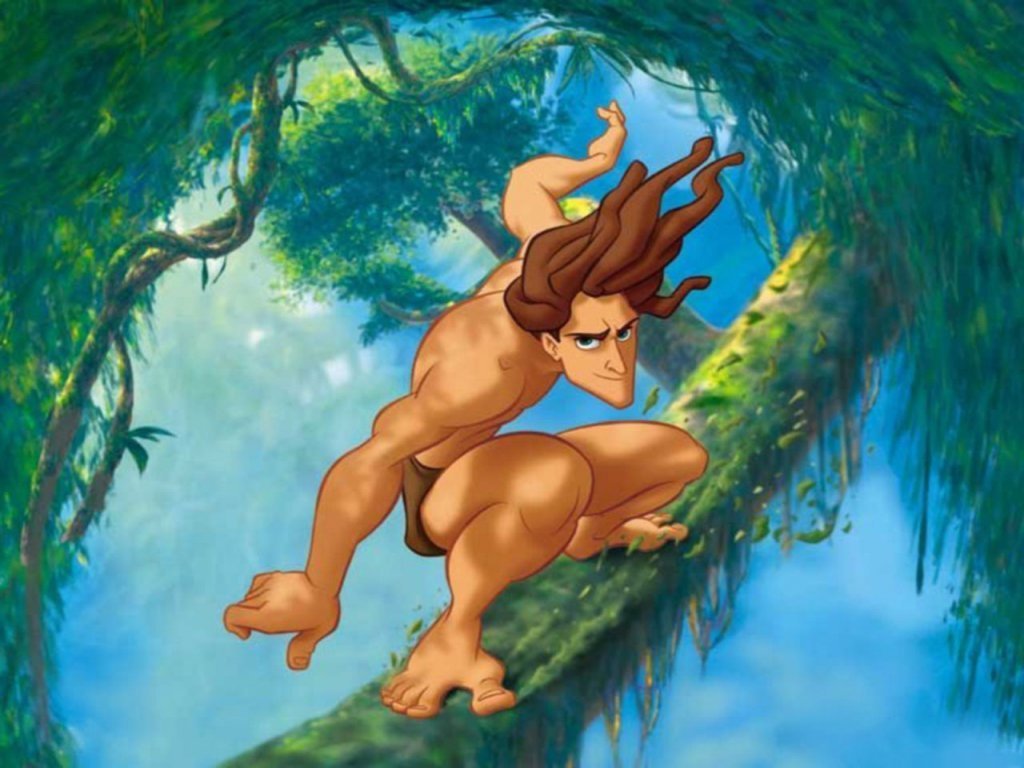
5. Tarzan

Debuted in: Tarzan of the Apes (1912)

Edgar Rice Burroughs first published Tarzan's debut in the pulp All-Story Magazine, then two years later on its own.  Hollywood quickly and wildly embraced the character, a prototypical civilized man in an uncivilized world.  A number of TV adaptations have also appeared, and among recent film appearances are 1984's live action Greystoke and Disney's animated version.  It's worth noting that comic books have any number of characters inspired by Tarzan, from Ka-Zar to Sheena to Kraven the Hunter.

via Hollywood Reporter
4. Zorro


Debuted in: All-Story Weekly #2 (1919)

Another icon to emerge from the pulps is Johnston McCulley's creation, who like Tarzan has long been a favorite of Hollywood.  A direct precursor to the idea of the superhero, much like the earlier Scarlet Pimpernel, Zorro is as much known for his mask as the man beneath it, an aristocrat who scoffs at the vigilante's adventures in his personal time.  Clearly an inspiration for another character on the list, and in fact some versions literally an element of their origin, Zorro continues to be revived periodically, recently in the pages of comic books, which have curiously tended to leave him behind.  Also of note is Isabel Allende's 2005 fictional revival, which took the character in more of a literary direction.


via The Plumber 702
3. Spock

Debuted in: "Where No Man Has Gone Before" (1966)

The lone holdover between the two pilots commissioned for the original Star Trek ("The Cage" was later spliced into the two-part "The Menagerie"), Spock is the iconic alien of the 20th century, and he looks very much human, doesn't he?  A true representation of both our fears and hopes in that regard, Spock is a much-cherished colleague and friend who nonetheless still encounters xenophobic hostility.  His cultural norms, and the ways he practices them, set Spock apart as much as his pointed ears.  Spock quickly leaped ahead of Kirk, the intended lead character of what would become a whole franchise, a point emphasized in the 2009 reboot when the only returning actor, Leonard Nimoy, appeared alongside his successor in the role.

via Alpha Coders
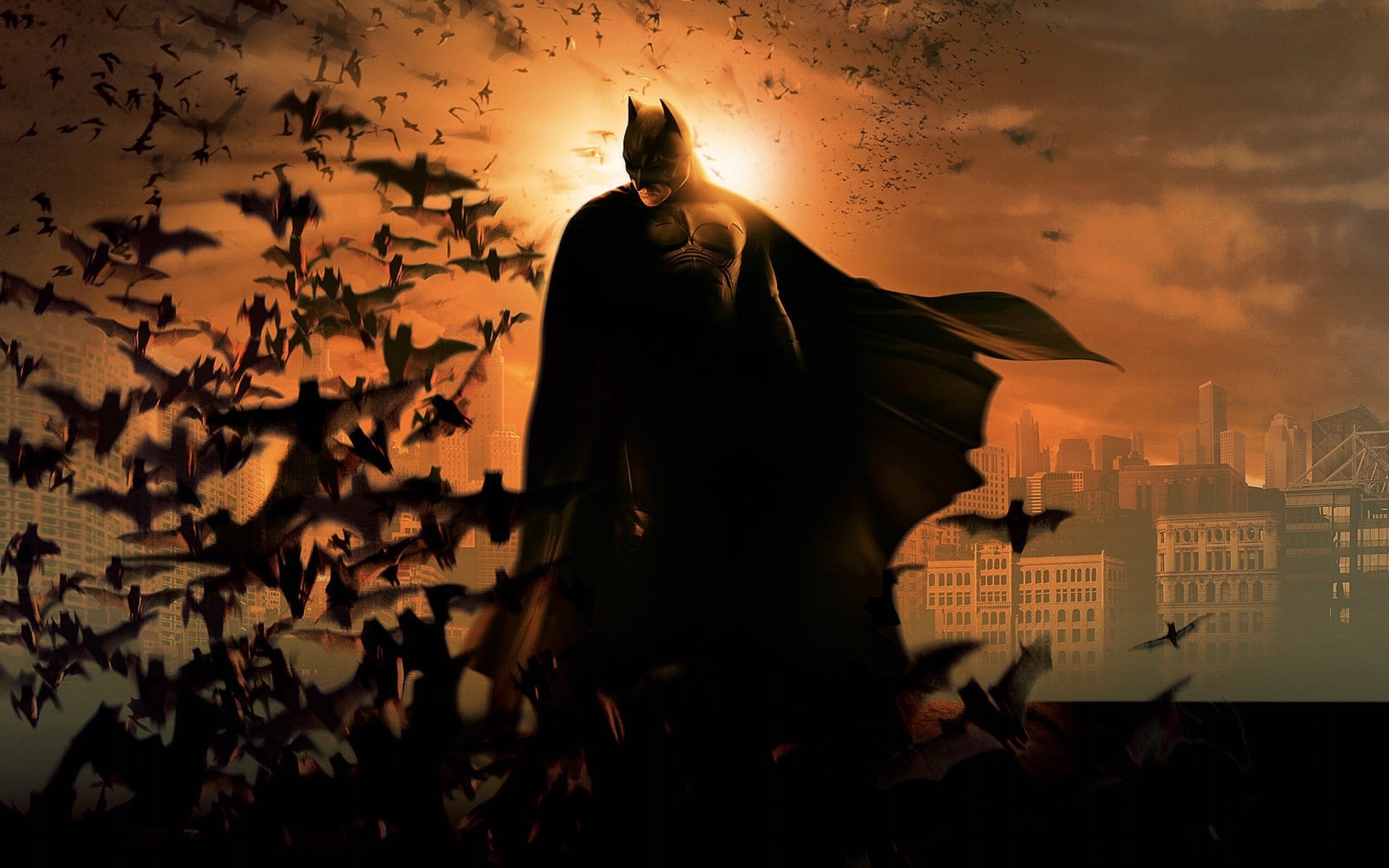
2. Batman

Debuted in: Detective Comics #27 (1939)

In a century dominated by superheroes, which is a phenomenon we see continue at the movies today, there remains none more iconic than Batman, created by Bill Finger and Bob Kane, a character that has weathered numerous interpretations, from the self-deprecating Adam West portrayal in the 1960s TV series to the brooding Christopher Nolan cinematic vision epitomized by 2008's The Dark Knight, as well as a constant surge of comic books from such creators as Alan Moore, Frank Miller, and Grant Morrison, all of whom converged in the late '80s to explore his past, present, and even future.  

via Today
1. Darth Vader

Debuted in: Star Wars (1977)

It's rare that the villain so decisively outshines the hero, but that's exactly what Darth Vader did from the start.  In George Lucas's original vision, Vader as he's known now is nowhere to be found, but his screen debut proved immediately compelling, and the twist ending of The Empire Strikes Back created the opportunity to change the saga forever, which is what happened in a separate series of films as Anakin Skywalker's transformation from naive recruit to tragic figure and finally villain is explored in detail.  A new kind of fictional icon that forever changed the landscape around him, Vader's is the story of a true antihero, whose improbable redemption comes in the form of a son who refuses to give up on him.

Sunday, January 11, 2015

#787. The Top Ten Characters from the British Isles of the Past Hundred Years

via Above Top Secret
10. Zaphod Beeblebrox

Debuted in: Hitchhiker's Guide to the Galaxy: The Primary Phase - Fit the Second (1978)

Douglas Adams made a huge impact on pop culture across radio, literature, television, and film with his creation of The Hitchhiker's Guide to the Galaxy.  Out of all the memorable characters to populate what became best known for the original five books (HitchhikersThe Restaurant at the End of the Universe; Life, the Universe, and Everything; So Long, and Thanks for all the Fish; Mostly Harmless), choosing the obnoxious Galactic President Zaphod seems like the best choice for an era filled with politicians most people would rather forget.  Later featured in a spin-off short story (Young Zaphod Plays It Safe), this parody is so spot-on that the longer H2G2 endures the more likely that future iterations will gravitate more in Zaphod's direction, whenever someone has the opportunity to follow-up on Eoin Colfer's headstart (And Another Thing...).  In the 2005 Hollywood version of Hitchhikers, Sam Rockwell offers an amusing taste of things to come.

via Comic Vine
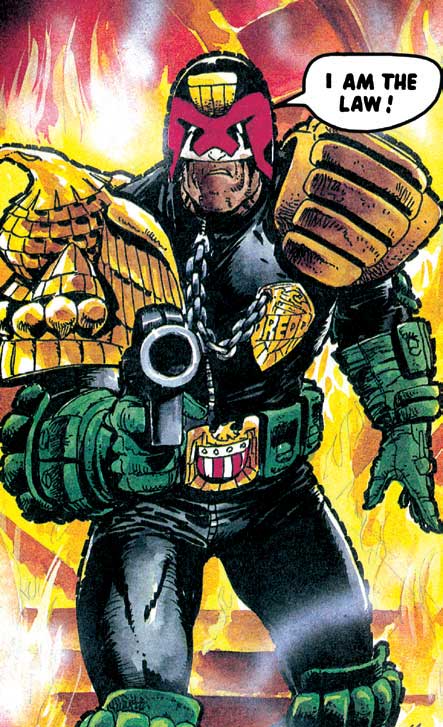
9. Judge Dredd

Debuted in: 2000 AD No. 2 (1977)

This iconic British creation is actually an American character, part of a future filled with a version of law enforcement that reflects its bleak landscape.  A reliable comic book presence that has crossed over from his country of origin to series published by DC and IDW in the United States, Dredd has also been the subject of two films (1995's Judge Dredd and 2012's Dredd).  Dredd's endurance over the years belies a relatively low profile compared to other creations on this list, but with his continued appearances makes a bigger and bigger statement to long-term viability.


via Comic Vine
8. Dream

Debuted in: Sandman #1 (1989)

Neil Gaiman's version of a classic comic book superhero quickly became a full-blown literary phenomenon, helping launch DC's Vertigo line and establishing Gaiman's later widespread success.  The original seventy-five issues of the series gave way to much-celebrated returns in the pages of Endless Nights and The Dream Hunters, as well as the current Overture.  Joseph Gordon-Levitt is currently working on the character's big screen debut.  Dream's sister Death, who became the quintessential Goth Girl, is another reason this one continues to endure in pop culture.  Dream is also known as Morpheus, and represents one of the more philosophical creations from any culture in the past hundred years.

via Wired


7. Gollum

Debuted in: The Hobbit (1937)

It's safe to say that J.R.R. Tolkien, like Douglas Adams, is responsible for more than one memorable character, but Gollum in particular skyrocketed in the popular consciousness after Peter Jackson's depiction of him in his adaptations of The Lord of the Rings, particularly thanks to the much-acclaimed motion-capture performance of Andy Serkis.  A portrait of abject corruption, Gollum is surprisingly one of the more nuanced characters on this list, a conflicted individual who sometimes literally argues with himself over doing the right thing.  His first appearance, however, depicted a still more complicated version, as a playful Sphinx figure who delights in riddles.  Not bad for someone who embodies obsession...

via Narnia Wikia
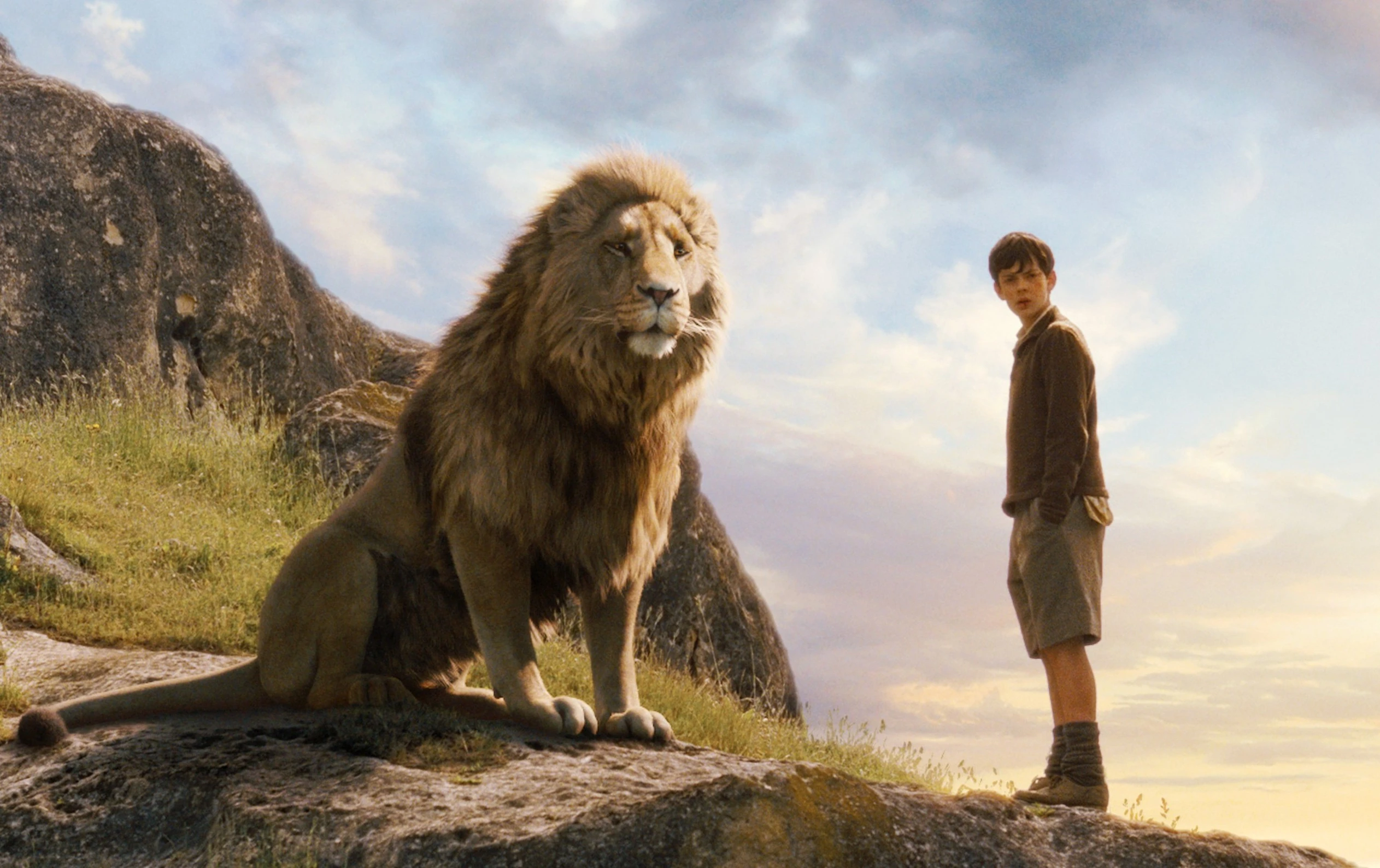
6. Aslan

Debuted in: The Lion, the Witch, and the Wardrobe (1950)

Well, unlike Adams and Tolkien, C.S. Lewis probably knew exactly which character from his books outshone the rest.  That would be the eponymous lion, Aslan, who leads the Pevensie kids and later groups of Narnia heroes to eventual victory in The Last Battle.  Various screen adaptations led to Liam Neeson voicing him starting with 2005's Lion.  Lewis plainly used Aslan as a religious allegory, but you don't need to care about the symbolism to know that his brutal murder in Lion is the most affecting scene of the series and one of the defining moments for any character on this list.

via Broadway
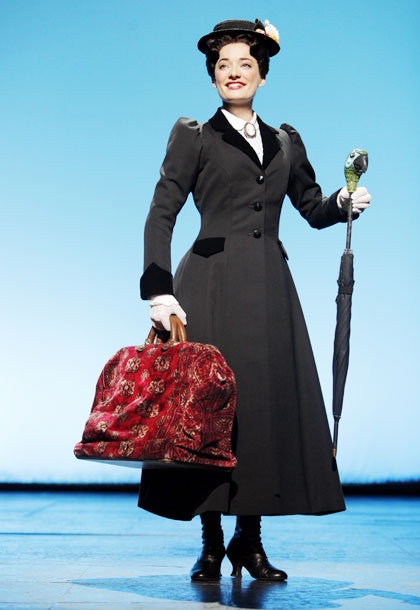
5. Mary Poppins

Debuted in: Mary Poppins (1934)

The star of eight books (Poppins, Mary Poppins Comes Back, Mary Poppins Opens the Door, Mary Poppins in the Park, Mary Poppins From A to Z, Mary Poppins in the Kitchen, Mary Poppins in Cherry Tree Lane, and Mary Poppins and the House Next Door) was popular before the 1964 film, but chances are she endures most because of the film.  The torturous journey from book to film was the subject of the 2013 movie Saving Mr. Banks, in which a battle of wills is pitched between creator P.L. Travers and Walt Disney.  Mary may be reflective of how others from the list may age as the years advance, but she's a remarkable entirely of her own accord, a modern fairy tale creation about the transformative potential in both kids and adults.

via Audioboom

4. Doctor Who

Debuted in: Doctor Who: An Unearthly Child (1963)

The Doctor's significance has increased in recent years as he becomes more and important as the most significant British TV character around the world.  It doesn't hurt that after fifty years he remains one of the most unique fictional creations to emerge from anywhere, who has survived more than a dozen portrayals (including an unofficial one in the form of Peter Cushing from 1965's Doctor Who and the Daleks and 1966's Daleks - Invasion Earth: 2150) without skipping a beat thanks to a built-in explanation concerning regeneration.  In recent years Doctor Who has even had a number of spin-offs (Torchwood and The Sarah Jane Adventures).  It might also be noted that Douglas Adams first envisioned H2G2 as a story of the Doctor.

via NPR
3. James Bond

Debuted in: Casino Royale (1953)

Ian Fleming created a prototypical spy in his fourteen books, but he likely had no idea how big 007 would become after Sean Connery appeared as the character for the first time in 1962's Dr. No.  Bond had previously been adapted to screen in a 1954 TV version of Royale, which was also adapted in one of several noncanonical films, with David Niven's portrayal in 1967 and later again with the reboot films starring Daniel Craig.  Various authors have continued the literary exploits, but Bond, James Bond has become one of the most significant film characters ever, arguably the single most important one.

via Today
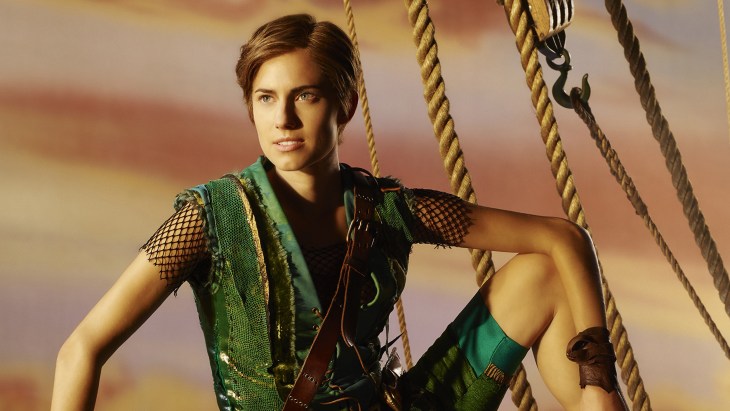
2. Peter Pan

Debuted in: The Little White Bird (1902)

The oldest character on this list had a complicated path to full-blown exposure.  Author J.M. Barrie adapted his creation for the stage in 1904's Peter Pan, or the Boy Who Wouldn't Grow Up, and then back into literature for 1911's Peter and Wendy.  Yet his legacy kept building.  Disney included him in its series of animated films with 1953's Peter Pan, a modern live adaptation was made in 2003, Spielberg created his version of a sequel with 1991's Hook, and Barrie's own story was told in 2004's Finding Neverland.  Dave Barry and Ridley Pearson have a series of books that take an alternate look at the mythology that were later adapted to stage as Peter and the Starcatcher.  2006's Peter Pan in Scarlet was officially commissioned by the Great Ormond Street Hospital, which received the copyright from Barrie in 1929.  The Doctor, Bond, and Peter all serve as unique insights into modern England, how its countrymen view themselves.  Notably, they're all isolated figures who can count on the support of others, but most often exist in isolation, surely a statement on the post-empire era.

via Geek Tyrant
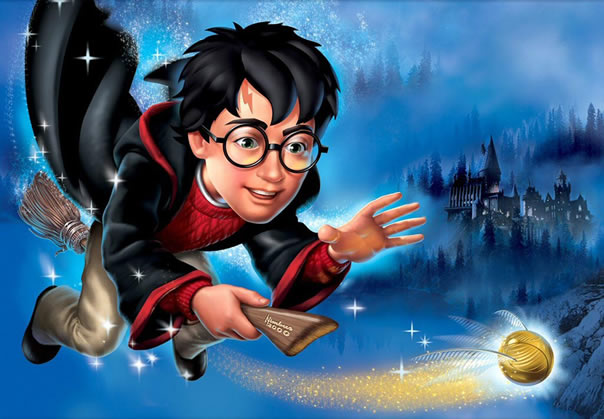
1. Harry Potter

Debuted in: Harry Potter and the Philosopher's Stone (1997)

Is it too early?  Does Mary Poppins offer an example of what early fame can lead to, without the intervention of other media?  Except Harry has already leaped into the adaptation phase, and led the whole modern thrust for franchises at the box office.  By the time of 2004's Harry Potter and the Goblet of Fire, J.K. Rowling's creation had become a global phenomenon, a series of books that children of all ages eagerly embraced.  Harry's world includes the sum of every other character on this list (the Doctor himself is a space-age wizard), an orphan figure on a massive quest against evil and general acceptance, who navigates a story filled with every imaginable obstacle, dirty politicians, self-centered jerks, secret agents, committed allies, and nurturing support that otherwise keeps him learning his own lessons.  Since 2007's Harry Potter and the Deathly Hallows, Rowling has insisted she won't write anymore Harry Potter adventures themselves (echoing the most significant British character of a century earlier, Sherlock Holmes), though she has since written additional stories around him.  Like Star Wars before him, Harry is a perfect representation of what it takes to dominate pop culture, make an impact early and make it stick.  Will kids still read the books as eagerly as they did a decade ago, will the films last?  The further careers of Daniel Radcliffe and Emma Watson may be one indication.  Yet in time, there will be other adaptations, and if history is any proof, Rowling won't stay away from Harry forever, whatever that ultimately means, whether additional short looks as she's done lately, or more books...Harry is a statement on tradition, the present, and a cautionary tale for the future.  Countless imitators and competitors sprang up in his wake, yet none of them have captured the sheer breadth of his achievements to date.  As with the others on this list, this is a story that continues.  And that's what it's all about.

Friday, August 08, 2014

#761. Mock Squid Soup: Stand by Me

Coming at us from Mock and Squid is a monthly movies bloghop, Mock Squid Soup.  The inaugural meeting concerns 1986's Stand by Me.

We're going to rewind a little before we reach the movie, however.  Stephen King's book Different Seasons was released in 1982.  The '80s were a boom decade for the Maine native.  This was the first time he consciously stepped away from the horror genre.  Clearly fans still found plenty to connect with, King's patented intimate viewpoint of humanity coming to the forefront of his storytelling for the first time.  The book was a collection of novellas that went on to great pedigree.  (Each of them are loosely associated with a season, so that's how the title came about.)  The first novella in the book is Rita Hayworth and Shawshank Redemption, which of course later became the movie The Shawshank Redemption; this is arguably King's best-received story to date.  The second is Apt Pupil, which also became a movie.  The fourth is The Breathing Method, which to date has not been adapted into cinema.  The third is The Body, which became Stand by Me.

Now, Stand by Me was a movie that for me originally was best known as the secret (or not-so-secret) origin of Star Trek: The Next Generation actor Wil Wheaton.  Later, it became, cruelly, perhaps the defining film of the late River Phoenix's career.  Rounding out an excellent ensemble were Cory Feldman and Jerry O'Connell as the other two lead boys as well as Kiefer Sutherland, John Cusack, and Richard Dreyfuss.
via Prime Movies
The irony of the movie is that the way the boys talk would become the pattern of geek talk, Internet speak.  The adventure itself is something that would become known as Spielbergian thanks to The Goonies from a year earlier (which was...directed by Richard Donner, with a script from Chris Columbus...based on a story from Spielberg), which for me actually means...Super 8, J.J. Abrams' 2011 movie.  Any fan of Stand by Me owes it to themselves to watch that one, too.

But I will round out this retrospective talking about River Phoenix.  The dude had obvious talent, from an early age.  He's this generation's James Dean.  Stand by Me remains his Rebel Without a Cause.  He made a few other movies, but none of them seem to have particularly stuck out in the same way.  The closest, and I'm always meaning to watch it, would be My Own Private Idaho.  The other one I've seen so far is The Thing Called Love, released in 1993, the same year he died.  It's about aspiring country music performers, and co-stars a young Sandra Bullock.  It may not be a classic but it's entertaining.  The lost movie Dark Blood was finally completed a few years back and released to the general public.  I want to see that, too.  It should be worth noting River's kid brother Joaquin turned out to be an exceptional talent, too.  You may know him best from Gladiator, but I'd recommend you catch Two Lovers.  He's received great acclaim in recent releases The Master and Her, and of course is perhaps best known for the notorious experiment known as I'm Still Here.  He also played Johnny Cash in Walk the Line.  I also recommend Buffalo Soldiers and Signs.

Wednesday, July 16, 2014

#758. Moxie Day Review!

You may remember me nattering on about Stephen King's 11/22/63, the book that happened to be set in my hometown of Lisbon Falls, ME.  For those who read it, you may remember the Kennebec Fruit Co. store run by Frank Anicetti.
via Sun Journal
King made up a few things (alas, no diner with a time portal exists, at least in Lisbon Falls), but he didn't make up what locals call the Moxie Store, or Frank.  You can't make up Frank.  Thanks to Frank and two preceding generations of Anicettis (the store recently celebrated a hundred years of business; yes, they used to sell fruit there), the Moxie Festival and Moxie Day itself, always celebrated on the second Saturday in July, came to town more than thirty years ago.  If you've never had Moxie, just know that it can be described both as "a treat" and "awful."  It's one of the original soft drinks, and still retains the vaguely medicinal nature they all had (really hard to believe though that is these days).  It's like Barq's root beer with...a different kind of bite, an aftertaste that always takes you by surprise.

Growing up in town, Moxie Day was a given, and it was increasingly a strange thing to realize we had something people came from all over the country to experience every year.  When I moved away in 2005, I began a ten year journey to experiencing Moxie Day all over again.

My oldest sibling, one of two sisters and the one who's older than me (not the one I spent that decade living with and/or near) has made an annual pilgrimage to Moxie Day for years.  She's been away since 1995, so I assume these visits are particularly special for her.  Half of Moxie Day this year was hanging out with her again for a extended period of time, which I hadn't done for a decade, another way this year's festivities were a way of closing a loop (a lot of my life is about closing loops, concluding journeys; don't worry, there are always loops to be closed).  She brought with her the whole family, husband and son, who happens to be my godson, whom I haven't actually seen since probably 2006, about two years into his life.

Also present and accounted for (besides my parents) were my brother (the middle child, older but not oldest brother) and his family, which includes two more nephews.  I've gotten to spend a great deal of time with these boys since returning to Maine last fall.  They're both young (five and two), which makes this an especially fun time to hang out with them.  

The highlight of Moxie Day is the parade and all the vendors who set up shop on Main St.  I got there a little early and slipped into the Moxie Store to at last have my own Moxie t-shirt (loop closed!), which I quickly slipped into (sorry, Rock Paper Scissors Lizards Spock from The Big Bang Theory!).  Walking around, I got to see what everyone was selling (either food, jewelry, or kiddie carnival games; Moxie Day is at heart a children's event with room for adults who want to have a good time).  This included my favorite part of Moxie Day, the library's book sale.  

I love browsing.  I guess for me that's the big difference between real world stores and online retailers.  In the real world you can come across things at random.  Often, online, you're looking for things you already know about.  (The big difference is that online you can find a lot of niche things.)  I know that's not always the case, but it takes less effort to find something unexpected, browsing a book sale.  (Plus you really can't beat the deal; $5 for a bagful.)  

I think it would have been the last time I got to enjoy Moxie Day that I found Thomas Pynchon's Mason & Dixon at the sale.  Most of the books in sales like this will not be a massive Pynchon tome.  But some of them will.  Here's what I got this year:
  • Agatha Christie's Murder Is Easy - I've never read Christie.  I know And Then There Were None was assigned reading for my three older siblings in school, but either I didn't have that class or it disappeared (a mystery that needs to be solved!) from the teaching agenda by the time I reached that year.  Although her best-known creation is Hercule Poirot, this is not part of the series.  (Loop closed.)
  • Winston Churchill's The Gathering Storm - Part of the famed British Prime Minister's history of WWII (six volumes in all).  
  • Eoin Colfer's Artemis Fowl: The Arctic Incident - The second of eight in the series, this was part of the great push in young readers publishing following the success of Harry Potter, and always seemed (along with Lemony Snicket's A Series of Unfortunate Events) one of the more inspired efforts.  I never got around to reading it, but after Colfer wrote the sixth book in the Hitchhiker's Guide to the Galaxy, er, trilogy, I figured I would have to get around to reading one of these eventually.  This was a recommendation from one of the attendants, a very welcome one.  (Loop closed.)
  • Stephen King's Bag of Bones - King (it seems appropriate, plus I was looking for him in the sale anyway, after unfortunately inserting most of my unread hardcovers into the great purge of 2013) has had a few phases in his career.  This book was part of a comeback that began while I was in high school (perhaps highlighted by The Green Mile).  Arguably since then there was also the Dark Tower Surge (to complete that seven book series) that followed it and the Books He Always Wanted to Finish period (I think recently concluded, featuring such novels as 11/23/63, Under the Dome, and Doctor Sleep), while of course the Everyone Loves Me 1980s era and his early success.  (This is a hardcover, by the way.)  (Loop closed.)
  • Michael Shaara's The Killer Angels - The popular work of Civil War literature that was later adapted into the film Gettysburg.  Always wanted to read this one.  (Loop closed.)
  • Gregory David Roberts' Shantaram - A book that used to stare at me expectantly when I worked at Borders, and also the subject of a rare customer recommendation.  So I finally have it (loop closed).  Another epic-sized (darn near a thousand pages) piece of fiction found in the book sale!
Drank some Moxie.  Ate some food.  Hung out with family.  Good times, good times.

Wednesday, June 25, 2014

#754. Overheard June 2014

This month I'm mostly going to provide links.  The first two will be interrelated (one directly references the other):

I'm including them because, especially in the latter, I've heavily inserted my thoughts into the comments sections.  The latter explains itself.  In the former, I'm thinking of a story I read in The Best of McSweeney's, "Can a Paper Mill Save a Forest?" from Nicholson Baker, which explores the curious facts of life under a digital cloud and the myths of how paper mills only negatively impact the environment.  As it turns out, all those files we save have to be saved on computers servers somewhere, that just because personal devices have gotten smaller that there isn't a need somewhere else for those giant things computers used to be to still exist.  This is something I'm fairly certain has been conveniently overlooked in our rush to digitize everything, arguably for the sake of progress.  But it's also another instance of the emperor wearing invisible pants, hiding unpleasant realities in plain sight with a collective willingness to overlook the obvious.

In much lighter Internet discoveries, I read on Pearls Before Swine creator Stephen Pastis's blog about a far more pleasant con job, the secret return of Bill Watterson to the comic strip page.  Even though Calvin & Hobbes ended nearly twenty years ago, it remains the gold standard for the medium.  The whole reason Watterson ended it was because he feared the format had been irredeemably compromised, whether by newspapers or capitalism.  I hope one day he releases a treasure trove of material he's done since his self-imposed exile.  In the meantime, he popped up in a strip that seems to be the polar opposite of everything he used to do himself.  (Though make no mistake, Pearls is brilliant.)

via Go Comics


Monday, May 26, 2014

#747. The Mystery Box

I've just finished S. from J.J. Abrams and Doug Dorst.  Put simply, it's amazing.  Put less simply, it's kind of the answer to all the questions you ever had about a J.J. Abrams project.

The project you ought to keep in mind, if you ever read it yourself, is Lost.  You know, that mesmerizing, confounding puzzle of a TV show that fans alternately love and hate.  There're so many elements to S. that it seems a rank injustice to single out only a few, but a lot of them seem tailor-made to anyone still trying to figure out what happened on that mysterious island.  It's the answer to what's inside that mystery box that seems to be at the heart of every Abrams story.

And it actually helps put Abrams into better context than ever.  I started ticking off all the associations I could easily make: Christopher Nolan, M. Night Shyamalan, Orson Welles, Frank Miller, Dean Motter, J.K. Rowling, Grant Morrison.  All his stories involve people trying to sort out the vagaries of identity while pushing up against powers much more frightening than they ever wanted to confront.

Getting back to Lost, however, and how S. offers such rich parallels, it reminds me all over again how drastically the series changed after its third season, the one the fans hated so much it forced a course-correction and abbreviated run of only three more years.  The third season is the one where the fans thought things started to drag, become less inspired, more predictable.  But I never really saw that.  The opening suite of episodes are especially electric.  Jack, Sawyer, and Kate are being held captive by the Others.  Finally, we're finding out what the enemy actually looks like.  And other than Jack's initial predicament...it's pretty mundane, actually.  It plays out a lot like the action in S., in which an amnesiac man finds himself thrust into a war of attrition between two sides who operate below the public radar, both completely convinced about the legitimacy of their actions and committed to eliminating the other.  He keeps ending up on the same boat, and struggles to connect with the woman of his dreams.  Just from the first moment we meet Jack in Lost, you can begin to see parallels.

The whole book is like that.  The approach, however, delves deeper.  It speaks to what Abrams might have thought as fans followed Lost's developments, whether in the series itself or the ephemera that gave secret clues about what lay ahead, such as the earliest references to the Dharma Initiative.  And just what did the mysterious organization turn out to be?  That's what the third season was headed toward, the same one where Jacob was referenced for the first time, who would eventually embody the war of black and white pieces Locke shows Walt from backgammon all the way at the beginning.

The moment the series acknowledged the wishes of the fans, I think Abrams felt it was the moment to give the series over to his collaborators.  The shift is so obvious, the approach altered in ways more profound than the length of seasons.  It becomes a lot more mythologized.  By the end of the series, the fans, who had become aware that they could affect the shape of the Mystery Box, felt it was appropriate to be disappointed when they realized the answers they thought they wanted didn't materialize.  And who is to blame?  The fans.  They scared off Charles Widmore.  The Dharma Initiative that showed up in the fifth season was as ineffectual as Widmore's role in the sixth.  I daresay both would have been far different with Abrams still steering the course.

None of this is to say I personally was disappointed with the series.  Abrams has explored the same story over and over, from Alias to Fringe to Person of Interest, the last of these most successful at hiding in plain sight the Mystery Box.  The Smoke Monster had different permutations, too, in Super 8 and Cowboys & Aliens.  Once Upon a Time took a different approach to the same fantastic lives ordinary people experience when they encounter open the box.  Abrams (and the creators who will be forever linked to Lost) likes characters with daddy issues, surrogate families, and conspiracy theories.  I think all these things come to their best form in Fringe.  Fans can pick their favorite.

S. is a way of affirming that Abrams can be a genre all to himself.  You can enjoy the book on its own merits, for its own accomplishments.  You can approach it by way of Lost (and come to different conclusions if you like).  But I think you'll enjoy it, one way or another.  It's ambitious.  It's a way of approaching Abrams as a pure storyteller, someone who clearly enjoys what he does, no matter his motives or proclivities or the demands he asks of his audience.  That he asks anything at all has always been one of my favorite things about him, the moment the name "Milo Rambaldi" was uttered for the first time.  I like a challenge in my entertainment, and Abrams is one creator always game to provide one.  I'm glad his efforts exist in book form now.

Sunday, May 18, 2014

#744. Overheard May 2014

Count me among those who won't be going.  I'd been living in New York a month when the attacks happened and saw the whole thing from my company's Learning Center, located on the Queens side of the East River, right across from the UN.  My "Prints, Plates, and Diagrams" class was on a break, so along with the rest of my class, I was down on the Center's back deck drinking coffee, enjoying what would otherwise have been one of the nicest days I'd ever spent in New York.  

I don't mind saying that the memory still haunts me.  I have absolutely no desire to relive it.
By the time the weekend rolled around, Hoboken was plastered with "Have You Seen This Person?" fliers.  They were on ever vertical surface in the Mile Square.  One poor guy lost his beautiful blonde wife or girlfriend.  I don't know the story.  But he kept putting those posters up for months and months and months.  I bet I saw her particular "Have You Seen This Person?" flier for a solid eight months after the attacks.  I still feel bad for that guy.
Anyway, that was a long time ago.  

I worked the phones for the telethon they held right after the attacks, and for awhile I jumped every time I saw a bunch of police cars rushing down the street to get anywhere.  But New York is eight million people and probably a million buildings, and for the most part, the City barely skipped a beat.  The Stock Exchange was out of lights for maybe four days, and I remember distinctly that when the mayor asked folks to go out and shop on Black Friday that year to help the City's economy, my mom came up, and we literally shopped 'til we dropped.  That was a pretty good day. 

Eh.  It's fine that they have a museum, but I think it's mostly for the tourists.  Anyone who was there won't need to see it to remember what it was like.
That's Dan Head over at Dan & Sally's Digital Domain reacting to the opening of the 9/11 Museum.  I've known Dan since 2006.  We both wrote about comics at the defunct Paperback Reader, and also overlapped at Digital Webbing (which is probably where we originally overlapped, in the message boards), so it was nice to reconnect with him in the blogging sphere.  9/11 is a subject that remains relevant to me.  Every time there's a piece of news concerning it (last week I read in the paper about the current status of unidentified remains) I still want to clip it and save it (which is what I did for years).  But I'm not a New Yorker (although, in some respects we're all New Yorkers since then), certainly not back in 2001.  That morning I was in a college dining hall.  Dan's memories are so much more...real.  I was fascinated to read his perspective years after the fact.  They're almost mundane.  I never really imagined it like that, what it was like to live there days, weeks, months after the fact.  The rest of us really only heard about the rescue efforts, the cleanup.  But those who lived with it...Anyway, just thought I'd send you some perspective.

Speaking of which:

I finally took a breath and dove into The Goldfinch, Donna Tartt's doorstopper of a novel. It just won the Pulitzer Prize (like, a few days ago) and was also shortlisted for 2013's National Book Critics Circle Award, so go Donna! As with Chang-Rae Lee's novel, this was a coming-of-age story and chock full of adventure. Our hero, young Theo, goes through a delightfully Dickensian childhood full of misery and joy, hijinks and heartbreak ... just one damn thing after another. I adored the thrill ride, implausible as some of it was, but the ending was terrible. OK, so you know dramatic structure has five parts — exposition, rising action, climax, falling action, denouement? It was all good until the denouement. When you get to that part, do yourself a favor and just stop reading. Because 90% of the book was excellent, I still recommend it. The ending doesn't kill the book, it's just boring.
...

I'm reading Goldfinch right now. I think the book lost the bulk of its momentum after Theo went to live with the Barbours. Tartt's best writing was easily her breathless opening sequence. So far she hasn't come close to recapturing it. And I don't much care for Boris, and I've gone ahead and saw that he comes back again. "Implausible" is a good way to describe the unnecessary sequence of histrionic events. Like a literary soap opera. 
...

I loved Boris! I really enjoyed the Barbours, too; and the bombing scene became almost unlistenable to me (possibly because it triggered some PTSD for me, but also because it was. so. incredibly. long.). We seem to have had opposite reactions to this book! :) But I agree that it is indeed a literary soap opera. 

That's from Stephanie over at Words Incorporated.  It's actually from the end of last month, one of several books she discussed for the Cephalopod Coffeehouse (yes, officially I'm no longer participating in that), then a response I made in the comments, and then her reply.  I finished reading it right around the end of that month, too.  Actually, "finished" isn't quite the word for it.  More like, "abandoned."  Because ultimately, I just never got back into it, once I realized I was no longer enjoying it.  The funny thing is, Goldfinch from Donna Tartt isn't really as random a topic to bring up along with 9/11 as you might think.  At the start of the book the main character finds himself in the midst of a terrorist attack in New York.  One of many things I would've changed about the book is that I would have just gone ahead and made it a 9/11 story.  It was all but one at that point anyway; I just didn't see the point in shying away, which is what I think Tartt did.  Instead it's just a random attack specifically on a museum, that's never really explained, just one of many inexplicable elements that the author uses to create unearned dramatic tumult.  Stephanie loved it, though, and as you can tell even a character who rubbed me the wrong way almost directly from his introduction, the wacky foreigner Boris.  But the thing is, she and I differ again, concerning the ending, and Boris is part of the reason I think Tartt managed to pull a late book redemption, because Boris actually finds some useful redemption as the story finally takes some shape after a lot of meandering through Theo Decker's life (which, as I said in my comment, was at its strongest in the opening sequence when Tartt's writing was at its sharpest and most focused).  But the contrasts between Stephanie's thoughts and mine, just serve to remind me that everyone's perspective is different.

Which is also what Dan's post made me realize.  But then, we all know that already, don't we?  I think we tend to forget that.  So this is a new feature where I will try and explore that, highlighting not just interesting things I've read, but thoughts that have made me think.  Because that's about as relevant as communal blogging is for me.

Friday, January 31, 2014

#676. The Cephalopod Coffeehouse January 2014

It's that time of the month again.  Yes, in different context that means something completely different.  Here, it means books.  To be clear, we're talking books!

Anyway, now that I've made it pleasantly awkward for everyone...It's time to celebrate the thing that has just made Lord Founder Squid feel terrible about being associated with a blog that can make perfectly innocent talk about books sound so weird.  But he knew what I was like when he recruited me.  Granted, he had only seen my traveling petting zoo act, and you can't go wrong with a traveling petting zoo (unless it has koalas...they bite), but still.  (I had koalas.)

Without further inane adieu, here are the books I finished in the past month:

  • Zealot by Reza Aslan
  • Justice League Beyond: Konstriction by Derek Fridolfs and various
  • Teen Titans Vol. 3: Death of the Family by Scott Lobdell and various
  • Monorama by Tony Laplume
By Tony Laplume???  Hey, what is this, Pat Dilloway's blog???  (I'd provide a link, but he set it to self-destruct because he read so many spy novels last year.)

Technically, I read Zealot at the very end of 2013, but it wasn't included in December's Coffeehouse chat because I hadn't read it by the time I wrote that one.  It's ridiculously good, in terms of illuminating certain things if you're open to their illumination without religious outrage (of a...zealot nature).  If I'd chosen to write about reading the Bible, which I'm very close to finishing, only weeks away, I might have talked about both it and Zealot today.

But I'm doing the full Dilloway.  (This is different from the Full Monty in that neither of us is British and hey! that means "Monty Python" means "Naked Python"...!)  I'm writing about my own book.  I'm not too concerned about seeming a little full of myself, though, because I know talking about my books on my blog(s) doesn't translate to sales.  I do have a whole blog dedicated to talking about my books and writing and such, so this is kind of infringing on my own territory.  But still.

And the neat thing is that Monorama is a lot more relevant to this blog than you might think.  The whole concept of the "Eponymous Monk" strip I've been running is taken from a few of the stories in this collection, which in turn is based on stories I originally wrote in high school.  (When I was creating a comic strip I actually drew.)  There's another piece of relevant prelude material here, by the way, which in fact comes from here.  Just in case you wanted to see some of the pieces in place.  If you at all care about "Eponymous Monk."  Although there are not too many spoilers there.  That I'm aware of.  (Honestly, I'm making all this up as I go along, even the parts I already know myself...)

Okay, so I'm talking about Monorama, one of my own books.  (One???)  It's a collection of stories I put together from material I had lying around, filled with nonsensical science-fictiony ideas.  Some of the stories are incredibly short, so I grouped those together in the opening section of the book.  One of them is a novella (not Nutella), and that's at the back of the book.  All of it covers basically a decade's worth of my creative output.

The copy I recently finished reading was one I'd given my parents.  I ended up picking it up and started reading.  (If I was a better editor, which is really clear if you read it for yourself, I would have read all of it when I prepared it for self-publication back in the summer of 2012.)  And you know what?  I liked what I saw.

This is not a matter of self-aggrandizement.  Some of this material I really hadn't read in years.  Now, I know I tend to read about as differently from other people as I write, but there's a comfortable overlap between my twin exercises, which I'm always happy to see for myself.  I really didn't come across anything that I found embarrassing to have in this book (other than, again, the editing).

Some of the stories, two or three in particular, I knew when I made the collection, I had never actually finished writing, the novella included (which is the longest source material to date for the "Eponymous Monk" strip).  I was surprised to find that they still read well, even the novella that somewhat blatantly ends mid-story, or the strict excerpt from another story that ends the collection.  They make sense in their own kind of logic, which is to say the internal logic of the storytelling.  (And really, any decent story ought to be able to be enjoyed even if you haven't experienced the beginning or ending, which is why I sometimes actually enjoy catching a movie or TV show only in part.  People assuming it's the complete story that gives them satisfaction, but really it's the overall quality of the material.  No matter what they say.)

The whole point of Monorama was to present material that potential paying readers could sample in order to figure out what kind of writer I am.  And again, maybe it's simply that I overlap comfortably my "reader" and "writer" hats (like the winter hat some people wear over their ball caps!), but I'm as convinced as ever that I wasn't mistaken in putting this book out there.  In fact, I'm actually a little more proud now, having read the complete book, completely removed from the creative process, and still enjoyed the material.

/full Dilloway

Sunday, January 26, 2014

#672. Seven epic visions from J.J. Abrams

I've been a fan of J.J. Abrams for a long time.  Not as long as some people (the 1998-2002 TV series Felicity was his first project to be heavily touted, but it gained most of its buzz from star Keri Russell's signature hair...and lost most of it when she lost it, although its concept-heavy final season was the first of J.J.'s big creative gambles; the largest impact on his career was the show's focus on emotional character development, which became a signature for every other project that followed; I've never seen a single episode of the series, alas, although frequent acting collaborator Greg Grunberg debuted in it, and that much is probably worth seeing), but long enough.  Here are seven projects that have kept me as inspired a fan as he is an imaginative visionary:


  • Alias (2001-2006) The saga of CIA agent Sydney Bristow, her father Jack, and the diabolical Arvin Sloane helped launch the popular careers of not only Abrams and star Jennifer Garner, but Bradley Cooper as well.  Full of twists and turns and all the Rambaldi creations you could ever hope to handle, this was a show that was always evolving but remaining true to its origins at every turn, including the surprise revelation of the first season major villain, who turned out to be Syd's own mother, Irina Derevko.  
  • Lost (2004-2010) The only show that could possibly have eclipsed Alias was its immediate successor, which became a full-blown phenomenon that needs no real introduction.  Fans loved to eat up its intricate mythology almost as much as they loved to dissect and lament its many developments.  Abrams discovered a rich wealth of collaborators for this one, allowing him to move on to other projects in his increasingly high-profile career.  
  • Fringe (2008-2013) The only way to succeed Lost was to return to the intimate scale of Alias, which worked exceedingly well in Fringe, which unlike Alias pulled the focus closer and closer to its original premise with each succeeding season even while expanding it to increasingly astonishing degrees.  Another project where Abrams discovered perfect collaborators, I'm still convinced that appreciation for this one has only just begun.
  • Person of Interest (2011-present) The genius of this show is that it's not even considered a J.J. Abrams show, even though it's exactly a J.J. Abrams show.  The brain-child of Jonathan Nolan (kid brother of Christopher Nolan) and as such featuring hallmarks of the Dark Knight script, this one is both successfully episodic in ways a broad audience can appreciate week to week, but also featuring a wider arc and classic Abrams character types in Reese and Finch, as well as several Abrams alum (Michael Emerson, Sarah Shahi, who had a minor role in the first season of Alias, and Amy Acker, a major supporting role in its last).  
  • Super 8 (2011) His first attempt at an entirely separate movie legacy (Abrams directs a lot of famous franchise films, you may know, including Mission: Impossible III), which a lot of people took as a pastiche on early Steven Spielberg but is a thoroughly enjoyable experience in its own right.
  • Star Trek (2009, 2013) Star Trek and Star Trek Into Darkness achieved the impossible, which was to not only make this particular franchise relevant again, but more popular than ever at the box office, which was probably the whole reason he got the assignment to direct the upcoming seventh Star Wars film.
  • S. (2013) This is a book, written in collaboration with Doug Dorst, which like most of what Abrams does is a love letter to the medium it's presented in as well as an entirely original and inspired piece in itself.  As far as I'm concerned, it solidifies him as one of the great creative minds of our time.  With it he emerges in an entirely new light, as arguably the successor of Orson Welles, what the great director of Citizen Kane might have become had he actually been embraced by Hollywood.  It bodes well for whatever Abrams does not just in the next few years, but decades.  I look back in this retrospective and see not the great things Abrams has done, but what he will do.

Friday, December 27, 2013

#658. The Cephalopod Coffeehouse December 2013

Please direct all congratulations and lamentations to A Squid for another Cephalopod Coffeehouse post.

This month since I've been reading the Bible (yes, that Bible) and am nowhere near finishing (although if you really want you can read along with me as I muse on my experiences here), I don't have a book like usual to talk about, but rather a different kind of reading experience entirely.

Comic strips!  Specifically, Over the Hedge: Stuffed Animals, which was originally released and I bought back in 2006, when the movie adaptation was also in theaters (Bruce Willis has one of his overlooked but always amusing voiceover roles in it).  I've actually been reading this collection off and on since that year.  This is not a judgment on the cartoon strip, but rather a sad indictment on the state of comic strips in general.  Because without this collection, or the Internet, I would never have read Over the Hedge at all.  I've never seen it in a newspaper, and that's one of the many criminal things to talk about today.

(Incidentally, one of the more popular posts I've done on any of my blogs was all about building a new comic strip line-up from obscure and familiar favorites, which you can read here. I suspect that some of the visits have been from bookmarks people have returned to as they read my digital compilation.)

I love comic strips.  My all-time favorite, as it is for many other dedicated fans even though it ceased publication way back in 1994 (twenty years ago!), is Bill Watterson's Calvin & Hobbes.  I have many other favorites.  My current favorite is Pearls Before Swine.  It's the main reason I don't want crocodiles for neighbors.  (They're idiots.)

Big Nate was created by a Maine native, but isn't popular enough in Maine to have stuck in my local paper.  It's since been extended into Diary of a Wimpy Kid-esque books, and that's been fun to see.  I enjoy that one.  I love Red & Rover, which is a perennial contender for Calvin & Hobbes-esque.  I love Zits.  I love Sally Forth.  I can't believe that FoxTrot has never become a beloved cultural institution, even though it basically invented our current event culture thanks to reliably nerdy Jason, who embodied The Big Bang Theory long before The Big Bang Theory ever existed.

I think the idea of the comic strip is an endangered species.  Yes, comic strips can exist on the Internet.  There are many comic strips that were born on the Internet and have made names for themselves.  But they are inherently a newspaper institution.  They're the last best social commentary we have.

That's what Over the Hedge is all about, by the way.  It features a band of woodland creatures who are forever commenting on the saddest aspects of American culture, all the stuff everyone else always complains about, but with fuzzy creatures who have lives and obsessions of their own (RJ the raccoon made a artform of obsessing over Twinkies long before Zombieland).

Maybe it was Watterson's principled fight against commercialism, but no comic strip since, except for Dilbert, has managed to pierce the heart of popular culture the way Garfield and Peanuts did and still do.  It's not a matter of stagnancy, as some observers are always saying.  You can ignore the likes of Family Circus, by all means!

I wish Dilbert were as successful in an overt way as it has in a subversive one, but as much as it lampoons everything, basically, that led to the Great Recession, it hasn't changed anything.  Yes, I take the funnies seriously.

And I wish more people were aware that an Over the Hedge movie exists, and that an Over the Hedge daily comic strip exists.

Although I would also be content to see Bill Watterson enshrined as one of the 20th century's great artists, where he rightly belongs...That's the strength of comic strips at their very finest.  That's worth preserving.  Newspapers don't seem like they will be around much longer.  How much longer still until comic strips disappear?  I don't think I want to see that day...

Sunday, December 22, 2013

#655. 101 books from 2013

Way back at the start of November, Pat Dilloway did a recap of all the books he'd read in 2013.  Don't tell him I said so, but it got me thinking.  I've logged all the books I've read this year at my Goodreads account, making it easy to keep score.  Why not do a recap myself?  And while I didn't get anywhere near as impressive as Dilloway's 200+, I hit 101, and thought that was a pretty good number, so that was all the motivation I needed to do this.  And because I'm obsessive like that, I'm ranking them based on the star scores I originally gave them...

  1. The Savage Detectives by Roberto Bolano
  2. The Casual Vacancy by J.K. Rowling
  3. The Cuckoo's Calling by Robert Galbraith
  4. Insane City by Dave Barry
  5. Zulu by Caryl Ferey
  6. The Skating Rink by Roberto Bolano
  7. The Annotated Sandman Vol. 1 by Neil Gaiman, Leslie S. Klinger/various
  8. How to Live Safely in a Science Fictional Universe by Charles Yu
  9. Star Trek: Deep Space Nine - The Never-Ending Sacrifice by Una McCormack
  10. The Spy Who Came In from the Cold by John le Carre
  11. Ilustrado by Miguel Syjuco
  12. A Most Wanted Man by John le Carre
  13. Mason & Dixon by Thomas Pynchon
  14. Call for the Dead by John le Carre
  15. Monsieur Pain by Roberto Bolano
  16. Batman and Robin: Pearl by Peter J. Tomasi, Patrick Gleason
  17. The Lorax by Dr. Seuss
  18. Green Lantern: Rebirth by Geoff Johns, Ethan Van Sciver
  19. G.I. Joe: Cobra - Son of the Snake by Mike Costa, Antonio Fuso
  20. A Murder of Quality by John le Carre
  21. Between Parentheses by Roberto Bolano
  22. Lunatics by Dave Barry, Alan Zweibel
  23. Death: The Deluxe Edition by Neil Gaiman/various
  24. Little Mouse Gets Ready by Jeff Smith
  25. The Starman Omnibus Vol. 6 by James Robinson/various
  26. War of the Green Lanterns by Geoff Johns/various
  27. The Final Solution by Michael Chabon
  28. The Mysterious Flame of Queen Loana by Umberto Eco
  29. Doom Patrol: The Painting That Ate Paris by Grant Morrison/various
  30. Doom Patrol: Down Paradise Way by Grant Morrison/various
  31. 7 Against Chaos by Harlan Ellison, Paul Chadwick
  32. The Crying of Lot 49 by Thomas Pynchon
  33. How I Became Stupid by Martin Page
  34. Ask the Dust by John Fante
  35. Blood Meridian by Cormac McCarthy
  36. The Friedkin Connection by William Friedkin
  37. Horton Hears a Who by Dr. Seuss
  38. Scott Pilgrim's Finest Hour by Bryan Lee O'Malley
  39. Scott Pilgrim vs. the Universe by Bryan Lee O'Malley
  40. Scott Pilgrim Gets It Together by Bryan Lee O'Malley
  41. Hellblazer: Rare Cuts by various
  42. The Otter, the Spotted Frog, and the Great Flood by Gerald Hausman
  43. Cave of the Dark Wind by Dave Barry, Ridley Pearson
  44. The Boy Who Played with Dark Matter by Holy Ghost Writer
  45. 11/22/63 by Stephen King
  46. "Ikibukuro West Gate Park" by Ira Ishida from Digital Geishas and Talking Frogs
  47. Doctor Who: Shada by Gareth Roberts 
  48. The Black Album by Hanif Kureishi
  49. Day of Judgment by Geoff Johns, Matt Smith
  50. The End of the Affair by Graham Greene
  51. Over the Hedge: Stuffed Animals by Michael Fry, T. Lewis
  52. If on a Winter's Night a Traveler by Italo Calvino
  53. The Curious Incident of the Dog in the Night-Time by Mark Haddon
  54. The Good Man Jesus and the Scoundrel Christ by Philip Pullman
  55. None Died in Vain by Robert Leckie
  56. Kaboom! by Jeph Loeb, Jeff Matsuda
  57. Supergods by Grant Morrison
  58. The Insufferable Gaucho by Roberto Bolano
  59. Strange and Amazing Facts About Star Trek by Daniel Cohen
  60. The March by E.L. Doctorow
  61. The Daughter of Time by Josephine Tey
  62. Specimen Days by Michael Cunningham
  63. Fated by S.G. Browne
  64. The New Teen Titans Archives Vol. 1 by Marv Wolfman, George Perez
  65. Green Lantern: Brightest Day by Geoff Johns/various
  66. Olympus by Geoff Johns/various
  67. Martin Monsterman by Manny Trembley
  68. The Gettysburg Address: A Graphic Adaptation by Jonathan Hennessey, Aaron McConnell
  69. Mockingjay by Suzanne Collins
  70. Blockade Billy by Stephen King
  71. The New Avengers Vol. 1 by Brian Michael Bendis, Stuart Immonen
  72. CassaStorm by Alex J. Cavanaugh
  73. Bayou Vol. 1 by Jeremy Love
  74. Flashpoint: The World of Flashpoint featuring Superman by various
  75. Star Trek Online: The Needs of the Many by Michael A. Martin
  76. Gone to Amerikay by Derek McCulloch, Colleen Doran
  77. Captain America and Bucky: The Life Story of Bucky Barnes by Ed Brubaker, Chris Samnee
  78. Star Trek: Deep Space Nine - Prophecy and Change by various
  79. We Are Now by various
  80. Batman: No Man's Land Vol. 4 by various
  81. Circuits of the Wind Vol. 1 by Michael Stutz
  82. Naked Lunch by William S. Burroughs
  83. Fanon by John Edgar Wideman
  84. Rez Salute by Jim Northrup
  85. The Memory Palace of Matteo Ricci by Jonathan D. Spence
  86. Astronauts in Trouble by Larry Young/various
  87. The Best American Comics 2007 by various
  88. A Hero's Journey by P.T. Dilloway
  89. Star Trek: Enterprise - The Good That Men Do by Andy Mangels, Michael A. Martin
  90. Star Trek: Department of Temporal Investigations - Watching the Clock by Christopher L. Bennett
  91. JSA: Fair Play by Geoff Johns/various
  92. Sky Pirates of Valendor Vol. 1 by Everett Soares
  93. Fables: Legends in Exile by Bill Willingham/various
  94. The Curse of Selwood by Martin T. Ingham
  95. The Tattered Banner by Duncan M. Hamilton
  96. Circuits of the Wind Vol. 2 by Michael Stutz
  97. Circuits of the Wind Vol. 3 by Michael Stutz
  98. Noah's Ark by Andrew J. Morgan
  99. Azlander: Second Nature by Gabriel Brunsdon
  100. Manifesto by Anonymous
  101. Why I Became a Muslim by Ian Nisbet

LinkWithin

Related Posts Plugin for WordPress, Blogger...